
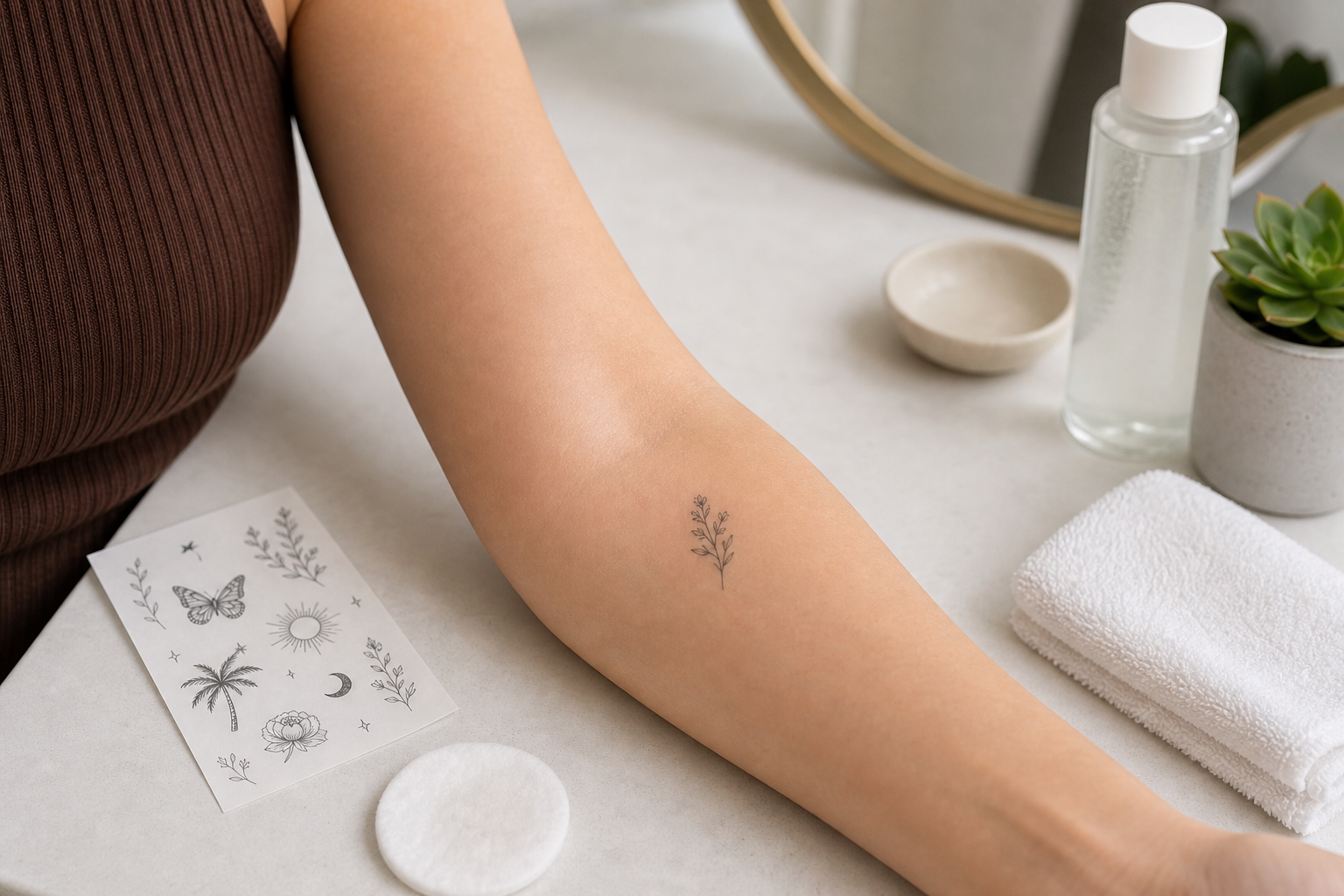
If you have sensitive skin, do not start with a large temporary tattoo or wear one for a long time. Start with a small design, test it on a calm low-friction area first, and avoid naturally sensitive or high-sweat areas such as the underarms, neck folds, freshly shaved skin, broken skin, or irritated skin.
Temporary tattoos can be comfortable for many people, but sensitive skin needs a more cautious approach. A decal-style temporary tattoo still touches your skin, uses water and pressure during application, sits as a surface film while you wear it, and needs to be removed later. If your skin often reacts to adhesives, fragrance, cosmetics, body glitter, sunscreen, or face paint, treat your first use as a small test instead of a full styling moment.
This guide focuses on the extra decisions for reactive skin. For the broader product-type, ingredient-label, reaction-sign, and black-henna boundaries, read Are Temporary Tattoos Safe?.
Are Temporary Tattoos Safe for Sensitive Skin?
No temporary tattoo is guaranteed safe for every person with sensitive skin. Use only clearly labeled skin products on intact, calm skin, start with a small less-visible test area, and remove the tattoo promptly if burning, swelling, hives, or increasing redness appears.
“Sensitive skin” is not one single condition. Before using a temporary tattoo, it helps to think about what usually triggers your skin. The answer changes how careful you should be.
- Adhesive or bandage sensitivity: Be careful with any product that sits on the skin, especially if you often react to tapes, patches, or bandages.
- Fragrance or cosmetic sensitivity: Avoid stacking perfume, body lotion, sunscreen, or makeup under the tattoo. Skin that reacts to cosmetics may be more likely to complain when several products are layered together.
- Dye or colorant sensitivity: Choose a small design first and avoid making your first test a dark, large, or heavy-ink look.
- Friction sensitivity: Avoid waistbands, bra lines, sock lines, neck folds, and underarms, where rubbing and sweat can make skin feel worse.
- Shaving or hair-removal sensitivity: Do not apply right after shaving, waxing, or depilatory use if the skin stings, burns, has bumps, or looks red.
- Eczema-prone or rash-prone skin: Do not apply over an active flare, rash, cracked skin, or itchy patch.
The American Academy of Dermatology explains that contact dermatitis can happen when something touching the skin irritates it or triggers an allergic reaction. The AAD also notes that once a trigger is identified, avoiding it matters. That is why “what are you sensitive to?” is not a small detail; it is the starting point.
Why Sensitive Skin Should Start Small
For sensitive skin, small is not just a style choice. It is a risk-control choice.
A small temporary tattoo gives you less skin contact, less area to remove, and an easier way to watch your skin. A large design can look dramatic, but it also covers more skin, has more edges that can rub or lift, and usually takes more product and more wiping to remove. If your skin is reactive, your first test should not be a full sleeve, a large chest piece, or a big festival design the night before an important event.
Instead, try a small design on intact skin and wear it briefly. If your skin stays calm, you can make a more confident decision next time.
Where Not to Place Temporary Tattoos on Sensitive Skin
Placement matters as much as the product. Sensitive skin usually does better on smooth, dry, low-friction skin.
Avoid Underarms
The underarm is not a good first-test area for sensitive skin. It sweats, folds, rubs, and is often shaved or treated with deodorant. Even if the tattoo transfers at first, the area may feel uncomfortable and the edges may wear down quickly. If you know your underarms react to shaving, deodorant, fragrance, or sweat, do not test a temporary tattoo there.
Be Careful With the Neck
Neck tattoos can look beautiful, but the neck is not the best first test for sensitive skin. The side of the neck, back of the neck, necklace area, collar line, and skin folds can experience sweat, friction, perfume, hair products, and clothing contact. If you want a neck look for a photo or event, test the same product somewhere calmer first.
Avoid Broken, Sunburned, Shaved, or Irritated Skin
Do not apply a temporary tattoo over cuts, scratches, scabs, open acne, peeling skin, sunburn, rash, hives, or freshly shaved skin that still stings. If the skin is not closed and calm, wait. For the full explanation, see our guide on using temporary tattoos on broken skin.
Other Areas to Avoid for a First Test
- inner elbow
- behind the knee
- waistline
- bra line
- sock line
- areas near the eyes or lips
- areas that will be covered by tight clothing for hours

Better First-Test Areas
For a first sensitive-skin test, choose an area that is easy to see, easy to clean, and unlikely to rub all day.
- outer upper arm
- outer forearm
- shoulder, if clothing will not rub it
- calf
- ankle, if shoes and socks will not rub the design
These areas are usually smoother and easier to monitor. They also make removal simpler if your skin starts to feel uncomfortable.
Why Temporary Tattoos Can Irritate Reactive Skin
A standard water-transfer temporary tattoo is a surface decoration, not a permanent tattoo. Still, several small factors can matter for reactive skin: the printed film, the transfer layer, water, pressure, drying time, clothing friction, sweat, oil, and removal.
The FDA’s temporary tattoo fact sheet notes that decal products vary and that reactions have been reported. This page keeps the sensitive-skin decision and first-use plan; for ingredient categories, label checks, and uncertainty, read what temporary tattoo ink is made of.
How to Test a Temporary Tattoo on Sensitive Skin
This is not the same as a medical patch test. It is a practical small-area trial to see whether your skin tolerates this product and placement.
- Choose a small tattoo, not a large sheet.
- Apply it to clean, dry, intact skin.
- Use a low-friction area such as the outer upper arm or outer forearm.
- Do not put lotion, sunscreen, body oil, perfume, or makeup underneath.
- Wear it for a short time first.
- Watch for itching, burning, swelling, spreading redness, pain, or blistering.
- Remove it gently if anything feels wrong.
The AAD recommends testing skin-care products on small areas before wider use because ingredients can irritate skin or trigger allergic contact dermatitis. A temporary tattoo is not skin care, but the same cautious logic is useful: test small before committing to a larger area.
How Long Should Sensitive Skin Wear One?
Sensitive skin does not need to wear a temporary tattoo until it naturally flakes away. If the tattoo is for a photo, outfit, festival, party, race day, or event, it is reasonable to remove it after the occasion instead of keeping it through several days of sweat, showers, sleep, and clothing friction.
Longer wear does not always mean a better experience. For sensitive skin, the goal is a comfortable temporary look, not maximum wear time at any cost.
How to Apply One More Gently
Application technique can reduce avoidable irritation.
- Wash and dry the area first.
- Do not apply over body lotion, sunscreen, oil, perfume, deodorant, or makeup.
- Do not apply to skin that was just shaved if it feels tender or bumpy.
- Press steadily, but do not aggressively rub the skin.
- Let the design dry completely before covering it with clothing.
- Choose a smaller design if this is your first time using that product.
If you want the general step-by-step process, read our guide on how to apply a temporary tattoo. For sensitive skin, the key difference is restraint: smaller area, shorter wear, gentler removal.
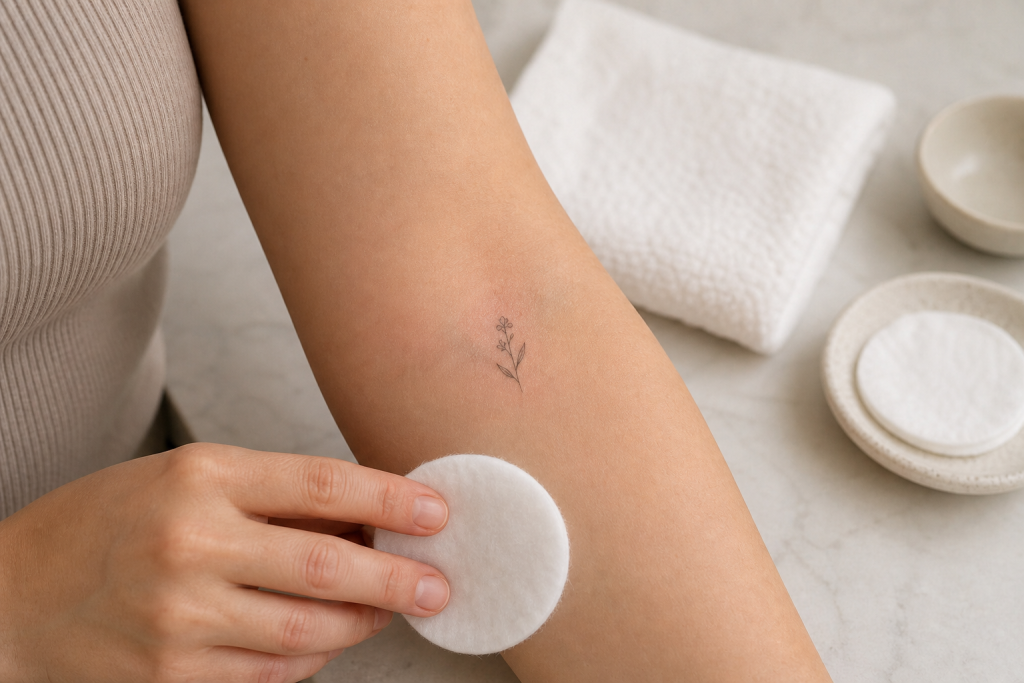
How to Remove It Without Irritating Sensitive Skin
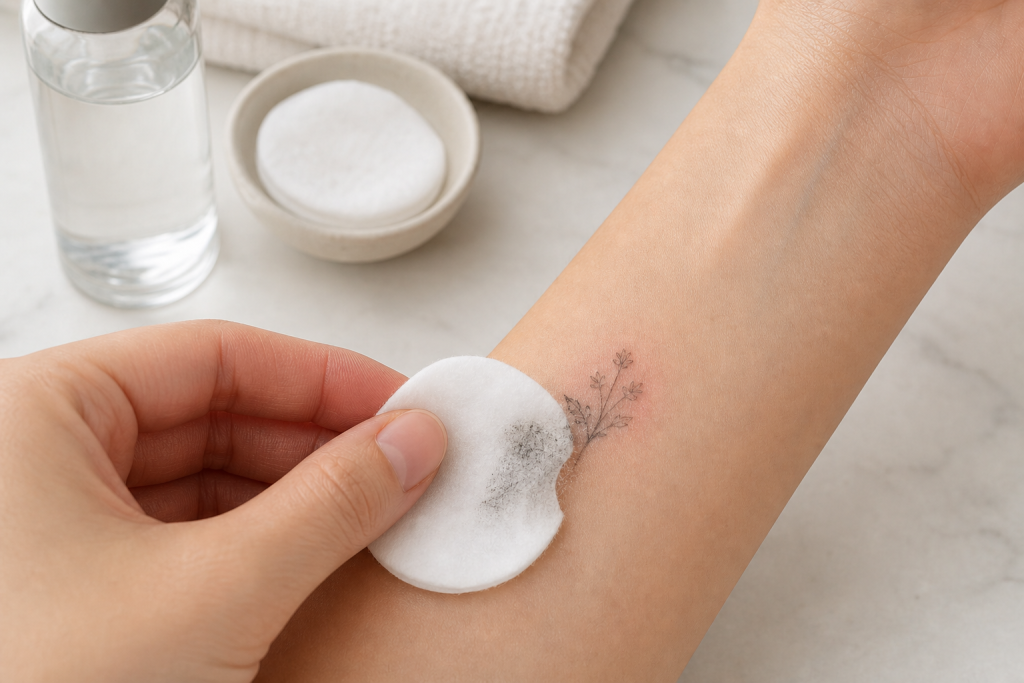
Do not scrape, pick, or scrub a temporary tattoo off sensitive skin. The remover should do the work, not friction.
- Use baby oil, cleansing oil, micellar water, or a gentle makeup remover.
- Let the remover sit briefly so the design softens.
- Wipe slowly with a soft cotton pad or cloth.
- Repeat gently instead of rubbing harder.
- Rinse the skin and leave it alone if it looks pink or feels tender.
For a fuller removal walkthrough, see how to remove a temporary tattoo without irritating your skin. Once the design is off, use the separate post-removal care guide to decide whether the skin needs simple care, more time, or professional advice.
What About Sunscreen, Lotion, Makeup, or Perfume?
For application, keep the skin bare. Oils, lotions, sunscreen, deodorant, perfume, and makeup can interfere with transfer and may add extra irritation variables for sensitive skin. If you need sunscreen later, apply the temporary tattoo first, let it dry fully, and then pat sunscreen around or over it gently instead of rubbing. Our guide on using sunscreen over a temporary tattoo explains the order in more detail.
If you are sensitive to fragrance or sunscreen, avoid testing several new products at once. If your skin reacts, you will not know whether the problem was the tattoo, the sunscreen, the fragrance, the rubbing, or the combination.
When to Stop Using It
Remove the temporary tattoo gently and stop using it on that area if you notice:
- burning
- strong itching
- swelling
- blistering
- spreading redness
- pain
- skin that feels hot
- a rash that develops after wearing or removing it
This article is product-use guidance, not medical diagnosis. If a reaction is severe, persistent, blistering, painful, or keeps returning, consider asking a dermatologist or other qualified medical professional for advice.
Does “Hypoallergenic” Mean It Will Not Irritate Sensitive Skin?
No label can guarantee that every sensitive-skin user will be fine. Words like “gentle” or “hypoallergenic” may be helpful signals, but your own reaction history matters more. If you already know you react to certain adhesives, colorants, fragrance, or cosmetic ingredients, do not ignore that history because a product sounds mild.
If you are unsure what triggers your skin, the AAD notes that identifying the cause of irritation can be difficult and that professional patch testing may help in some cases. For temporary tattoos, the practical rule is simpler: do not test on an important day, do not test on irritated skin, and stop if your skin complains.
Sensitive Skin FAQ
Can I use temporary tattoos if I have eczema?
Do not apply a temporary tattoo over an active eczema flare, cracked skin, rash, or itchy inflamed skin. If your skin is calm and fully intact, you may choose to test a small design on a low-friction area first.
Can I put a temporary tattoo on my neck?
If you have sensitive skin, the neck is not the best first-test area. Neck skin can be exposed to sweat, hair products, perfume, collars, necklaces, and friction. Test the product somewhere calmer before using it on the neck.
Can I put one near my underarm?
Avoid the underarm for sensitive skin, especially if you shave, sweat heavily, use deodorant, or often get irritation there. Choose the outer upper arm instead.
Can I use a temporary tattoo after shaving?
Only if the skin feels calm. If shaving left redness, bumps, stinging, burning, or small nicks, wait.
Is a small tattoo safer than a large one?
A smaller tattoo is a better first test for sensitive skin because it touches less skin and is easier to remove gently. It does not guarantee that you will not react, but it lowers the commitment.
What if I am sensitive to adhesive bandages?
Be cautious. A temporary tattoo is not the same as a bandage adhesive, but both involve skin contact and later removal. Start with a very small design on intact low-friction skin, or avoid it if your adhesive reactions are strong.
Final Takeaway
Sensitive skin can sometimes use temporary tattoos, but the safest approach is small, short, and selective. Know what your skin usually reacts to. Avoid underarms, neck folds, broken skin, sunburn, fresh shaving irritation, and high-friction areas. Test a small design first, wear it briefly, and remove it gently. A temporary tattoo should be fun decoration, not a reason your skin spends the next day upset.
What the guide images show
Key visual information is repeated below as text so the design, scale, placement, and process do not depend on images alone.
- For sensitive skin, start with a small design on calm intact skin instead of a large long-wear look.
- Small temporary tattoo placed on outer shoulder away from the neck fold for sensitive skin
- Tiny temporary tattoo on outer forearm for a sensitive skin test
- Cotton pad gently removing a tiny temporary tattoo from sensitive skin