
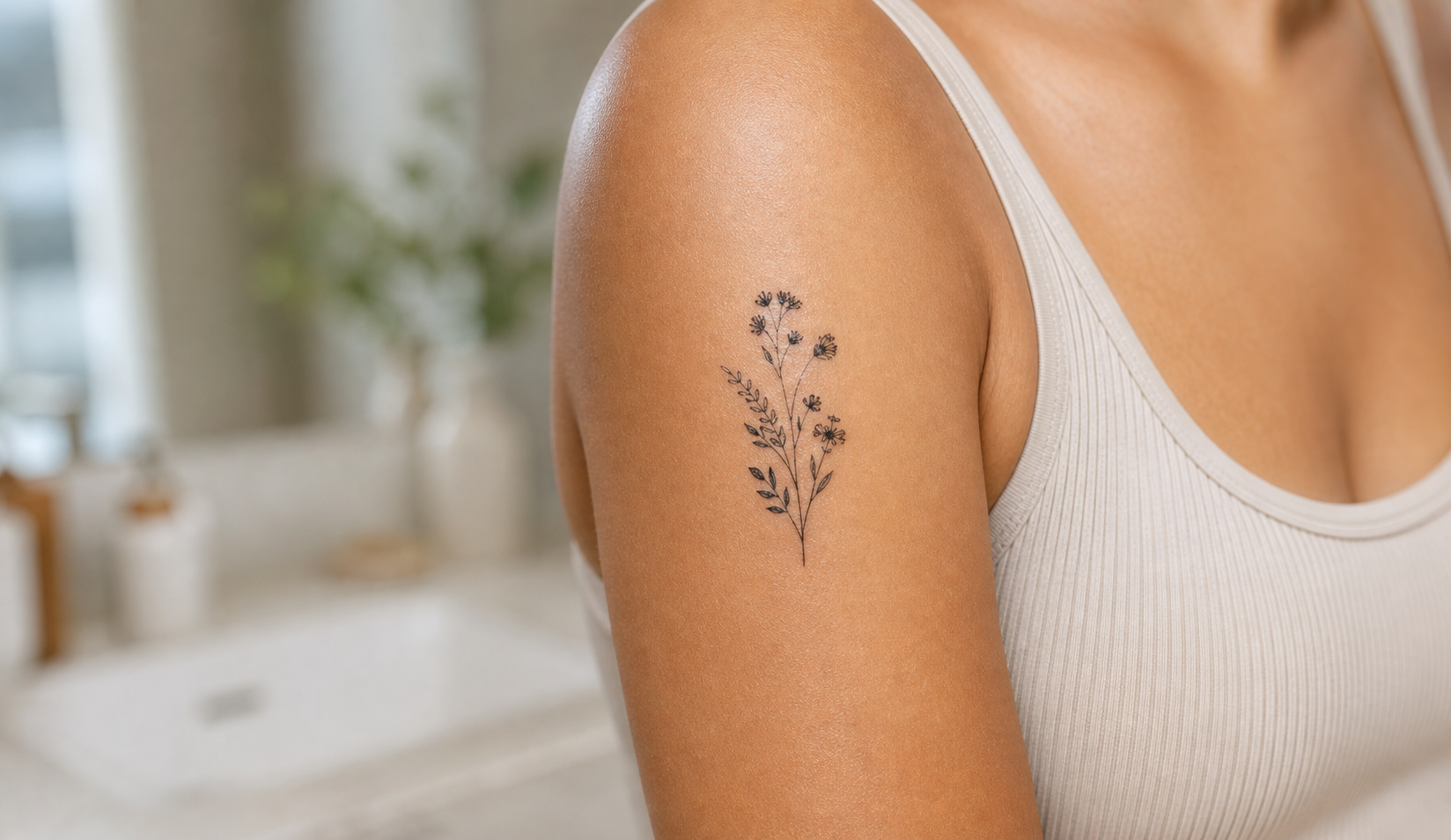
Yes, standard temporary tattoo stickers are generally safe for most people when they are applied to clean, intact skin and removed gently. At Beauty of Papers, we take skin safety seriously: a temporary tattoo should look beautiful, feel comfortable, and come off without harsh scrubbing. But “generally safe” is not the same as “safe for every person, every product, and every skin condition.”
Any product that sits on the skin can cause irritation or an allergic reaction for some people. The safest way to think about temporary tattoos is practical: choose the right type, avoid damaged or sensitive areas, apply them correctly, and remove them if your skin starts to feel uncomfortable.
This guide focuses on standard water-transfer temporary tattoo stickers, not permanent tattoos, real henna paste, jagua stains, or semi-permanent stain products. If you are looking for application steps, start with how to apply a temporary tattoo. If your skin is already irritated or you need to take one off, use the gentler steps in how to remove a temporary tattoo without irritating your skin.
Quick Answer: Are Temporary Tattoos Safe?
For most people, a standard temporary tattoo sticker is a low-commitment cosmetic accessory. It stays on the surface of the skin, wears for a short time, and can usually be removed with oil or makeup remover.
Choosing your next temporary tattoo?
Start with clear-placement temporary tattoo stickers
Choose standard water-transfer temporary tattoo stickers when you want a decorative look that applies with water and removes without permanent commitment.
Avoid eyes, lips, broken skin, and irritated skin; patch test first if your skin is sensitive.
The main safety limits are:
- Do not apply a temporary tattoo over broken, sunburned, freshly shaved, or irritated skin.
- Do not use it if the product looks damaged, unsealed, or unusually sticky.
- Be careful with very dark “black henna” products, especially those offered as stain-like body art.
- Remove the tattoo if you feel burning, strong itching, swelling, rash, or pain.
- People with sensitive skin should test a small area first and avoid high-friction placement.
So the honest answer is: temporary tattoos can be safe for many users, but the product type and your skin condition matter.
First, Know What Kind of Temporary Tattoo You Have
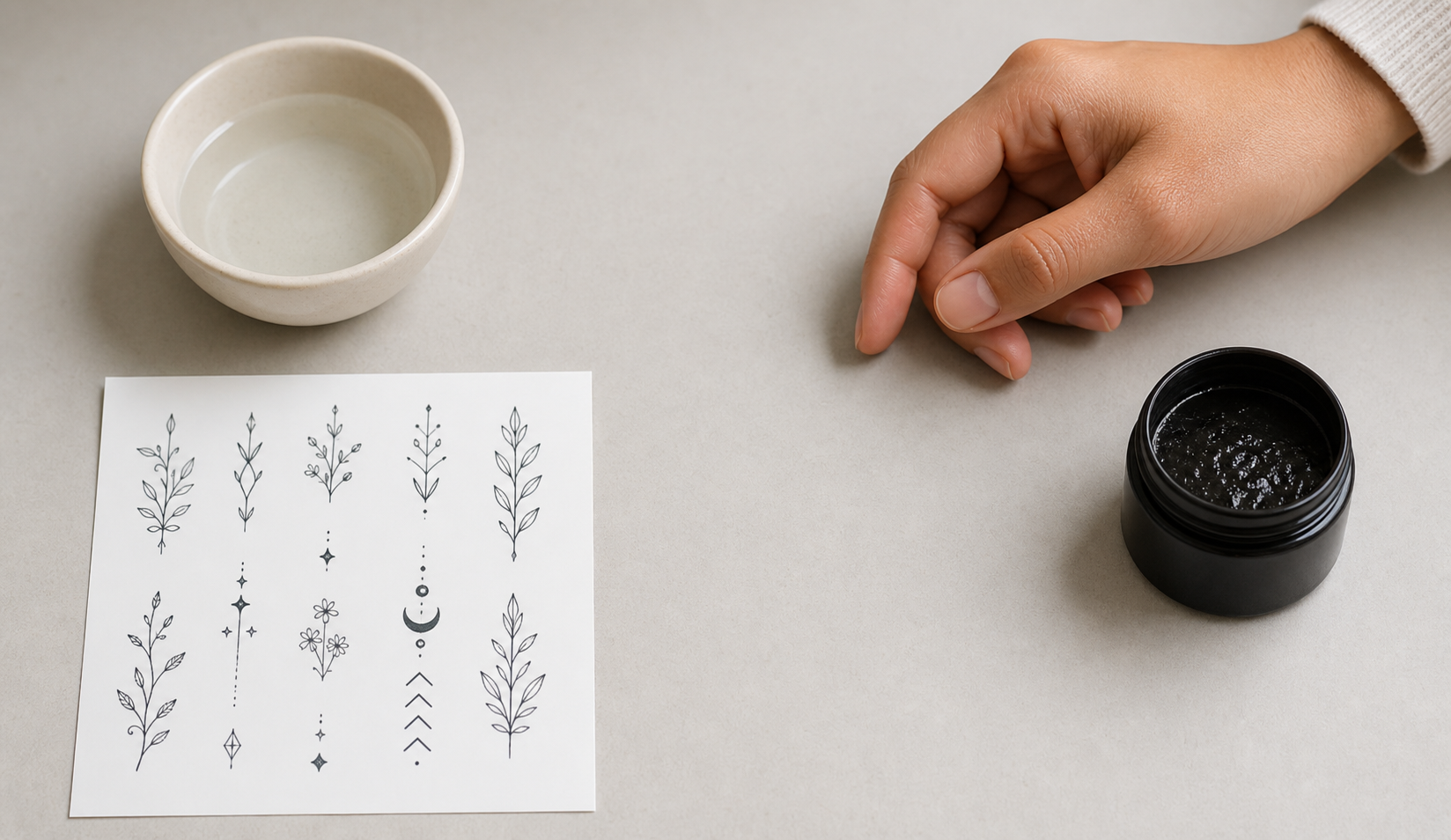
People use the phrase “temporary tattoo” for several different products, and they do not all behave the same way.
For the purchase decision between a water-transfer decal and a developing stain, use our temporary versus semi-permanent tattoo buying guide. For the broader taxonomy, see our temporary tattoo styles and product types guide. This page remains the safety guide.
Standard decal-style temporary tattoos
These are the familiar water-transfer tattoo stickers. You place the design on the skin, wet the backing paper, press, and peel the paper away. The design sits on the skin surface rather than staining deeply into the skin.
This is the type most Beauty of Papers guides discuss. It is also the type this article is mainly about.
Henna, mehndi, jagua, and stain products
Henna, jagua, and semi-permanent stain products work differently because they tint or stain the skin. Some people love that look, but it is not the same as a standard temporary tattoo sticker.
The biggest caution is black henna. The FDA warns that products marketed as black henna or pre-mixed henna may be associated with skin reactions, and that true henna is typically reddish-brown rather than black. You can read the FDA’s temporary tattoos, henna, and black henna fact sheet for the full context.
If a product promises a very dark stain that lasts a long time, treat it differently from a simple decal tattoo sticker.
Who Should Be More Careful?
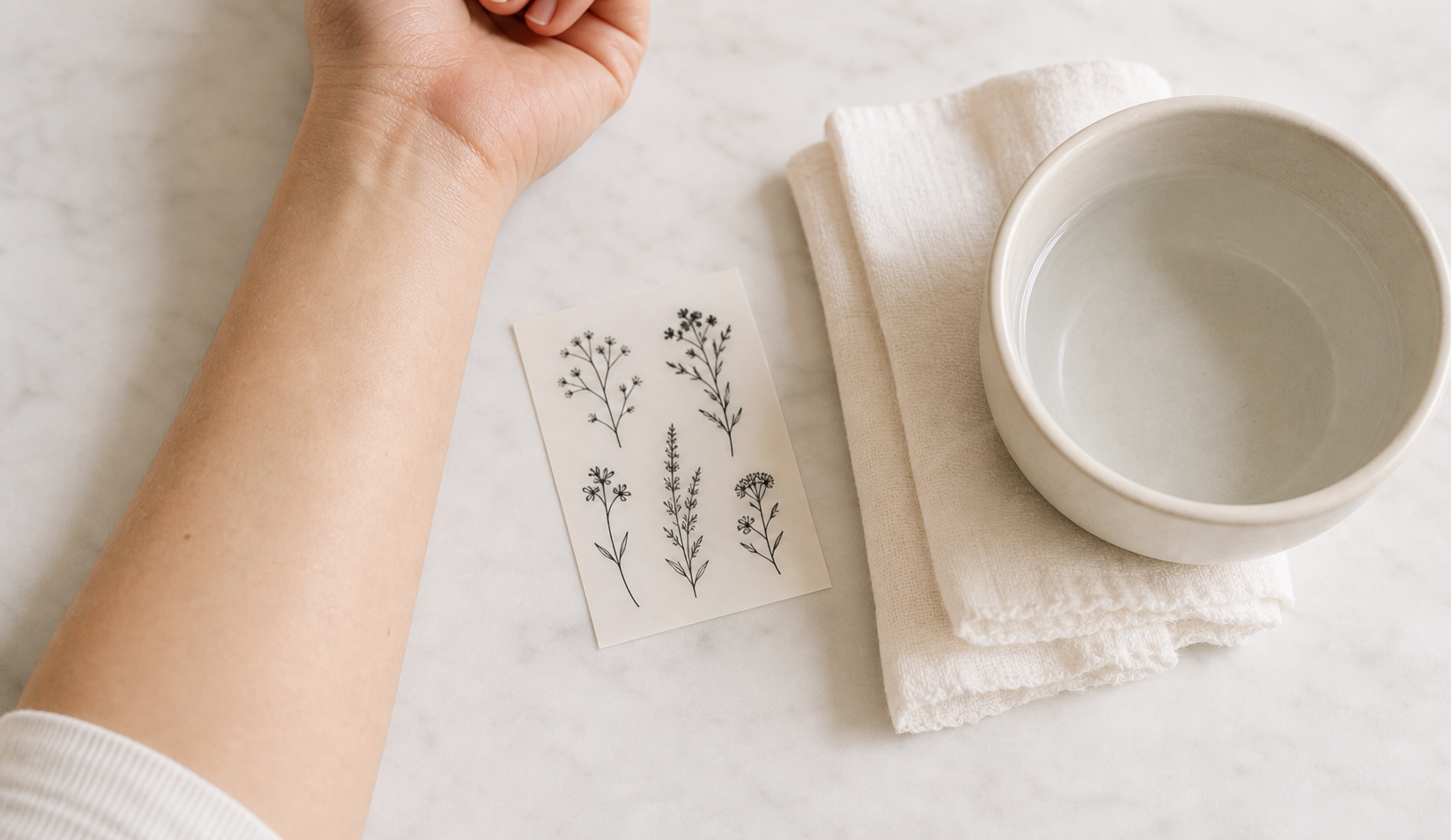
Some people can wear temporary tattoos without any problem. Others should be more cautious, especially if their skin is already reactive.
Be more careful if you:
- have sensitive skin or a history of cosmetic reactions
- have eczema, dermatitis, psoriasis, or another active skin condition
- recently shaved, waxed, exfoliated, or used strong body-care products
- have sunburn, scratches, cuts, bug bites, or irritation in the area
- want to place the tattoo on the face, near the eyes, or near mucous membranes
This does not mean everyone in these groups can never use temporary tattoos. It means you should choose a small, low-friction area first and stop quickly if the skin reacts.
Are Temporary Tattoos Safe for Sensitive Skin?
Sensitive skin needs a more conservative approach. Use only clearly labeled skin products on clean, intact, calm skin; start with a small design on a less-visible, low-friction area; and remove it promptly if discomfort or increasing redness appears.
For trigger differences, placement choices, small-area trial limits, wear time, and gentle removal, read Can Sensitive Skin Use Temporary Tattoos?.
How to Apply a Temporary Tattoo More Safely
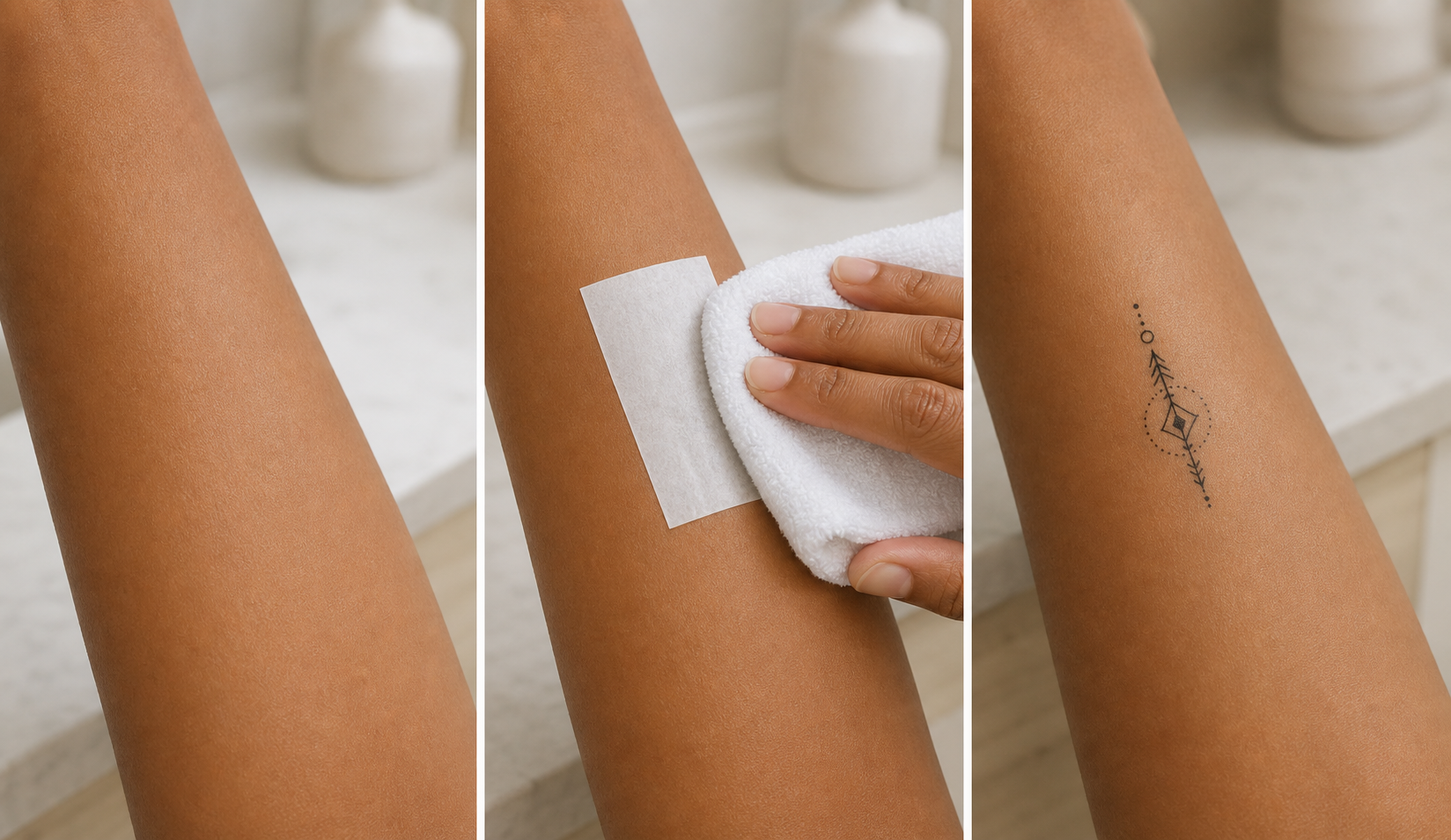
Good application is not only about making the tattoo look better. It also helps avoid unnecessary rubbing, residue, and repeated fixing attempts.
- Wash and dry the skin first.
- Do not apply over lotion, oil, sunscreen, makeup, or sweat.
- Choose intact skin with no cuts, rash, sunburn, or irritation.
- Trim excess clear border if it helps the design fit the body area.
- Press the backing paper evenly instead of sliding it around.
- Let the tattoo dry before touching it or covering it with clothing.
- Pat dry after water exposure instead of rubbing with a towel.
Water is not usually the only problem. Friction, oil, and repeated touching often damage the design faster than a normal shower. For a deeper explanation, read are waterproof temporary tattoos really waterproof?.
Where You Should Not Put a Temporary Tattoo
Placement matters. Temporary tattoos are for external decoration on intact skin, not for covering a cut, wound, rash, or other damaged area.
Avoid applying temporary tattoos:
- on broken, infected, peeling, or irritated skin
- on fresh sunburn or recently treated skin
- inside the mouth, on the lips, or inside or very close to the eyes
- where clothing or shoes will rub constantly
- over skin that already feels itchy, hot, swollen, or sore
If the skin barrier is damaged, wait or choose another intact placement. See Can You Use a Temporary Tattoo on Broken Skin? for the strict boundary and what to do instead.
What Skin Reactions Should You Watch For?
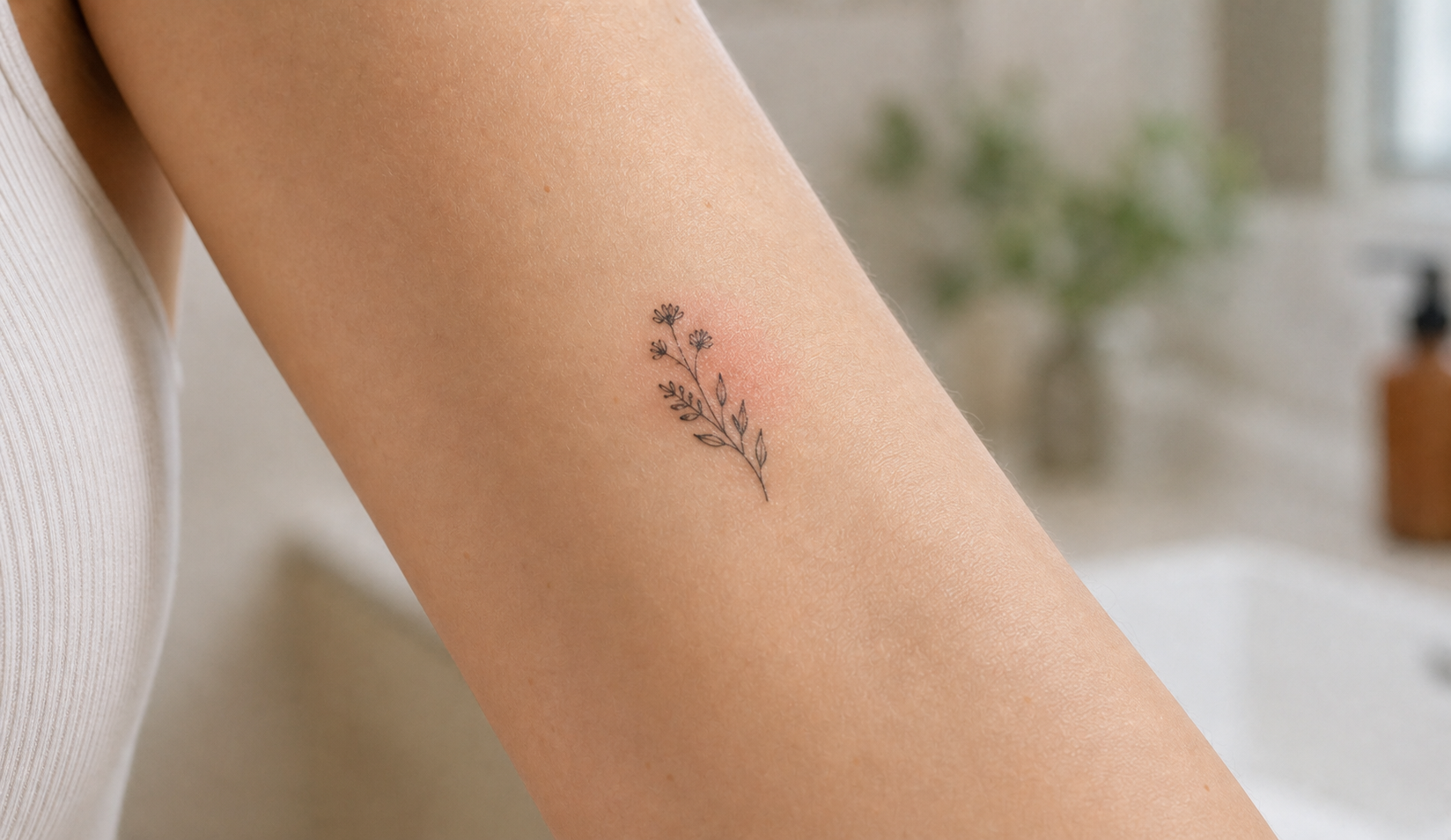
A little awareness is useful. A temporary tattoo should not burn, sting strongly, swell, or make the skin feel painful. Remove it if the area starts to feel wrong.
Watch for:
- redness that spreads beyond the tattoo area
- itching that keeps getting stronger
- swelling, warmth, blisters, or raised bumps
- pain, burning, or weeping skin
- a rash that appears after the tattoo is removed
These signs can overlap with contact dermatitis, which is a skin reaction that can happen after contact with an irritant or allergen. Cleveland Clinic has a clear overview of contact dermatitis symptoms and causes if you want general medical context.
What to Do If Your Skin Reacts
If your skin reacts, remove the tattoo gently. Do not scratch it off and do not apply another tattoo over the same area. Use oil, makeup remover, or mild soap and water depending on what your skin tolerates, then rinse and leave the area alone.
After removal:
- avoid perfume, exfoliants, acids, retinoids, and strong body-care products on that area
- do not cover the reaction with glue, polish, or another tattoo
- let the skin rest before trying any new cosmetic product there
- seek medical advice if the reaction is severe, painful, spreading, blistering, or does not improve
If you believe a cosmetic product caused an unexpected reaction, the FDA explains how to report a cosmetic-related complaint.
A Note About Children
Beauty of Papers’ active content scope is adult use. If a child may use another temporary tattoo product, a supervising adult should check the product label, use it only on intact skin, keep it away from the eyes and lips, avoid black henna, and remove it if itching, burning, or discomfort occurs. This boundary note is not a recommendation for kids-first use.
Safety Myths to Avoid
“Waterproof means safe for all skin”
No. Waterproof only describes how the tattoo handles water exposure. It does not mean the product is suitable for every skin type or every placement.
“Natural-looking henna is always safe”
Not automatically. Product type, ingredients, freshness, and color claims matter. Black henna deserves special caution because it is not the same thing as a simple decal tattoo sticker.
“Clear nail polish is a good sealer”
It is not a good general recommendation. Nail polish is made for nails, not flexible skin. It can feel tight, look shiny, crack, or irritate the area.
“If it itches, just cover it”
No. Itching is a signal to pay attention. Remove the tattoo gently and let the skin rest instead of covering the area with more products.
Frequently Asked Questions
Can temporary tattoos cause allergic reactions?
Yes, they can for some people. This safety guide keeps the response steps and warning signs; for the role of colorants, adhesion-supporting materials, exact labels, and ingredient uncertainty, read what temporary tattoo ink is made of.
Should I test a temporary tattoo first?
If you have sensitive skin, yes. Try a small design on a low-friction area first and remove it if the skin becomes irritated.
Can You Put a Temporary Tattoo on Your Face?
A small decal may be used on clean, intact cheek or temple skin when the product is labeled for skin use, but patch-test conservatively and use extra caution. Avoid eyelids, lash lines, the waterline, lips, mucous membranes, broken skin, and any placement very close to the eyes; remove it if discomfort begins.
Can I wear a temporary tattoo after shaving?
It is better to wait if the skin feels freshly shaved, dry, stinging, or irritated. Applying over recently disturbed skin can make discomfort more likely and may also make the transfer less smooth.
Is black henna the same as a temporary tattoo sticker?
No. A standard temporary tattoo sticker transfers a surface design. Black henna is a stain-like product category that needs more caution, especially because the FDA has warned about reactions linked to some black henna products.
Final Takeaway
Temporary tattoos can be a safe, easy way to try body art without commitment, but safety depends on using the right product on the right skin. Choose standard decal-style temporary tattoos when you want short-term decoration, apply them to clean intact skin, avoid black henna if you are unsure, and remove the tattoo if your skin feels irritated.
The best rule is simple: your skin matters more than keeping the design on. If a temporary tattoo looks beautiful and feels comfortable, enjoy it. If it burns, itches, swells, or makes your skin unhappy, take it off gently and give the area a break.
Shop temporary tattoo styles with clearer expectations
Choose standard water-transfer temporary tattoo stickers when you want a decorative look that applies with water and removes without permanent commitment.
What the guide images show
Key visual information is repeated below as text so the design, scale, placement, and process do not depend on images alone.
- Standard temporary tattoo stickers are generally safe for most people when applied to clean, intact skin and removed gently.
- Temporary tattoo with mild localized redness around one edge
- Visual guide comparing temporary tattoo stickers with a separate dark stain product
- Instruction-style temporary tattoo skin check with clean skin, tattoo sheet, cloth, and water
- Instruction-style steps for applying a temporary tattoo to clean dry skin