
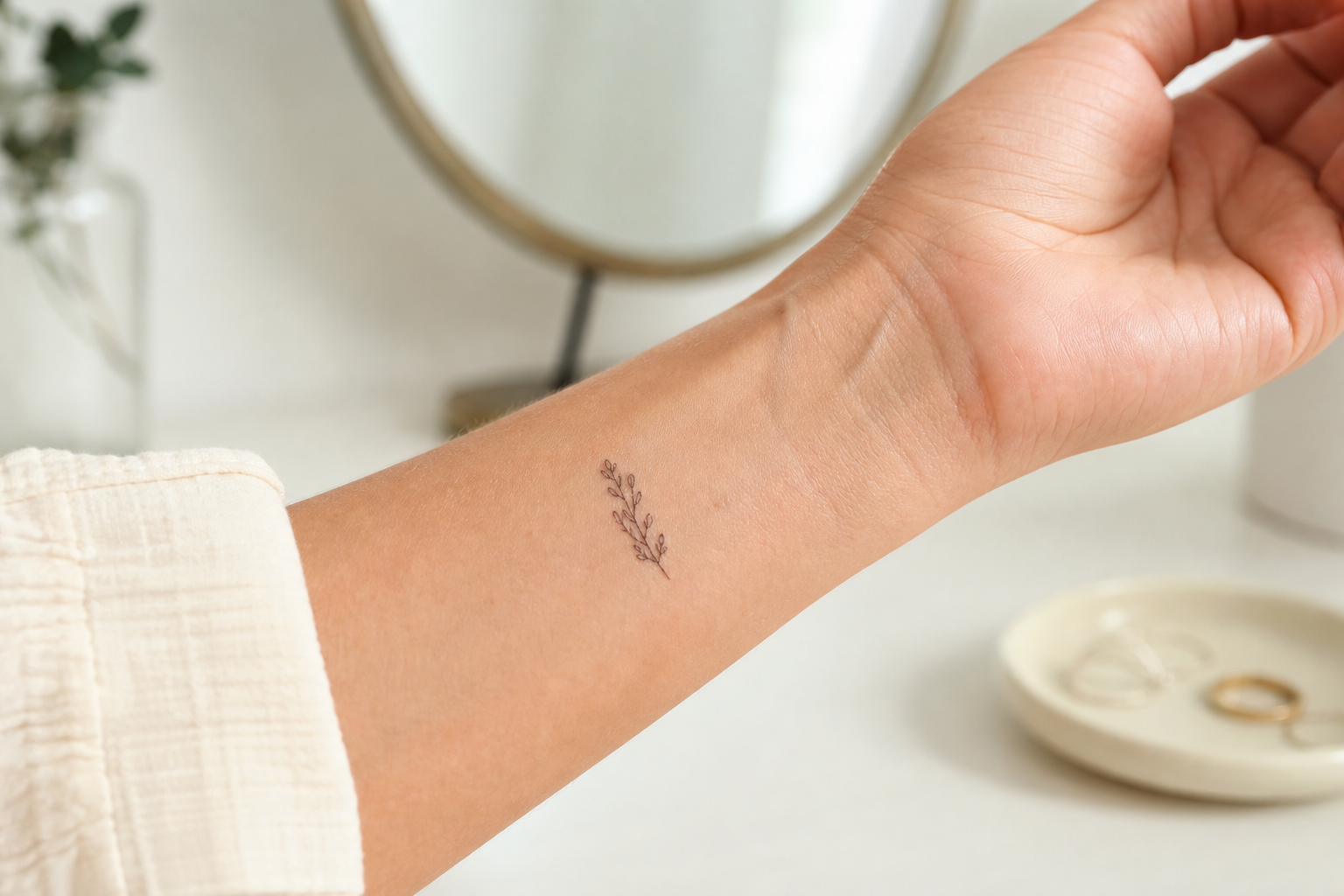
Joints are not the best place for temporary tattoos because they bend, crease, rub, and move more than flatter skin. A temporary tattoo can still work near a wrist, finger, elbow, knee, or ankle for a short event or photo, but it is more likely to crack, wrinkle, peel, or wear off faster there.
This does not mean you can never place a temporary tattoo near a joint. It means you should choose the design, size, and exact placement with more care. If you want a cleaner result that lasts longer, place the tattoo beside the crease instead of directly across it.
Why Temporary Tattoos Wear Faster on Joints
A standard water-transfer temporary tattoo sits on top of the skin as a thin decorative film. It is not placed under the skin like permanent ink. That surface layer can look smooth on calm skin, but joints make the film work harder.
Joints bend and fold
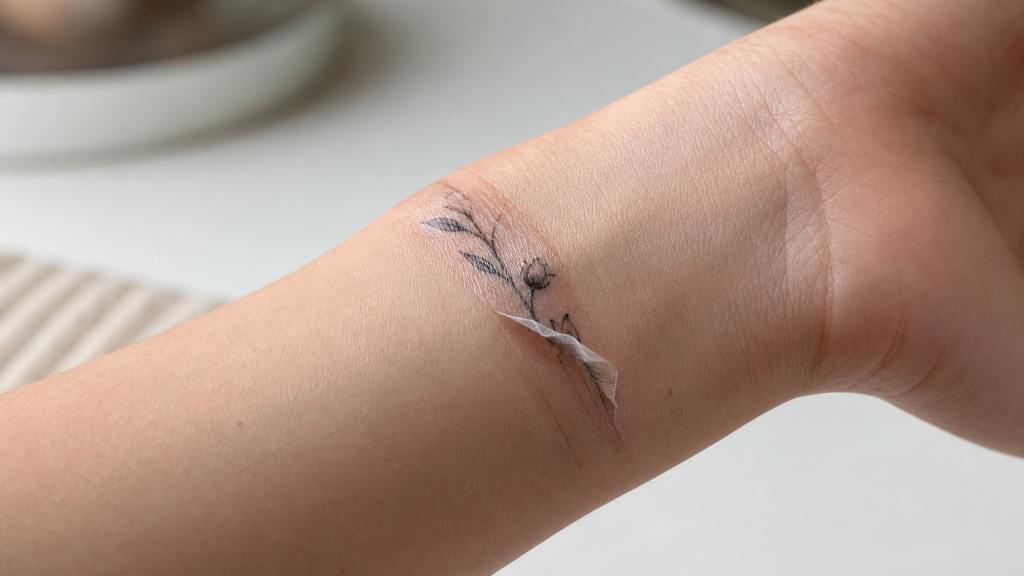
Every time you bend a finger, wrist, elbow, or knee, the skin stretches on one side and folds on the other. A temporary tattoo has to move with that skin. Fine lines may break, solid shapes may wrinkle, and edges may lift where the skin creases most.
Joints get more friction
Joint areas also touch more things during the day. Sleeves rub wrists and elbows. Pants rub knees. Shoes and socks rub ankles. Hands touch water, bags, phones, desks, and clothing. That repeated friction is one reason temporary tattoos often wear faster on moving areas than on the upper arm, shoulder, calf, or outer forearm.
Sweat, water, and oil collect easily
Temporary tattoos usually handle normal wear better when the skin stays clean and dry. Around joints, sweat, water, lotion, sunscreen, and body oil can collect in creases or get rubbed across the design. For a deeper guide on wear time, see our article on how to make temporary tattoos last longer.
The Riskiest Joint Areas
Fingers and knuckles
Finger and knuckle tattoos are usually best for short wear. They can look fun in photos, but handwashing, bending, and daily contact make them hard to keep crisp for several days.
Elbows and knees
Elbows and knees are difficult because they bend sharply. Large designs across the center of the joint are especially likely to distort, crack, or peel at the edges.
Inner wrists
The inner wrist is visible and stylish, but it rubs against sleeves, watches, bracelets, desks, and bags. If you want a wrist tattoo, the outer wrist or lower forearm is often easier than the exact crease.
Ankles
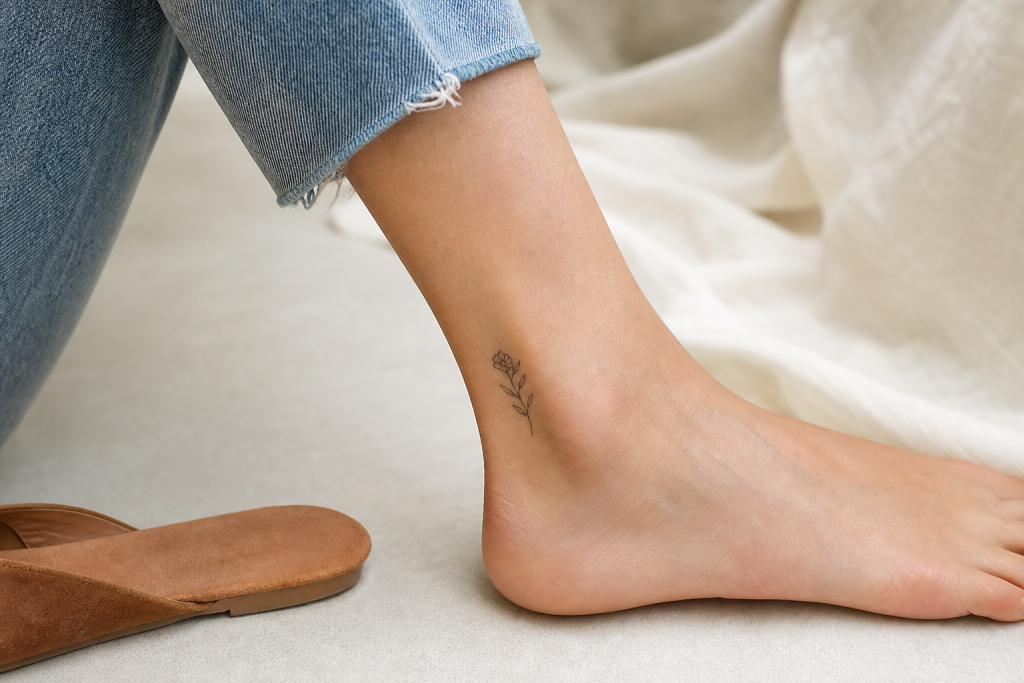
Ankles can work, but placement matters. A small design above or beside the ankle bone may wear better than a design placed where shoes, socks, or the foot bend repeatedly.
How to Make a Joint Placement Work Better
Choose a smaller design
Small motifs, narrow strips, and simple accents are usually more forgiving than large solid blocks or detailed designs. If you like a jewelry-like wrist or ankle look, a sheet such as the Metallic Charm Band Temporary Tattoo Sheet can be trimmed into smaller accents and placed near the joint instead of directly across the deepest crease.
Place it beside the crease
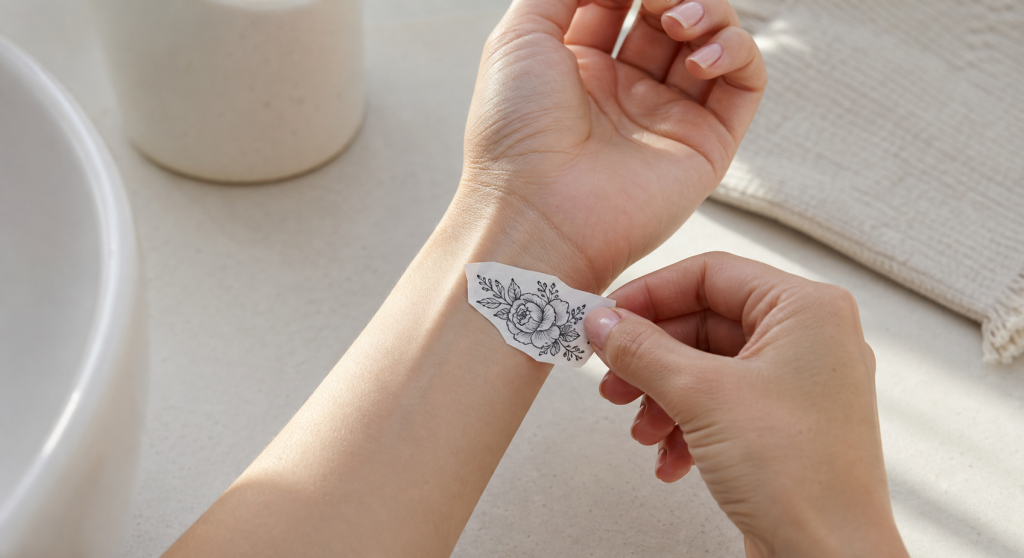
Before applying, bend the joint and look for the strongest fold line. Try to place the tattoo just above, below, or beside that line. This is a small change, but it can make the design look cleaner and reduce early cracking.
Let it dry before moving too much
After transfer, give the tattoo time to dry before bending the area repeatedly or putting clothing over it. For the full transfer process, use our temporary tattoo application guide.
Expect shorter wear
A joint placement may still look good for an event, outfit, or photoshoot. It simply may not be the best choice if you want the design to stay crisp for several days.
What If the Tattoo Starts Cracking or Peeling?
If only a small edge lifts, keep the area dry and press it gently. Do not add lotion or oil to “smooth” it down, because oil is more likely to loosen the tattoo. If the design has cracked badly, remove it gently instead of scrubbing at the joint. Our guide on how to fix a peeling temporary tattoo explains when a small repair is worth trying and when removal is cleaner.
Better Places to Put Temporary Tattoos
If you want longer, cleaner wear, choose smoother skin with less bending and less rubbing. The upper arm, shoulder, outer forearm, calf, collarbone area, or upper back usually gives a temporary tattoo more room to sit flat.
For more placement ideas, see our guide to the best places to put a temporary tattoo. If you are comparing multiple locations before committing to permanent ink, use our temporary tattoo placement test guide.
What About Sensitive Skin?
If your skin is sensitive or allergy-prone, be extra careful with joint areas. Movement and friction can make skin feel more irritated even when the tattoo itself is small. Start with a small test, wear it for a shorter time, and avoid broken, irritated, freshly shaved, or uncomfortable skin.
The FDA notes that reactions have been reported with tattoos and temporary tattoos, and the American Academy of Dermatology explains that contact dermatitis can happen when something touching the skin irritates it or triggers an allergy. For a more specific guide, read can sensitive skin use temporary tattoos?
FAQ
Can I put a temporary tattoo on my finger?
Yes, but treat it as short-term styling. Fingers bend, wash, and rub constantly, so the tattoo may fade or crack faster than it would on flatter skin.
Can temporary tattoos go over elbows or knees?
They can, but large designs across the center of an elbow or knee are more likely to wrinkle or split. If possible, place the design above, below, or beside the joint.
Why did my wrist temporary tattoo crack?
The wrist bends often and rubs against sleeves, jewelry, desks, and bags. If the tattoo crossed the main wrist crease, cracking is more likely.
How do I make a temporary tattoo last longer on a moving area?
Use a smaller design, avoid the deepest crease, apply it to clean dry skin, let it dry fully, and keep oil, lotion, water, and rubbing away from the design as much as practical.
Final Takeaway
Joints are not “bad” because temporary tattoos cannot work there. They are difficult because the skin moves, folds, sweats, and rubs more often. For the cleanest look, keep joint placements small, avoid the crease, and use smoother nearby skin whenever you want the tattoo to last longer.
What the guide images show
Key visual information is repeated below as text so the design, scale, placement, and process do not depend on images alone.
- Joints bend and crease, so temporary tattoos usually wear better beside the fold rather than directly across it.
- Adult testing temporary tattoo placement near a wrist crease before applying
- Temporary tattoo edge peeling where it crosses a wrist joint crease
- Small temporary tattoo placed beside the ankle joint away from shoe friction