
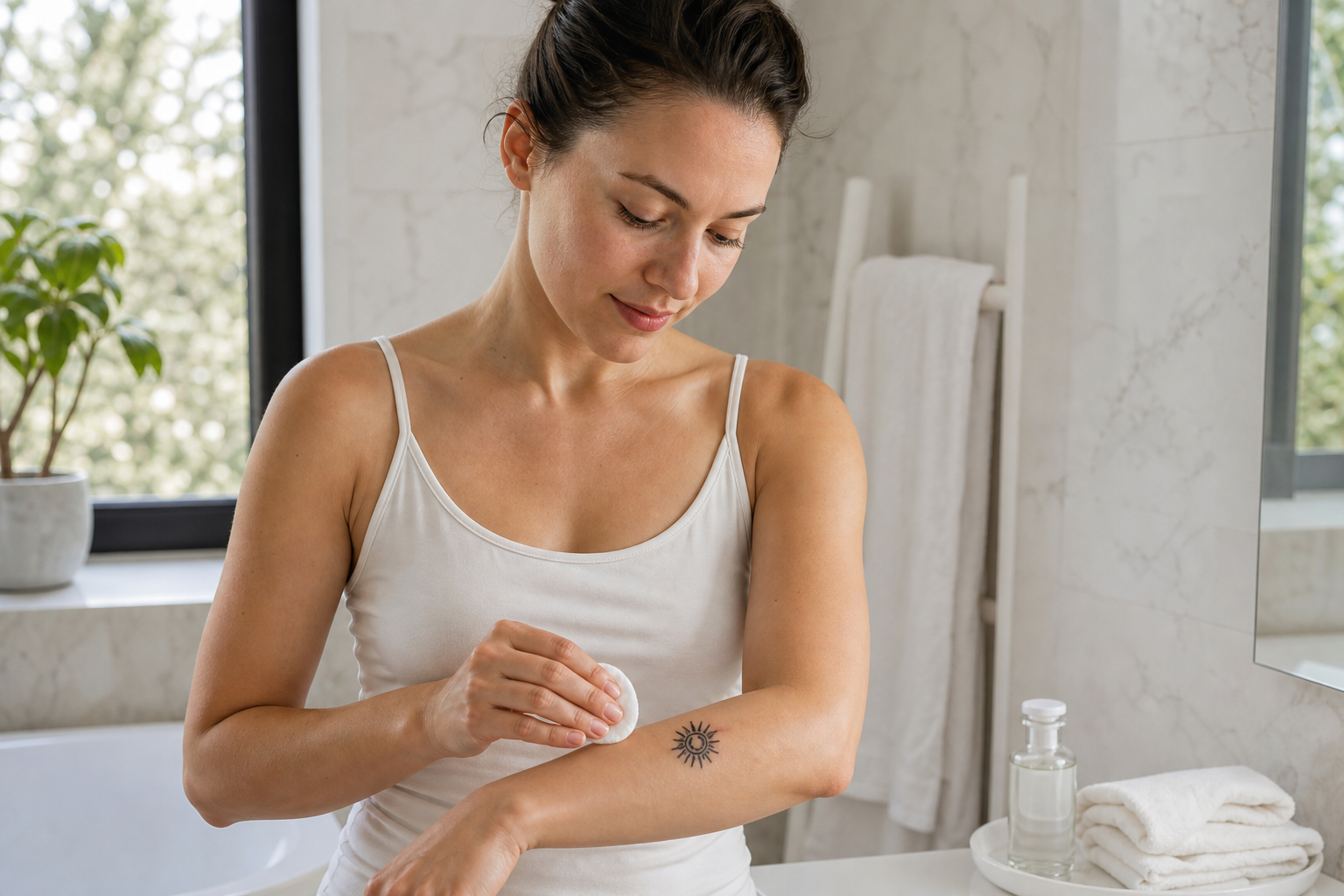
Quick Answer: How Do You Remove a Temporary Tattoo?
To remove a standard water-transfer temporary tattoo, first soften the printed surface with micellar water, a makeup remover your skin already tolerates, or a small amount of baby oil. Hold a soft pad against the design, wipe gently from an edge, and repeat once rather than scrubbing. If the image barely changes, stop and check the product type: stain-style and semi-permanent tattoos fade differently. Stop removal if the skin becomes painful, swollen, blistered, or increasingly irritated.
First Identify the Temporary Tattoo Type
A standard water-transfer tattoo is applied with water and leaves a printed layer on the surface of the skin. It may lift at the edges as it wears. This guide’s step-by-step methods are designed for that surface-decal format.
A stain-style or semi-permanent product may darken after application and fade as the outer skin renews. It may not wipe off in one session. Henna and products marketed as black henna are different again. If you are unsure, check the package and brand instructions before adding more friction or a stronger remover. The temporary versus semi-permanent tattoo guide explains the choice before purchase.
The U.S. Food and Drug Administration’s temporary tattoo fact sheet describes decal tattoos separately from henna and black henna and reports that some temporary tattoo products have caused skin reactions. Product type is therefore the first removal decision, not a minor detail.
Choose the Gentlest Suitable Removal Method
| Method | Best for | How to use | Avoid when |
|---|---|---|---|
| Micellar water or familiar makeup remover | Most small or lightly worn surface decals, including delicate placements | Saturate a soft pad, hold it on the design briefly, then wipe from an edge; repeat once if needed | The product stings, the skin is broken, or the label excludes the area |
| Baby oil | Larger surface decals or oily, adhesive-like residue | Apply a small amount, let it sit briefly, then wipe gently and wash away residue | Oil is not suitable for your skin or the area is already inflamed |
| Lukewarm water and gentle cleanser | Removing leftover remover and loose residue | Wash lightly with your hands or a very soft cloth, then pat dry | You would need to scrub to make progress |
| Transparent tape | A few loose fragments on intact, non-hairy body skin | Touch one small piece to the loose fragment and lift gently | Face, eye area, hairy skin, broken skin, or any irritation |
The table is a decision aid, not a ranking of universal “best” products. The right method is the mildest one that changes the surface tattoo while the skin remains comfortable.
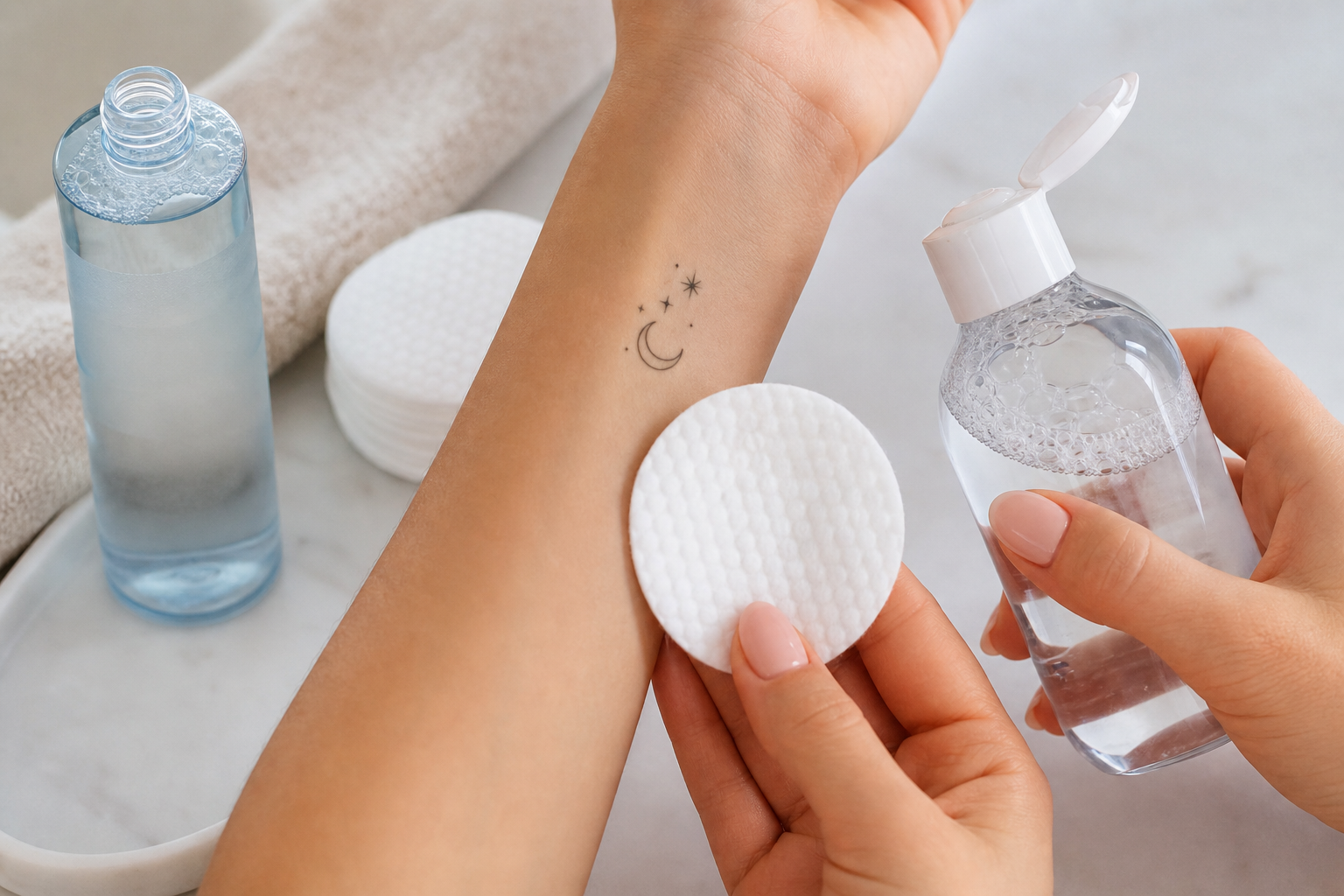
How to Remove a Temporary Tattoo With Micellar Water
- Check that the skin is intact and that the micellar water is intended for the area where the tattoo sits.
- Wet a soft cotton pad thoroughly.
- Hold the pad against one edge of the tattoo for several seconds so the surface becomes wet.
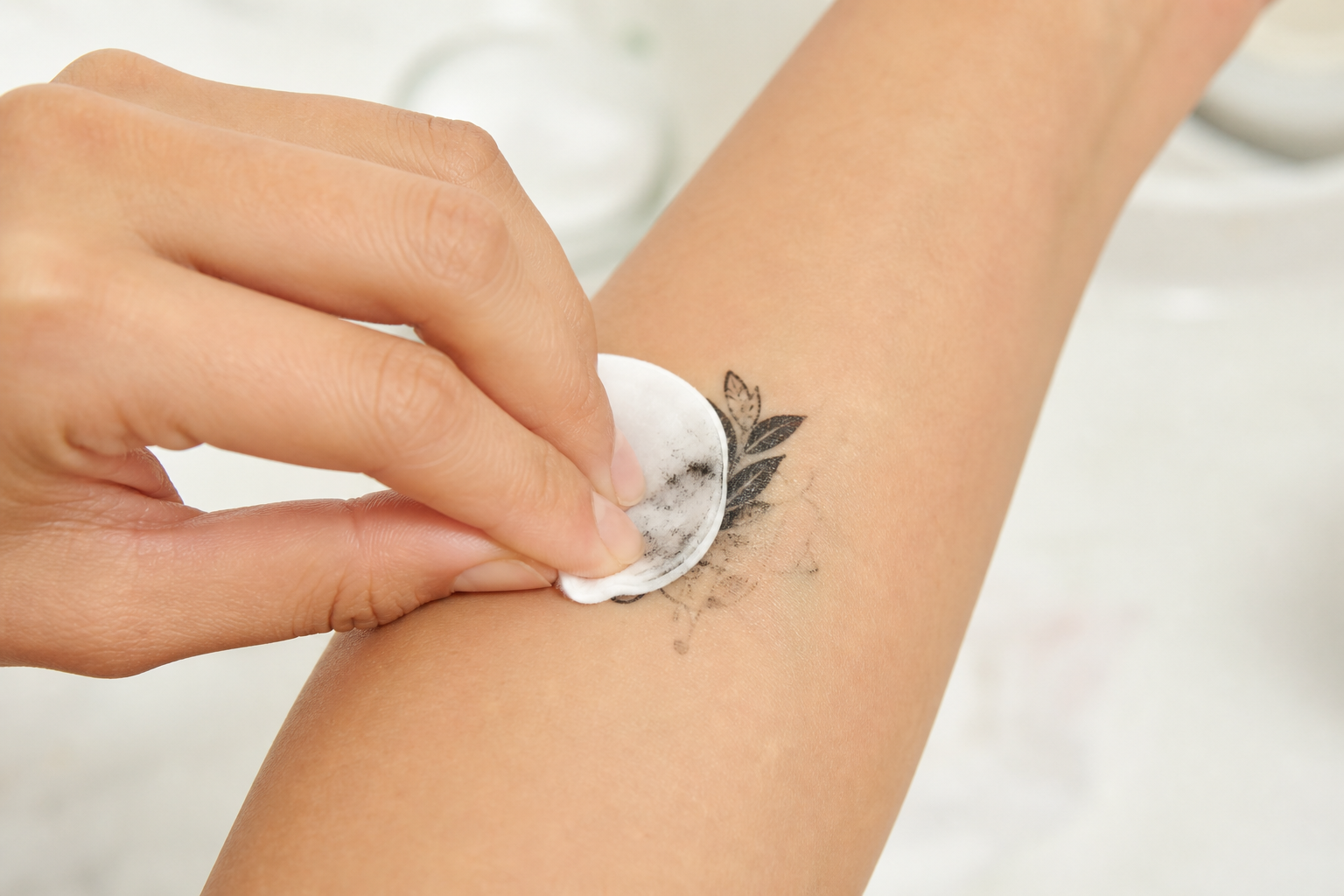
- Wipe gently from the edge toward the center. Do not polish the skin back and forth.
- If part of the decal remains and the skin feels normal, repeat once with a newly wet section of the pad.
- Rinse away residue with lukewarm water and pat dry.
Micellar water is useful because it combines moisture with a wipe that can lift the surface design. It is not automatically suitable for every person or every body area. Use a product you already tolerate, follow its label, and keep it out of the eyes.
If the tattoo does not change after gentle contact, do not treat that as permission to scrub harder. Recheck whether it is a stain-style product or move to the oil method only when the skin is comfortable.
How to Use Baby Oil for Residue
Baby oil can help loosen a standard surface decal, particularly when a larger patch or an adhesive-like film remains.
- Spread a small amount across the design.
- Leave it in contact briefly rather than rubbing immediately.
- Wipe from an edge with a soft pad or cloth.
- Repeat gently only if the tattoo is lifting and the skin remains comfortable.
- Wash away the oil with a gentle cleanser and lukewarm water, then pat dry.
The goal is to let the product reduce the need for force. More pressure is not the same as faster removal. If oil has lifted most of the image but a faint film remains, a second short contact is usually more skin-friendly than aggressive friction.
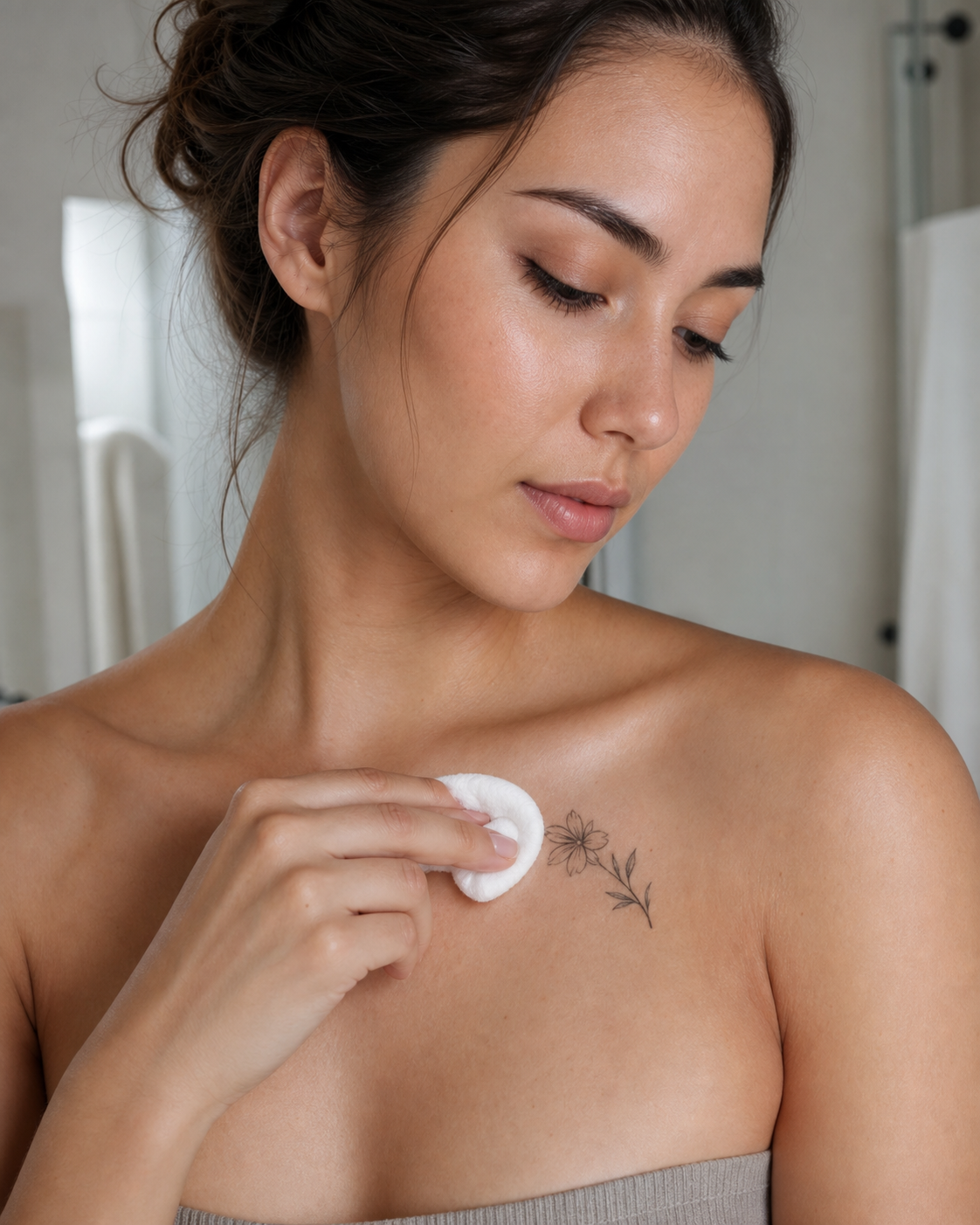
Removing a Temporary Tattoo From the Face or Sensitive Skin
The face, eye area, freshly shaved skin, and skin that already feels reactive need a narrower plan. Use only products labeled for that area, avoid tape and harsh scrubs, and keep remover out of the eyes. Press and lift with a soft pad instead of repeatedly dragging it across the skin.
If you know your skin reacts easily, the sensitive-skin temporary tattoo guide covers patch-testing and placement considerations. Do not apply or remove a tattoo over broken, sunburned, peeling, or actively irritated skin unless a qualified professional has advised you otherwise.
The American Academy of Dermatology lists redness or discoloration, swelling, tenderness, burning or stinging, hives, and fluid-filled blisters among possible contact dermatitis signs. These signs are a reason to stop adding products and friction, not a reason to try a stronger solvent.
What Not to Use and When to Stop
Do not use bleach, acetone, household cleaning products, sharp tools, or an abrasive pad on skin. Do not keep rubbing until the area becomes hot, shiny, raw, or painful. Rubbing alcohol and hand sanitizer can sting or dry the skin, so they are poor first choices for the face, sensitive skin, or an area that is already uncomfortable.
Stop the removal attempt when:
- the area becomes painful, increasingly red or discolored, swollen, hot, or blistered;
- itching, burning, stinging, or hives appear;
- the product reaches the eye or another area its label excludes;
- the design barely changes after a gentle method, suggesting it may not be a surface decal;
- only faint color remains and further rubbing would affect the skin more than the tattoo.
If a reaction is severe, spreading, persistent, blistering, or near the eye, gently remove any remaining product that can be removed without more irritation and seek appropriate professional advice. AAD guidance for a reaction to a skin product recommends washing it off and not using it again; a severe reaction may need dermatologic care.
Semi-Permanent Tattoos and Black Henna Are Different
A semi-permanent stain may remain visible after the skin surface has been cleaned. Follow the exact brand instructions and expect gradual fading rather than trying to force an instant result. Repeated abrasion can injure the skin without removing color that sits differently from a decal.
Products marketed as black henna require particular caution. The FDA notes reported adverse reactions to some henna and black-henna products. If the design area is itchy, burning, swollen, blistered, or otherwise reacting, stop experimenting with home removal and use the FDA’s temporary tattoo safety information as a starting point for next steps.
Aftercare Once the Tattoo Is Off
Wash away remaining remover with lukewarm water and a gentle cleanser, then pat the area dry. If the skin feels comfortable, use a simple product you already tolerate rather than layering several new products over it.
Do not immediately reapply a tattoo to an area that is red, tender, swollen, blistered, or otherwise irritated. The post-removal care guide helps you distinguish ordinary leftover film from a skin reaction and decide when the area is ready to be left alone.
Frequently Asked Questions
Does micellar water remove temporary tattoos?
It can remove many standard water-transfer decals. Saturate a soft pad, hold it against the design briefly, and wipe gently from an edge. Stop if the product stings or the skin becomes irritated.
Does baby oil remove temporary tattoos?
Baby oil can loosen many surface decals and their residue. Give it brief contact time, wipe gently, then wash away the oil. It may not instantly remove a semi-permanent stain.
How do you remove temporary tattoo residue without scrubbing?
Soften the residue with micellar water, a familiar makeup remover, or a small amount of baby oil before wiping. Repeat a gentle contact once rather than increasing pressure.
Can you use tape to remove a temporary tattoo?
Only consider it for a few already-loose fragments on intact, non-hairy body skin. Do not use tape on the face, near the eyes, on hairy or sensitive skin, or anywhere that is irritated.
Why is my temporary tattoo not coming off?
It may be a stain-style or semi-permanent product rather than a surface decal, or the remover may not suit the printed film. Check the label and product type before trying a stronger method.
Can you remove a temporary tattoo and apply another one immediately?
Only if the skin is fully comfortable and clean. If removal caused redness, tenderness, burning, swelling, or broken skin, wait and let the area recover instead of covering it with another product.
Final Takeaway
Successful removal is not just an empty patch of skin; it is an empty patch of comfortable skin. Identify the product, soften a standard decal, wipe lightly, and stop when the skin tells you to stop. If the color behaves like a stain rather than a film, change your expectation instead of increasing force.
For the next design, use the step-by-step application guide and choose a placement you can care for without repeated rubbing.
Choose Your Next Water-Transfer Design
When the skin is comfortable and ready for another look, choose the artwork first and follow the directions for that exact water-transfer sheet.
What the guide images show
Key visual information is repeated below as text so the design, scale, placement, and process do not depend on images alone.
- A gentle first step for removing a standard temporary tattoo without over-scrubbing the skin.
- Micellar water, cotton pads, and makeup remover placed next to a temporary tattoo
- Hand wiping away a standard temporary tattoo with a soft cotton pad
- Woman gently removing a temporary tattoo near her collarbone with a cotton pad
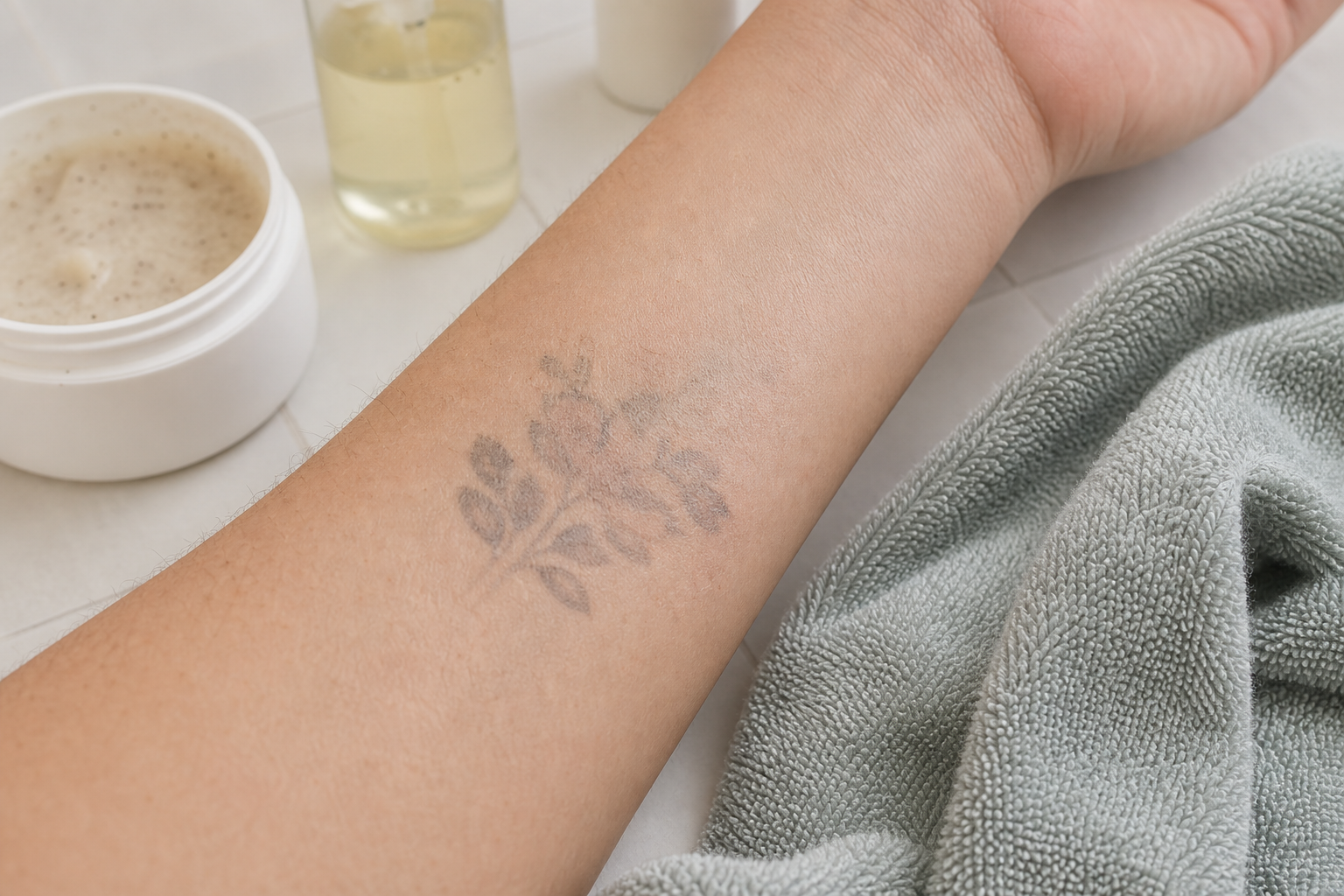
- Faded semi-permanent temporary tattoo on skin with a soft washcloth nearby