
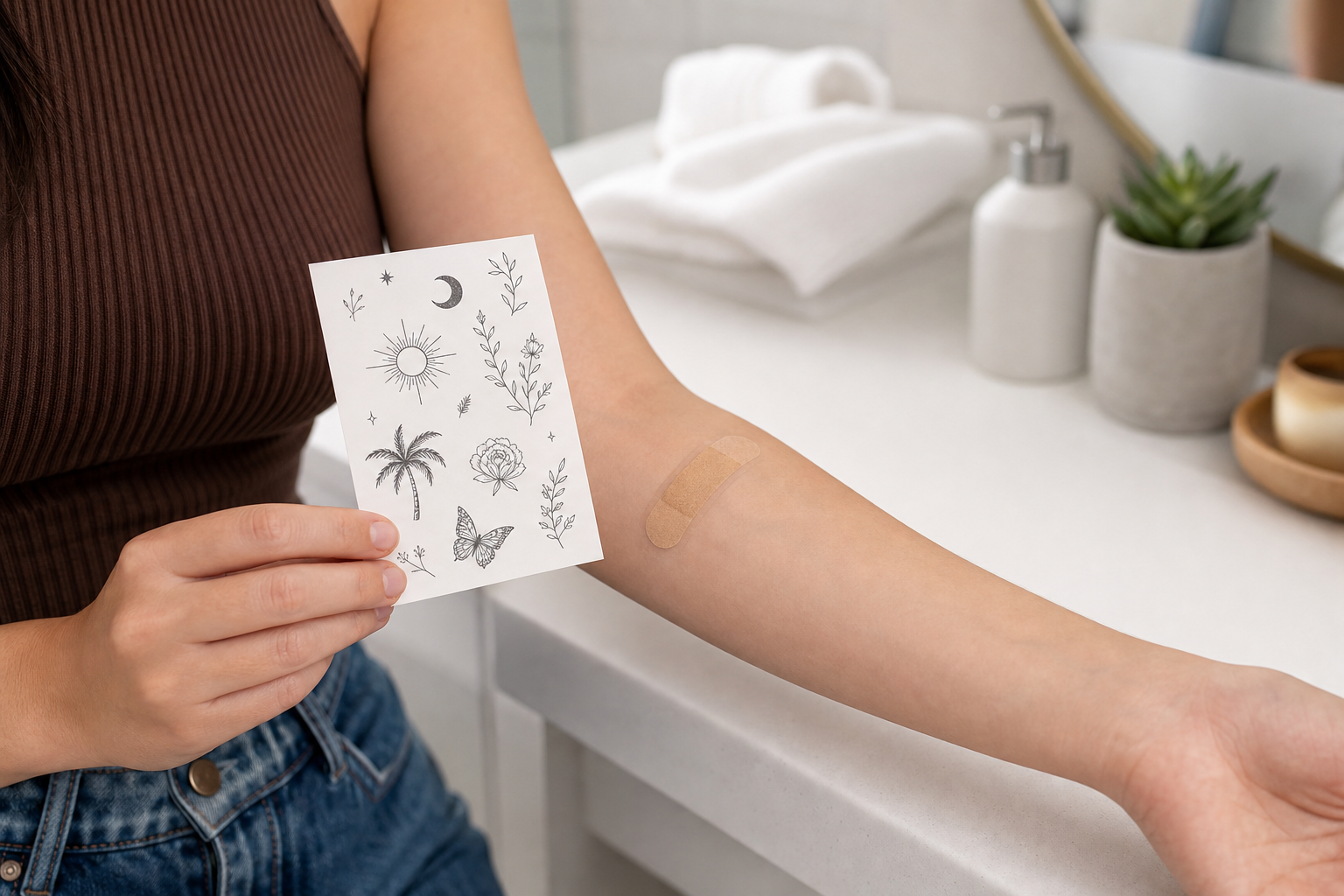
No. Do not apply a temporary tattoo over broken, irritated, infected, sunburned, peeling, or freshly sensitive skin. Wait until the area has fully closed and feels calm again. A standard temporary tattoo sits on the skin surface, but it still uses a transfer layer, colorants, and ingredients that help the design adhere. Broken skin needs simple care and protection, not decoration.
If you only need the short rule, it is this: temporary tattoos are for clean, dry, intact skin. If the area is open, scabbed, sore, hot, itchy, swollen, weeping, or actively healing, choose another placement and let that skin recover first.
What Counts as Broken or Irritated Skin?
Broken skin does not only mean a deep cut. For temporary tattoo use, it also includes smaller or less dramatic skin problems that make the surface less protected than normal.
- cuts, scratches, scrapes, or abrasions
- scabs, peeling skin, or skin that recently bled
- fresh sunburn or skin that feels hot and tender
- rashes, hives, active eczema flares, or inflamed bumps
- open acne, picked spots, or irritated razor bumps
- freshly shaved skin that stings, burns, or feels raw
- skin with pus, spreading redness, warmth, swelling, or increasing pain
If any of those describe the area, skip the tattoo there. Our broader guide to temporary tattoo safety uses the same rule: avoid broken, sunburned, freshly shaved, or irritated skin.
Why a Temporary Tattoo Is a Bad Idea on Damaged Skin
A water-transfer temporary tattoo is usually simple to apply on healthy skin: press the design onto clean skin, wet the backing, peel it away, and let the surface film dry. That does not make it a wound covering. The FDA explains in its temporary tattoo fact sheet that decal temporary tattoos may use dyes, backing materials, and ingredients that help the image adhere to the skin, and that some people have reported reactions to temporary tattoos. That is one reason to keep them on intact skin only.
It can sting or irritate the area
When skin is already scratched, scraped, sunburned, or inflamed, it may react more easily to pressure, moisture, rubbing, colorants, or remover. The American Academy of Dermatology explains that contact dermatitis can happen when something that touches the skin irritates it or triggers an allergic reaction. You do not need to panic about every temporary tattoo, but you should not put a new cosmetic layer directly over skin that is already upset.
It may interfere with basic wound care
For minor cuts, the AAD recommends cleaning the cut, protecting it, and keeping it covered until it heals. A temporary tattoo does the opposite: it adds a decorative film and usually requires rubbing or oil-based removal later. That is not what healing skin needs.
A reaction can be harder to read
If a design covers a scratch or irritated patch, it becomes harder to see whether redness, swelling, warmth, pus, or pain is improving or getting worse. Those signs matter. The FDA’s broader overview of tattoos, temporary tattoos, and permanent makeup lists infections and allergic reactions among possible tattoo-related adverse effects, so questionable skin should stay visible and easy to monitor.
What Should You Do Instead?
Choose another spot, or wait. That is the most practical answer.
- If the skin is open or scabbed: do not cover it with a temporary tattoo.
- If the area is red, hot, painful, itchy, or swollen: leave it alone and do not test a product there.
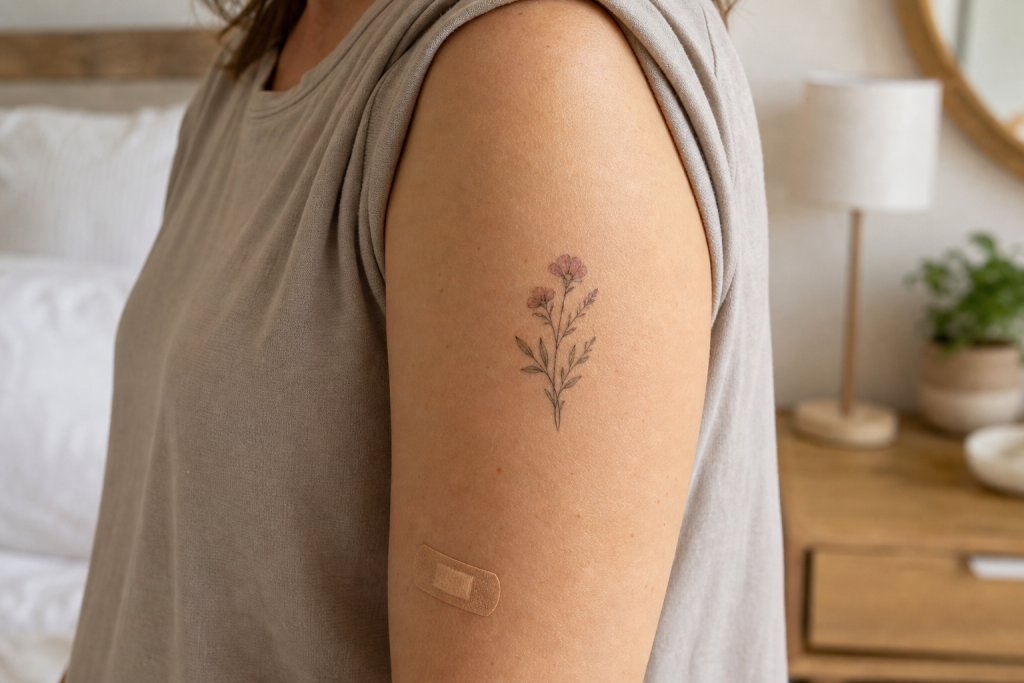
- If the cut is nearby: you may be able to place a small tattoo on intact skin beside it, but only if the design does not touch the wound, bandage, or irritated edge.
- If you need a photo or event look: move the tattoo to a smooth, intact area such as the upper arm, shoulder, outer forearm, ankle, or calf.
If you are new to applying temporary tattoos, start with our step-by-step guide on how to apply a temporary tattoo. The clean-skin rule matters for both appearance and comfort.
When Is It Okay to Apply One Again?
Wait until the skin looks and feels normal for you. In practical terms, that means the surface is closed, no longer bleeding or weeping, not scabbed, not peeling, not warm or swollen, and not painful to touch.
For sensitive skin, use a small design first and choose a low-friction area. Remove it if you feel burning, strong itching, swelling, or pain. This is especially important if you have reacted to adhesives, hair dye, face paint, cosmetics, or body-art products before.
What If You Already Applied One Over Broken Skin?
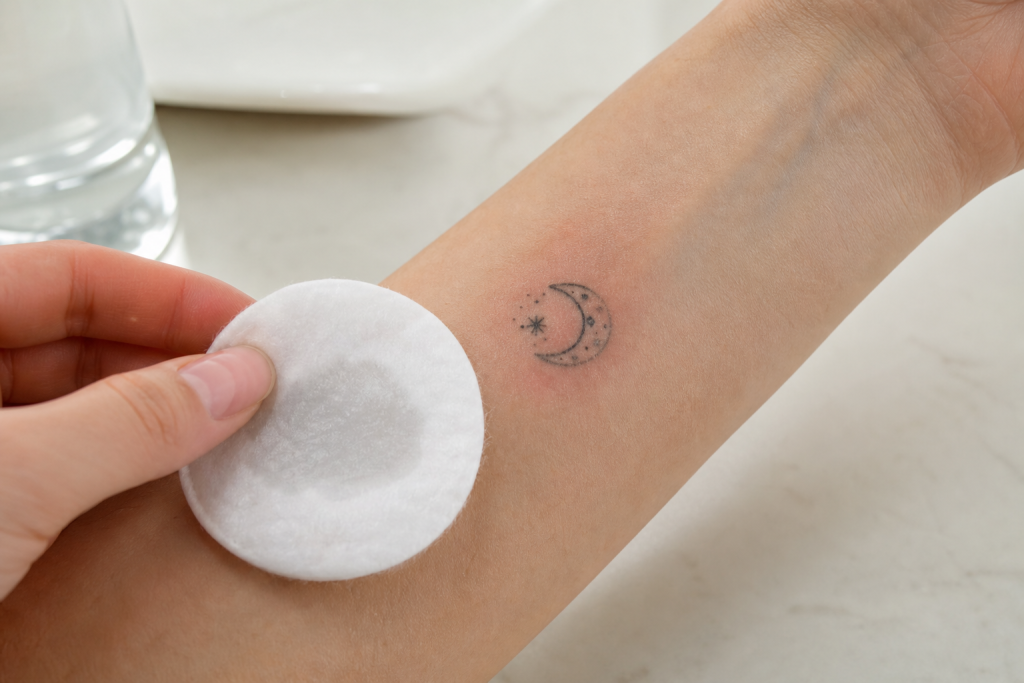
If it feels fine and the skin underneath is not actually open, watch the area carefully. But if the tattoo stings, burns, feels hot, becomes painful, or the skin looks more irritated, remove it gently and stop using products on that same spot.
Do not scrub. For a standard surface decal, a soft cotton pad with micellar water, makeup remover, or baby oil can help loosen the design. Our guide to removing a temporary tattoo without irritating your skin explains the gentler options in more detail.
Seek medical advice if the area becomes increasingly painful, swollen, warm, blistered, weeping, or shows pus or spreading redness. This article is general product guidance, not medical diagnosis.
Can You Put a Temporary Tattoo Near Broken Skin?
Sometimes, but keep distance and use judgment. A small temporary tattoo on intact skin near a covered minor scratch is different from placing the design across the scratch itself. Keep the tattoo away from the wound edge, avoid rubbing the bandage, and choose a spot where clothing will not press the design into irritated skin.
If the surrounding skin also looks red, swollen, peeling, or sensitive, move the tattoo somewhere else entirely.
Safer Places to Put a Temporary Tattoo
For most adults, temporary tattoos look and wear best on smooth, intact, low-friction skin. Good options often include the upper arm, shoulder, outer forearm, calf, or ankle. Hands, fingers, joints, waistbands, and shoe-rub areas tend to wear faster and may be less comfortable if the skin is already sensitive.
If you are choosing a design for an outfit, event, or photo, browse temporary tattoo stickers first, then match the size to a healthy placement area. For more placement ideas, see our guide to the best places to put a temporary tattoo.
Frequently Asked Questions
Can I cover a cut with a temporary tattoo?
No. Do not use a temporary tattoo as a cover for a cut, scrape, scab, or open area. Let the skin heal first.
Can I put a temporary tattoo over a scar?
Only if the scar is fully healed and the skin is closed, calm, and not painful or irritated. Fresh scars, healing wounds, and recently treated skin should be left alone unless a medical professional has told you otherwise.
Can I use a temporary tattoo over acne?
Avoid active, inflamed, picked, or open acne. If the skin is smooth, closed, and not irritated, a small tattoo nearby may be fine, but do not use a tattoo to hide a raw or painful breakout.
Can I apply a temporary tattoo over eczema or a rash?
Do not apply one over an active rash, eczema flare, hives, or itchy inflamed skin. Wait until the skin is calm and consider a small patch test first.
Can I put a temporary tattoo on sunburned skin?
No. Sunburned skin is already irritated. Let it recover before applying any temporary tattoo, adhesive decoration, or heavy cosmetic product to that area.
Should I remove a temporary tattoo if it starts stinging?
Yes. Remove it gently and stop using that product on the same area. If discomfort, swelling, blistering, warmth, spreading redness, or pain continues, get medical advice.
Final Takeaway
A temporary tattoo is for intact skin, not broken skin. If the area is cut, scraped, scabbed, sunburned, irritated, infected, or actively healing, wait or choose another placement. The design will look better, removal will be easier, and your skin gets the simple thing it needs most: time to recover.
What the guide images show
Key visual information is repeated below as text so the design, scale, placement, and process do not depend on images alone.
- Temporary tattoos should go on clean, intact skin, not over cuts, scrapes, or irritated areas.
- Small temporary tattoo placed on smooth intact upper arm skin away from a covered scratch
- Cotton pad and remover beside a temporary tattoo on slightly red irritated skin, suggesting gentle removal
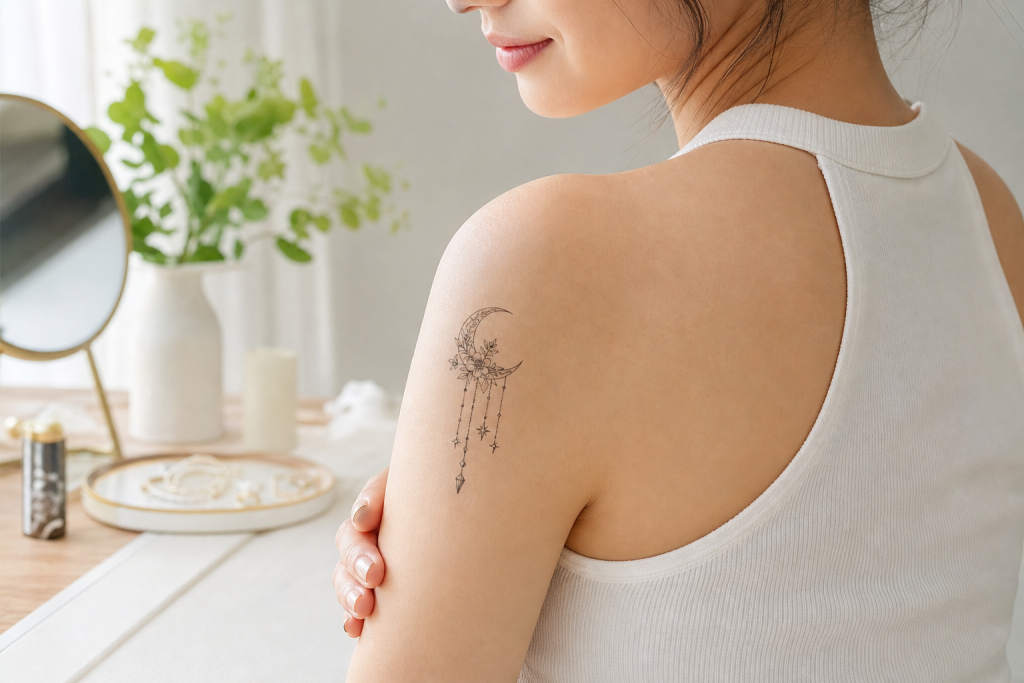
- Temporary tattoo on healthy shoulder skin with clean styling items nearby