

The best places to put a temporary tattoo are smooth, clean, low-friction areas such as the upper arm, shoulder, outer forearm, collarbone, ankle, calf, and upper back. For the longest wear, avoid oily skin, heavy bending areas, tight clothing edges, and places that get washed or rubbed often.
Placement changes everything. The same temporary tattoo can look polished on the shoulder, wear down quickly on the hand, or crease around a joint. This guide focuses on standard water-transfer temporary tattoo stickers, not henna, jagua, semi-permanent stains, or permanent tattoo ink.
Quick Answer: Choose Smooth, Clean, Low-Friction Skin
A temporary tattoo works best when the printed layer can sit flat on the skin. That usually means choosing an area that is:
- smooth enough for the full design to touch the skin evenly
- easy to press during application
- not too oily or sweaty at the moment of transfer
- not rubbed constantly by sleeves, straps, waistbands, watches, or shoes
- not bending deeply every few seconds
If you are still choosing a design, browse our temporary tattoo stickers collection with placement in mind. A small star, a long floral strip, and a large shoulder piece need different body areas.
Best Places for Beginners
If this is your first time applying a temporary tattoo, start somewhere you can see and reach easily. The outer forearm, upper arm, wrist outside, ankle, calf, and shoulder are usually beginner-friendly.
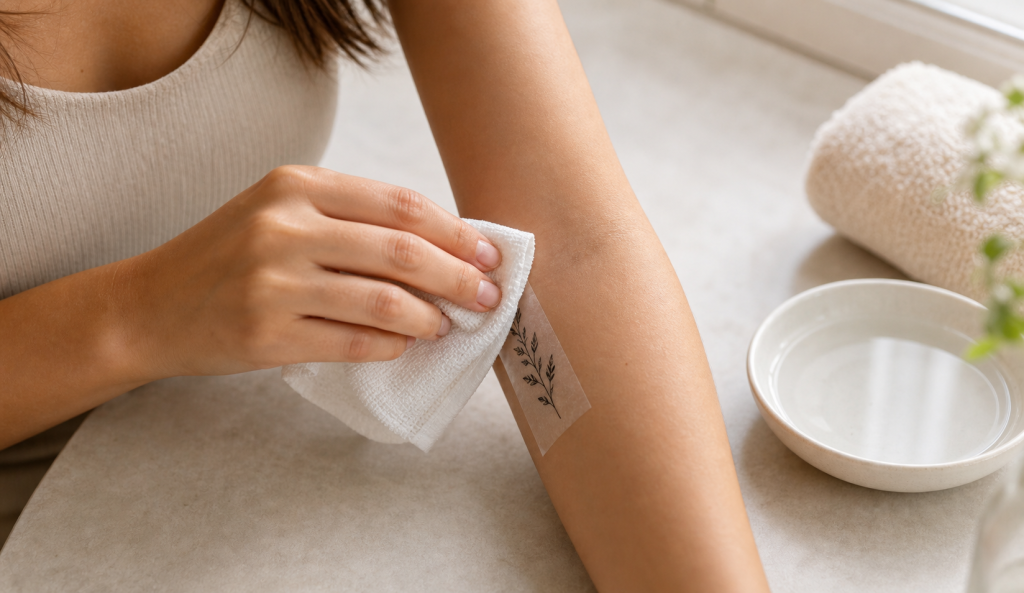
These areas are easier because you can hold the tattoo sheet steady, press evenly, and peel the backing slowly. They also give you enough room to check whether the design is straight before you wet the paper.
For a first attempt, avoid the back of the neck, inner upper arm, fingers, ribs, or any place where you need a mirror and a very steady hand. If the tattoo is for an important event, apply one test design before the day itself.
Best Places for Photos, Parties, and Outfits
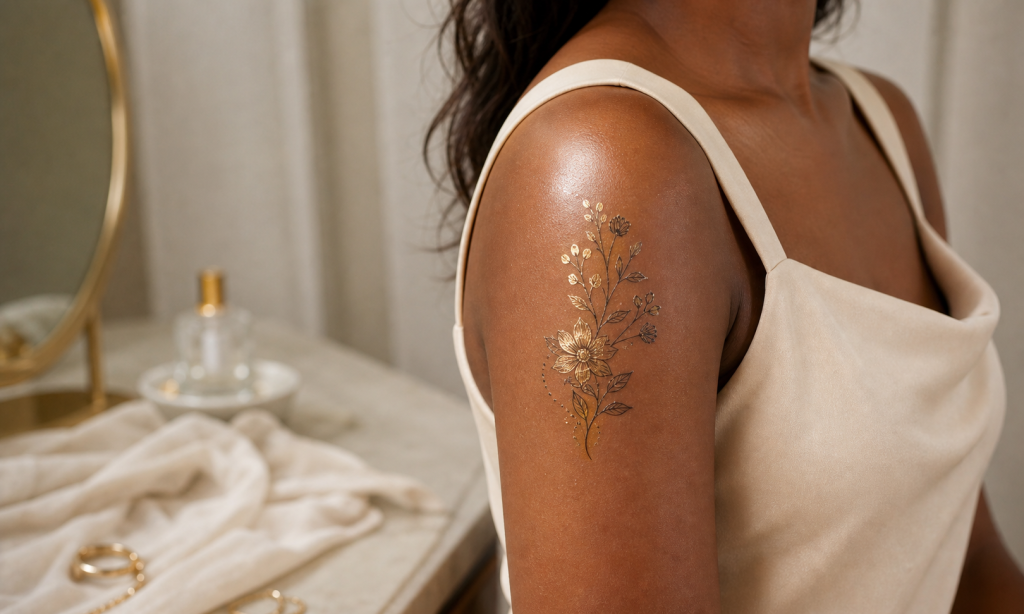
For photos and styling, the best placement is often the area that naturally works with your outfit. A collarbone tattoo can look elegant with an open neckline. A shoulder or upper arm tattoo works well with sleeveless tops. An ankle or calf tattoo pairs nicely with sandals, skirts, shorts, and festival looks.
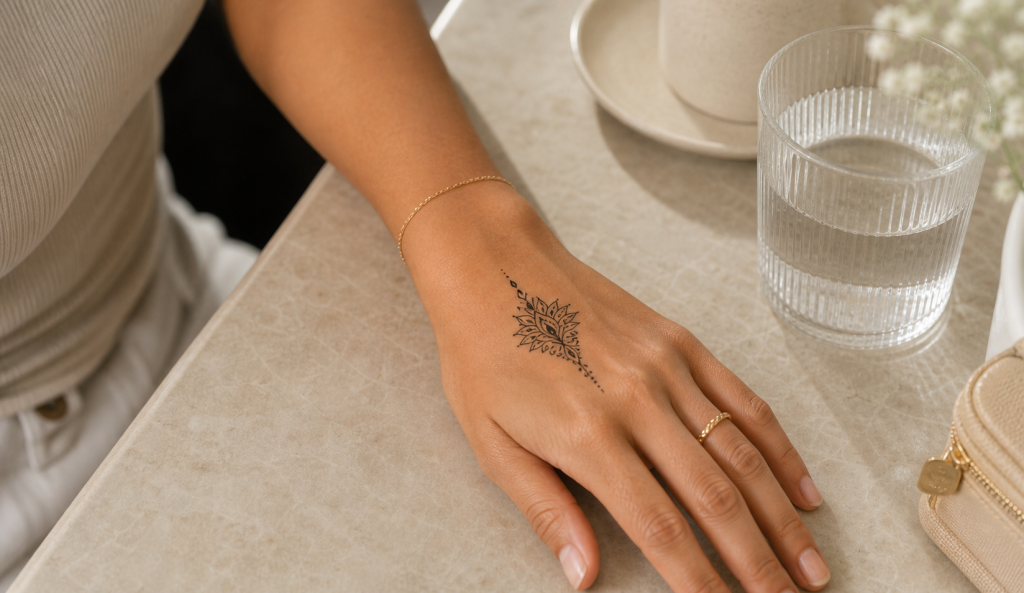
Hands, fingers, and the side of the neck can look striking in photos, but they usually wear faster. Hands are washed often, fingers bend constantly, and neck placement can rub against hair, collars, perfume, or skincare. Use these areas when the look matters more than long wear.
If you are using a temporary tattoo to preview a future permanent tattoo placement, see our guide on using temporary tattoos to test tattoo placement. A temporary tattoo can help you understand size, visibility, and daily comfort before making a bigger decision.
Where Should You Place a Temporary Tattoo So It Lasts Longer?
For longer wear, choose a place with less rubbing and less oil. The upper arm, outer forearm, shoulder, upper back, calf, and outer ankle often perform better than palms, fingers, elbows, knees, or waistline areas.
Water alone is not always the biggest problem. Friction, oil, sunscreen, body lotion, tight clothing, towels, and repeated touching can lift the edges sooner. If durability is your main goal, our article on how to make temporary tattoos last longer explains the wear logic in more detail.
Places That Look Good but May Wear Faster
Some placements are beautiful but high-maintenance. They are not wrong, but they need realistic expectations.
- Fingers and hands: stylish and visible, but frequent washing and bending shorten wear.
- Palms: usually a poor choice because the skin moves, sweats, and touches things constantly.
- Elbows and knees: bending can crack or wrinkle the design.
- Feet and toes: shoes, socks, and sweat can rub the tattoo away quickly.
- Waistline and bra strap areas: clothing pressure can lift the edges.
- Inner arm: soft and pretty, but skin-to-skin rubbing can affect wear.
If you still love one of these placements, use a smaller design and apply it close to the time you want to show it.
How Placement Changes by Design Size
Small temporary tattoos are flexible. They can work on the wrist, ankle, hand, collarbone, cheek area, shoulder, or behind the ear, as long as you avoid the eyes, lips, and irritated skin.
Long designs usually look better when they follow a natural line of the body. Try the forearm, calf, collarbone line, outer ankle, or upper arm. Give the design enough straight skin so it does not fold into itself.
Large designs need the most planning. A shoulder, upper arm, upper back, chest area, or thigh gives more flat space than a wrist or hand. If you are new to large temporary tattoos and need the look for a fixed event time, buy an extra sheet as a backup. Larger sheets are easier to wrinkle, shift, or peel too soon if you are not used to applying them.
Metallic Bands and Small Accents Need Different Space
For a metallic temporary tattoo, start with the shape of the artwork rather than the shine alone. A band or ornamental strip asks the eye to follow a line; a tiny star, moon, or floral detail works more like a small point of light. Choose a body area that gives that shape enough room to read clearly before you decide on the exact sheet.
Use a Continuous Line for Bands and Ornamental Strips
Band-style designs look most intentional when they can follow a clean visual path. A wrist or ankle can frame a short wraparound-style detail, while an outer forearm gives a longer ornamental strip more room to travel without competing with a bend or a busy seam. The goal is not to make every band look like real jewelry; it is to let a repeated line or border look deliberate on the skin.
The Metallic Bracelet Band Temporary Tattoo Sheet is one example of a sheet with layered band-like details that can be used as a full border or trimmed into smaller accents. For the wider range of gold, celestial, floral, charm, and band options, browse the Metallic Temporary Tattoos collection.
Give Small Metallic Accents Room to Read Clearly
A small metallic accent does not need a long surface, but it does need a little clear skin around it. A compact star, moon, or floral detail can act as a quiet punctuation mark near an open collarbone, shoulder, cheek, or the outside of the wrist. If other bright details are already close by, leave more space around the tattoo so it does not disappear into the rest of the look.
If you are deciding on one exact effect, use the more specific guides for a bracelet-style look, an anklet-style accent, a design beside a watch or bracelet, or a celestial wrist-versus-ankle choice. Once you have chosen the kind of space you want to use, check the product page for the individual design before applying it.
Before You Apply: Check the Skin and the Moment
Apply temporary tattoos only to clean, dry skin. Do not put them over lotion, sunscreen, body oil, makeup, fresh self-tanner, irritated skin, broken skin, or a rash. The transfer may fail, and uncomfortable skin is not the right surface for decoration.
The FDA’s information on tattoos and temporary tattoos notes that some people report skin reactions from tattoo products. The American Academy of Dermatology explains that contact dermatitis can happen when something touching the skin irritates it or triggers an allergic reaction, and its treatment guidance emphasizes avoiding the cause when contact dermatitis develops.
For a fuller safety overview, read Are Temporary Tattoos Safe?. For the actual transfer steps, use our temporary tattoo application guide.
Final Takeaway
The best temporary tattoo placement depends on your goal. For easy application, choose the outer forearm, upper arm, ankle, calf, or shoulder. For photos and outfits, choose the area that frames the look. For longer wear, choose smooth skin with less oil, bending, and friction.
Temporary tattoos are flexible, so placement can be playful. Just match the design size to the body area, keep the skin clean and dry, and avoid high-rub areas when you need the tattoo to last.
What the guide images show
Key visual information is repeated below as text so the design, scale, placement, and process do not depend on images alone.
- Good temporary tattoo placement depends on both the design and the body area.
- The outer forearm is easy to see, press, and control during application.
- Shoulder and upper arm placements can frame an outfit without constant hand friction.
- Hand placement can look beautiful, but washing and movement may shorten wear time.
- Beginner-friendly temporary tattoo placement on the outer forearm.
- Temporary tattoo on the upper shoulder styled for an outfit or event.
- Temporary tattoo on the hand showing a stylish but high-friction placement.