
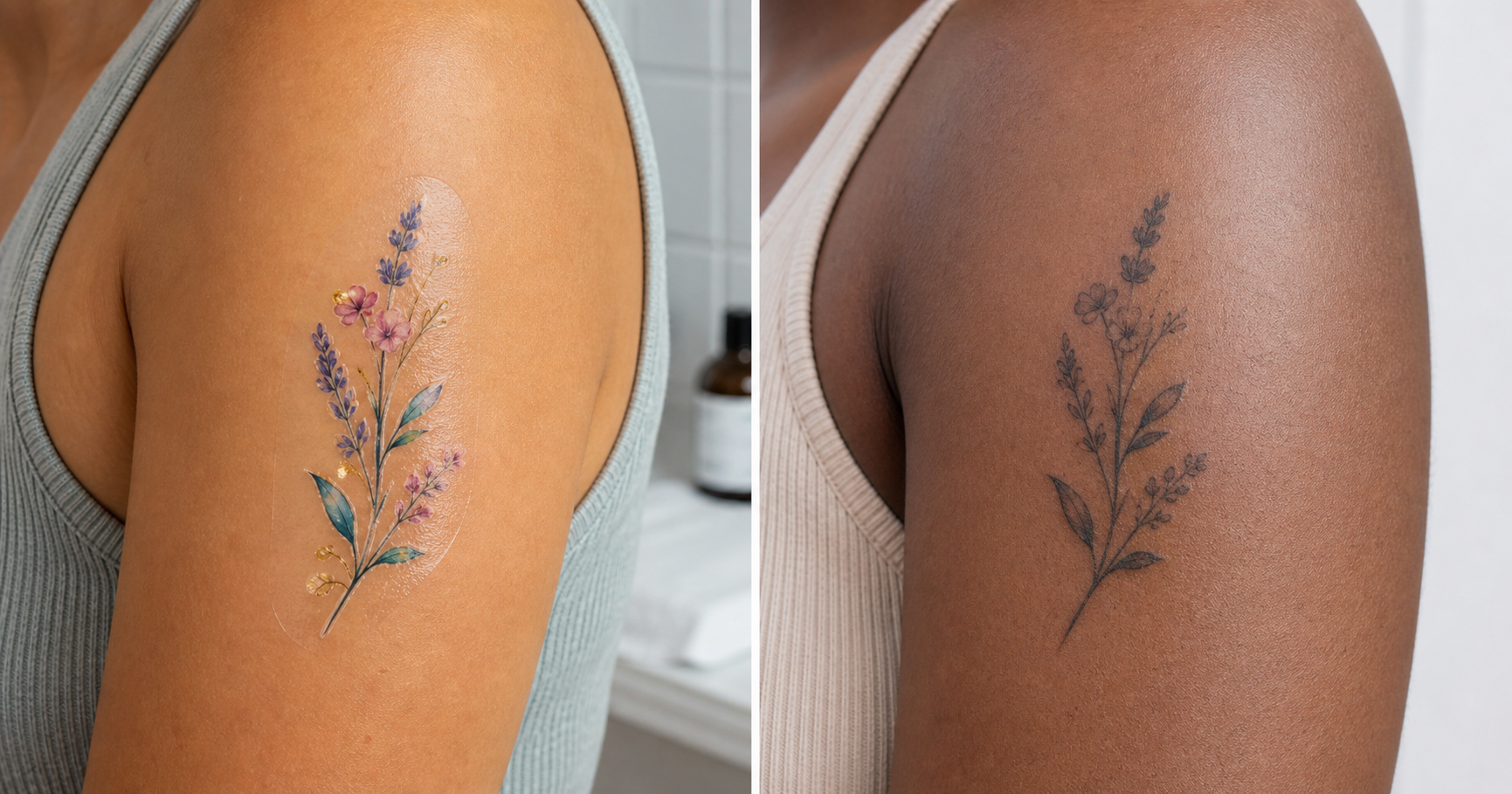
Yes, a temporary tattoo can be a useful way to test permanent tattoo placement before you commit. It can help you judge size, direction, visibility, body movement, clothing coverage, and how you feel about seeing the design on yourself in daily life.
But it is important to use the test for the right purpose. A temporary tattoo can preview placement and overall visual balance. It cannot perfectly predict permanent ink, fine-line detail, pain, healing, aging, or the final work of a tattoo artist.
If you are still deciding whether you want a tattoo at all—not only where to place one—start with Why Choose Temporary Tattoos? to separate design, placement, and commitment questions.
Temporary and permanent tattoos are also different materials. Temporary designs can use brighter printed color, watercolor effects, metallic-looking finishes, powder effects, and many ready-to-wear styles. Permanent tattoos are much more durable and are not restricted by decal-sheet size or seams in the same way, but they can soften, fade, blur, or change with skin and body changes over time. The two should not be treated as direct equivalents.
Can You Use a Temporary Tattoo to Test Tattoo Placement Before Getting Real Ink?

Yes. A temporary tattoo is especially helpful for testing:
- the general size of the design
- where it sits in relation to a joint, bone, or muscle
- whether the design faces the right direction
- how visible it is with different clothing
- how it looks in mirrors and photographs
- whether you still like the placement after living with it for a few days
Think of the temporary tattoo as a wearable placement mockup. It gives you better information than holding a paper drawing against your body, but it is still a preview rather than a promise of the permanent result.
What a Temporary Tattoo Can Help You Test
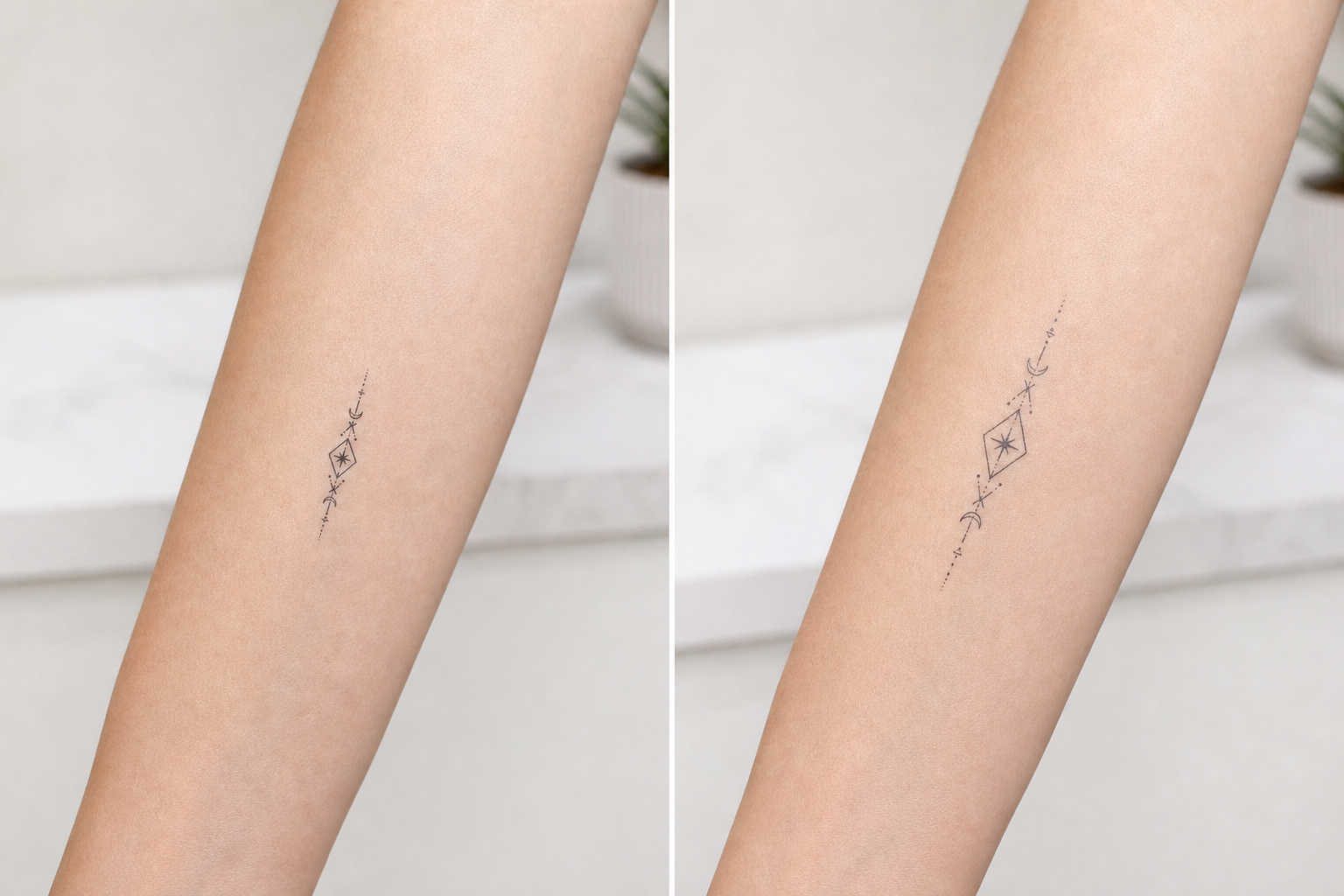
Size and proportion
A design that looks small on a screen or sheet can feel much larger once it is on the body. Temporary wear lets you see how the design relates to the width of your wrist, the curve of your shoulder, the length of your forearm, or the open space around your collarbone.
Look at it from more than one distance. Check the details close up, then step back. A placement can look balanced in a close mirror but too small or too isolated from across the room.
Direction and alignment
Some designs have a clear top and bottom. Flowers grow upward, birds face a direction, and long ornamental pieces can follow or fight against the natural line of the body. A temporary tattoo helps reveal whether the design feels upright when your arm is relaxed, not only when you twist it toward yourself.
Photograph the test from the front, side, and back when possible. This is especially useful for shoulders, upper arms, ankles, and other placements that are difficult to judge in a mirror.
Visibility and clothing coverage
Wear the temporary tattoo with the clothes you actually use: workwear, short sleeves, formal clothing, workout clothes, swimwear, watches, jewelry, socks, or shoes. You may discover that a placement is more visible than expected, or that a sleeve, strap, or neckline cuts through the design.
Movement and body shape
Bend, turn, reach, walk, and sit normally. A flat design can curve, compress, or rotate when it is placed near a wrist, elbow, shoulder, ankle, or rib area. That movement is useful information even though the temporary transfer itself will not behave exactly like permanent ink.
Your emotional reaction to the placement
The most valuable part of the test may be how ordinary the tattoo becomes. Notice whether you keep admiring it, forget about it comfortably, feel distracted by it, or wish it were slightly higher, lower, larger, or easier to cover.
Temporary and Permanent Tattoos Are Not Direct Equivalents
A placement test works best when you understand the material differences.
Temporary tattoos can offer richer surface effects
Temporary tattoos are printed products that sit on the skin surface. This makes it possible to use a wide range of decorative looks, including bright printed color, watercolor gradients, metallic-looking gold or silver, glitter-like details, powder effects, and very fine ready-to-wear artwork. The FDA’s temporary tattoo fact sheet also distinguishes decal-style temporary tattoos from henna, black henna, and other products that work differently on the skin.
Those surface effects do not always translate directly into permanent tattoo pigment. Metallic shine, for example, depends on how light reflects from the temporary surface. Permanent ink sits in the skin and will have a different finish. Special temporary materials can also be more delicate around water, oil, and rubbing, as explained in our guide to waterproof temporary tattoos.
Large temporary tattoo coverage is harder to apply cleanly
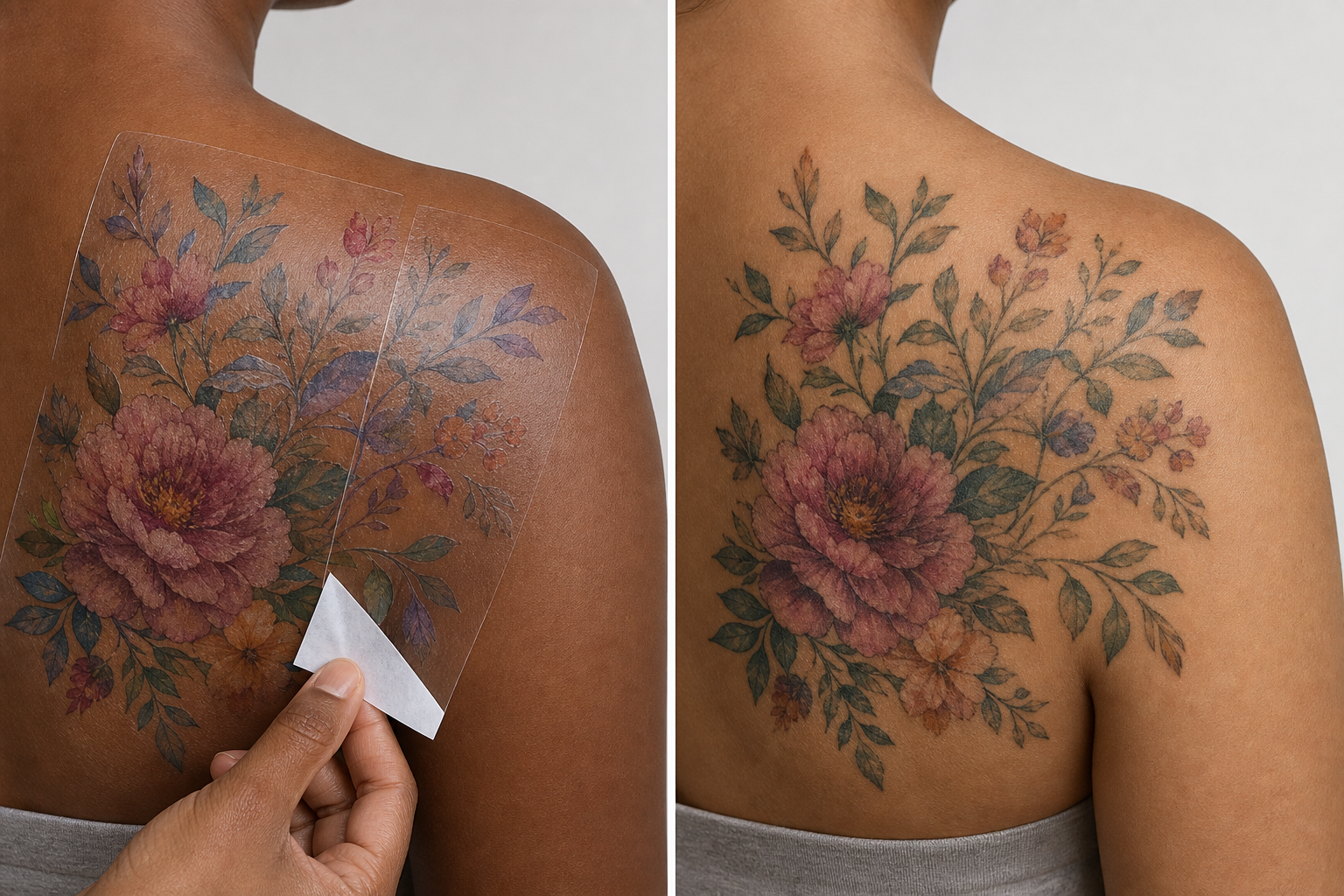
Small and medium temporary tattoos are easy to use as placement tests. Very large coverage is more difficult. A large transfer must make even contact across curves and moving areas. If several pieces are used together, every edge must align closely or visible gaps, overlaps, and seams can appear.
This does not mean large temporary tattoos are impossible. It means application difficulty rises with size, curvature, and the number of pieces that must meet. For a large back, chest, sleeve, or thigh concept, several smaller placement tests or a paper stencil may be more useful than trying to reproduce the entire project as one perfect temporary transfer.
Permanent tattoos are more durable and scalable, but they still change
Permanent tattoos are not restricted by printed sheet dimensions or transfer seams in the same way. An artist can scale and adapt a design to the body, although large work may require multiple sessions and careful planning.
Permanent does not mean visually unchanged forever. Lines and color can soften or fade, and the design can look different as skin ages, stretches, or changes shape. Sun exposure, placement, pigment, technique, and aftercare can also affect long-term appearance. The FDA’s tattoos and permanent makeup fact sheet provides additional context about permanent tattoo pigments and risks.
Use the temporary tattoo to answer, “Do I like this general placement?” Do not use it to assume, “The permanent tattoo will look exactly like this for life.”
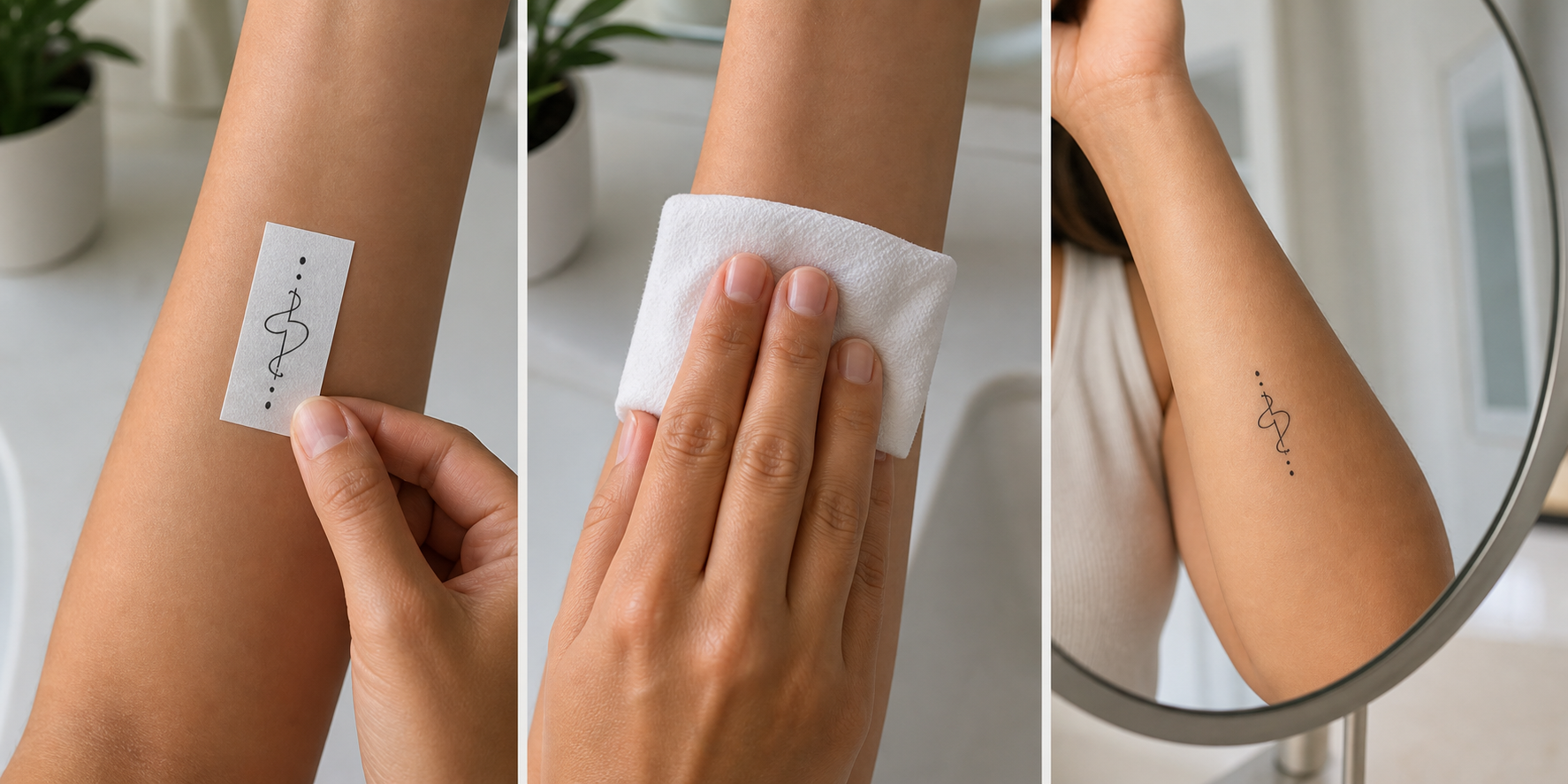
How to Test Tattoo Placement Step by Step
1. Choose the closest useful design
You do not need an exact copy to test basic placement. A ready-made temporary tattoo with a similar height, width, outline, and visual weight can help you test location and scale. A tall botanical design can stand in for another vertical design; a small geometric motif can help test a compact wrist or ankle placement.
2. Preview it with the backing still on
Before transferring, hold the tattoo against the body or use a paper shape cut to the same size. Mark the approximate top and bottom mentally, then check the position with your body relaxed.
3. Apply it to clean, dry skin
Remove lotion, oil, sunscreen, makeup, and sweat. Apply the temporary tattoo using even pressure and avoid sliding the backing. Our full temporary tattoo application guide covers the transfer process in more detail.
4. Check it from multiple angles
Use a full-length mirror and take photographs in natural poses. Ask someone else to photograph hard-to-see areas. Check the design while standing normally instead of turning the body into an unusual position just to view it.
5. Test it with real clothing and accessories
Wear sleeves, straps, watches, bracelets, necklaces, socks, and shoes that might interact with the placement. This can reveal both visibility concerns and friction points.
6. Live with it before deciding
A full day is more useful than a five-minute mirror check. If the temporary tattoo remains comfortable, wear it for several days and notice whether your opinion changes. Avoid forcing it to last longer than your skin is comfortable with. See our temporary tattoo safety guide if you have sensitive skin or notice irritation.
Ready-Made Design or Exact Custom Preview?
A ready-made temporary tattoo is usually enough when the question is about temporary tattoo placement: upper or lower, inner or outer arm, visible or hidden, horizontal or vertical, small or medium.
An exact temporary version is more useful when spacing, lettering, detailed composition, or precise dimensions are essential. Even then, it remains a surface print. It cannot reproduce how a tattoo artist will adapt line weight, shading, color, and negative space for permanent work.
Beauty of Papers offers ready-to-wear temporary tattoo styles rather than presenting this article as a custom permanent tattoo simulation service. The practical approach is to choose a design with a similar shape and scale, then use it to evaluate the location.
Can Temporary Tattoos Test Collarbone, Leg, or Arm Placement?
Yes. A ready-to-wear temporary tattoo can help compare scale, direction, visibility, clothing contact, and movement on the collarbone, leg, or arm. It previews placement, not the exact finish or long-term behavior of permanent ink.
Wrist and forearm
Check which direction the design faces when your arm hangs naturally. Test watch and sleeve contact. Remember that wrists move and rotate throughout the day.
Upper arm and shoulder
View the tattoo from the front, side, and back. Shoulder designs can look centered from one angle and shifted from another. Try different sleeve lengths.
Collarbone and upper chest
Test the relationship with necklines, straps, jewelry, and the natural curve of the collarbone. Check whether the design feels balanced when standing normally.
Ankle and lower leg
Wear the shoes, socks, and trousers you use most often. Look at the placement while standing and walking, not only while sitting with the leg turned toward you.
Hands, fingers, elbows, and other high-movement areas
These placements can be visually appealing, but movement, washing, bending, and friction affect temporary wear. A short test can still show visibility and direction, but early wear should not be mistaken for how permanent ink would behave.
Questions to Ask Yourself Before You Commit
- Does the design look right from a normal viewing distance?
- Is it the right size for this body area?
- Does it follow the body line when I stand naturally?
- Can I cover it when I need to?
- Do clothing or accessories cut through the design?
- Does it still feel right in photographs?
- Do I like seeing it every day, not only on the first day?
- Would moving it slightly improve the balance?
Take notes or save photographs from each test. Comparing two placements side by side is easier than relying on memory.
When to Talk to a Professional Tattoo Artist
Once the temporary test helps you choose a general area, a professional tattoo artist can refine the permanent placement. Artists consider body flow, anatomy, stencil scale, line spacing, long-term readability, and how a design works with existing tattoos.
Bring your photographs and explain what you liked or disliked about the temporary test. The artist may recommend moving, rotating, enlarging, or simplifying the design. That is not a failure of the test; it is exactly how the test becomes useful information.
Frequently Asked Questions
Is It Worth Trying a Temporary Tattoo Before Your First Real Tattoo?
Yes, when your decision is about placement, approximate size, direction, visibility, or living with the idea. A ready-to-wear temporary tattoo cannot predict the exact ink, healing, pain, or aging of a permanent tattoo, but it can reveal whether the body area and visual scale still feel right after more than a mirror check.
How long should I test a tattoo placement?
Wear it for at least a full day if your skin is comfortable. Several days can give you a better sense of clothing, work, exercise, sleep, and daily visibility.
Does a temporary tattoo look like permanent ink?
Not exactly. It can preview shape and position, but surface shine, printed color, metallic effects, line sharpness, and skin interaction will be different.
Can I test more than one placement?
Yes. Testing the same approximate size on two or three areas is one of the best reasons to use temporary tattoos before making a permanent decision.
Can a temporary tattoo test a large sleeve or back piece?
It can test sections, boundaries, and visual direction, but reproducing a very large design with multiple temporary pieces is difficult because the pieces must align without gaps or overlaps. Paper stencils and consultation with an artist may be more practical for the full composition.
Will a permanent tattoo stay sharper than the temporary test?
A fresh permanent tattoo may have precise detail, but permanent work changes as it heals and ages. Long-term sharpness depends on design, line spacing, technique, placement, skin, sun exposure, and care. Ask the tattoo artist how the planned design is expected to age.
Final Takeaway
A temporary tattoo is a smart, low-commitment way to test permanent tattoo placement. Use it to evaluate size, direction, visibility, movement, clothing coverage, and your own comfort with seeing the design every day.
Just keep the comparison honest. Temporary tattoos can offer richer printed colors, more surface finishes, and a large variety of ready-made styles, but large seamless coverage is harder to apply. Permanent tattoos are far more durable and can be scaled beyond decal-sheet limits, but they can still soften, fade, and change over time. Test the placement with a temporary tattoo, then work with a professional artist to translate the idea into a permanent design.
What the guide images show
Key visual information is repeated below as text so the design, scale, placement, and process do not depend on images alone.
- A temporary tattoo can test placement, but its printed surface and finish do not look exactly like healed permanent ink.
- Adult checking temporary tattoo placement on the upper arm in a mirror
- Two temporary tattoo placement tests comparing size and direction on a forearm
- Large temporary tattoo pieces with a seam compared with a continuous permanent tattoo
- Three visual steps for previewing, applying, and checking temporary tattoo placement