

Fake tattoos do not have one universal shelf life. For an unused water-transfer sheet, follow any date or storage instructions on the package first. If no date is shown, judge it by its storage history, packaging, protective film, backing paper, and print condition. Replace a questionable sheet when the result matters, especially before a wedding, trip, festival, or photo session.
Shelf Life Is Not the Same as Wear Time
Shelf life describes how long an unused product can be expected to look and work as intended while remaining suitable for use. Wear time starts only after a temporary tattoo has been transferred to skin.
An unused sheet needs a packaging-and-condition check. A tattoo already on the skin has a different clock: its total visible wear and usually shorter best-looking or photo-ready window. Friction, sweat, soaking, sunscreen handling, clothing, and towel drying affect that result. For those questions, use our guide to how long temporary tattoos last.
Is There One Expiration Date for All Temporary Tattoos?
No. Water-transfer decals, stain-style products, henna or jagua products, and skin markers are not interchangeable. Manufacturers may use different materials, packaging, and stability checks. This article focuses on unused standard water-transfer decal sheets.
The FDA explains that cosmetic shelf life varies with the product, how it is used, and how it is stored. It also says U.S. law does not require cosmetics to carry one specific shelf life or an expiration date, while manufacturers remain responsible for product safety and determining shelf life. A missing date therefore does not mean a sheet lasts forever.
Use this order of authority:
- Follow a printed expiration date, storage direction, or manufacturer instruction.
- If the label is unclear, contact the seller or manufacturer with the SKU or batch information.
- If no product-specific answer is available, make a conservative decision from the storage history, physical condition, and importance of the occasion.
How Should You Store Unused Temporary Tattoos?
Keep the original package closed and identifiable
Keep the protective film, backing paper, package, SKU, and batch information together. Avoid touching the transfer surface. Product-specific storage directions take priority over general advice.
Choose a cool, dry, shaded place
The FDA notes that moisture, temperature changes, sunlight, and air exposure can change a cosmetic product’s color, texture, or smell. Do not leave temporary tattoo sheets in a hot car, a damp bathroom, direct sun, or beside a heater. Keep them clean, dry, and protected from temperature extremes.
Beauty of Papers stores flat sheets flat when practical to avoid a hard fold. This is a handling observation, not a laboratory-tested shelf-life promise.
Plan event backups separately
For a wedding, festival, trip, or photo session, record when the sheet arrived and check it early. Keep one unopened backup when the look cannot fail.
How Can You Check an Old Temporary Tattoo Before Using It?
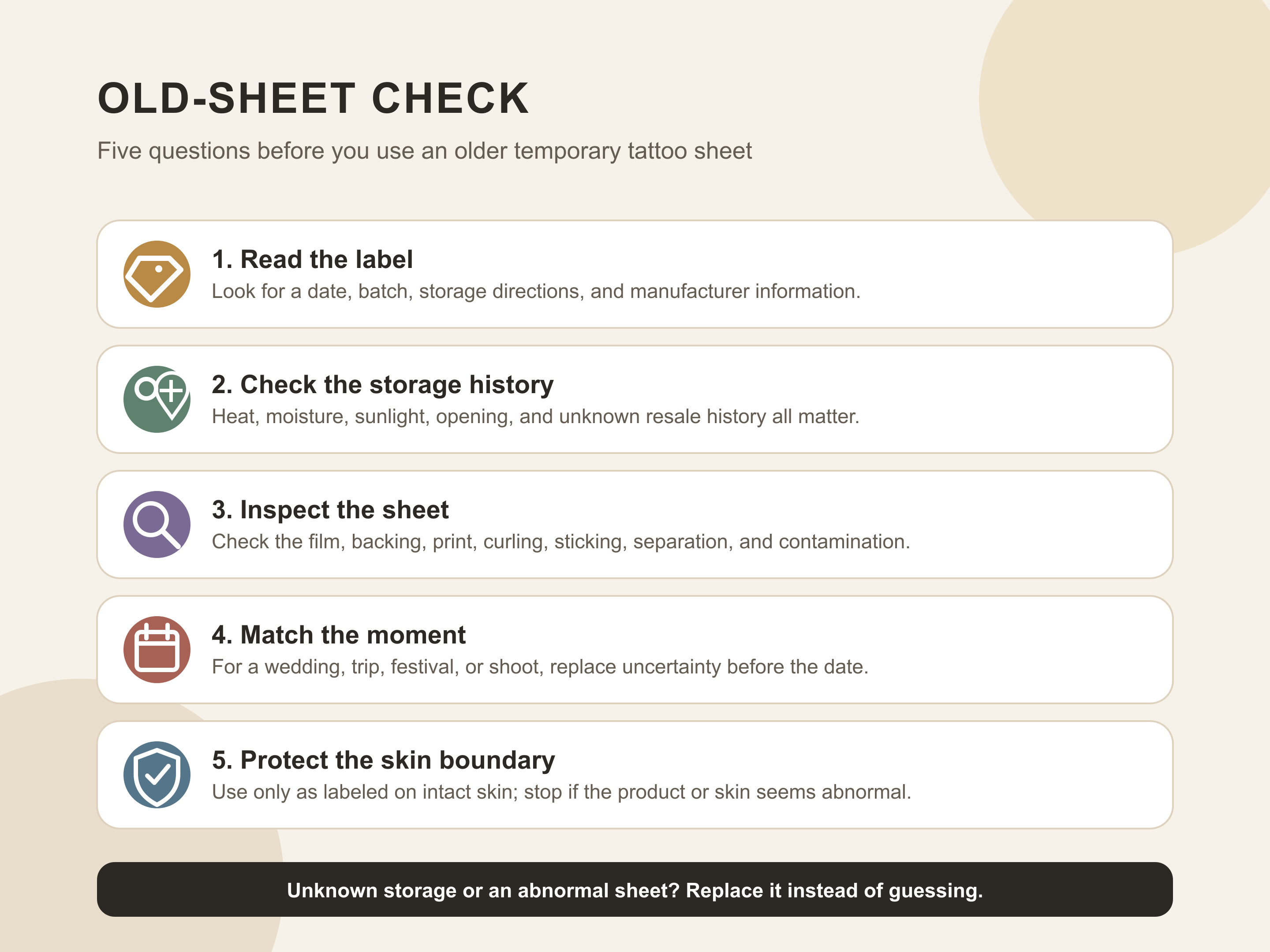
Use the Beauty of Papers Old-Sheet Check: label, storage, physical condition, occasion, and skin boundary.
- Read the label. Look for a date, batch, storage directions, ingredient information, and a manufacturer or seller contact.
- Check the storage history. Consider heat, moisture, sunlight, opening, and whether the sheet came from an unknown reseller.
- Inspect the sheet. Check for a lifted protective film, damp or stuck backing, severe curling, separation, foreign material, or an unusual change in color or smell.
- Match the moment. A casual test has more room for failure than a wedding, trip, festival, or shoot.
- Protect the skin boundary. Follow the label and use the product only on clean, intact skin. Do not use an uncertain sheet near the eyes, lips, broken skin, or irritated skin.
| What you find | Decision | Next step |
|---|---|---|
| Date is current, storage is known, and the sheet looks normal | Reasonable to follow the label | Try a non-critical motif first if the occasion matters |
| No date, but the original package is intact and storage is known | Conditionally usable, not guaranteed | Test before relying on it for an event |
| Heat, moisture, sunlight, or storage history is unknown | Performance is uncertain | Contact the seller or replace it for a fixed-date event |
| Film has lifted, backing is damp or stuck, layers have separated, or the sheet has foreign material or an unusual color or smell | Do not rely on it | Replace the sheet; do not try to repair it with heat, glue, or extra soaking |
| Skin becomes red, itchy, painful, swollen, or burning after use | Stop using it | Remove it gently and follow appropriate care guidance |
When Should You Replace the Sheet Instead of Testing It?
Replace the sheet when its condition is abnormal, its history is unknown, or the occasion has no room for a failed transfer. Use the same rule for sensitive placements or unverifiable product information.
Do not try to “revive” an old sheet with heat, added glue, longer soaking, or harder rubbing. Those methods are not supported shelf-life tests and can create new problems. If the sheet does not release normally, a fresh sheet is the cleaner decision.
The FDA advises consumers to read cosmetic labels, protect products from temperature extremes, and discard products that show unusual changes. Its temporary tattoo fact sheet also distinguishes decal tattoos from henna products and notes that reactions have been reported with some temporary tattoos. For skin-use boundaries, see our temporary tattoo safety guide.
Planning Temporary Tattoos for a Wedding, Festival, or Trip
Work backward from the event date. Allow time for delivery, inspection, and one backup test. Then use the application guide for the transfer and the wear-care guide afterward.
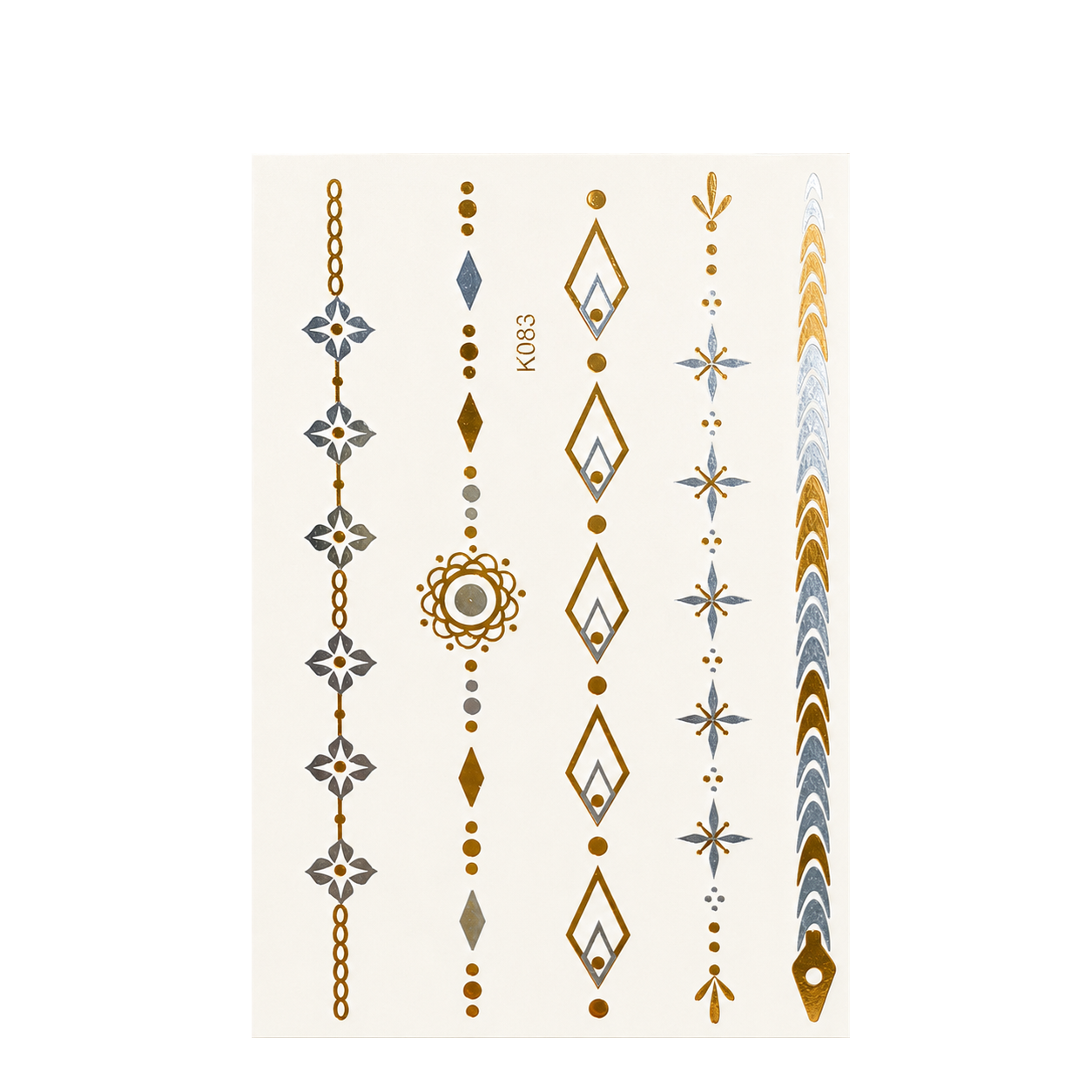
Beauty of Papers currently offers ready-to-wear water-transfer sheets, but our live product records do not state one universal shelf life for every SKU. That is why we do not turn a general storage rule into a fixed years-long promise. If you need a fresh design for a date-sensitive plan, browse the current temporary tattoo shop and verify the exact product information before ordering.
Summary
There is no universal shelf life for every fake tattoo. Follow the exact label or manufacturer information first. If no date is available, check the storage history, protective film, backing paper, print condition, and importance of the occasion. When storage is unknown or the sheet looks abnormal, replace it instead of guessing.
What the guide images show
Key visual information is repeated below as text so the design, scale, placement, and process do not depend on images alone.
- is shown on its verified source model, upper-arm placement, pose, and camera view. This styling image does not document shelf life, motif dimensions, or a wear test.
- Five-step checklist for checking the label, storage history, physical condition, occasion, and skin boundary of an older temporary tattoo sheet
- Complete metallic gold and silver temporary tattoo sheet shown unused on a clean white background
Leave a Reply