
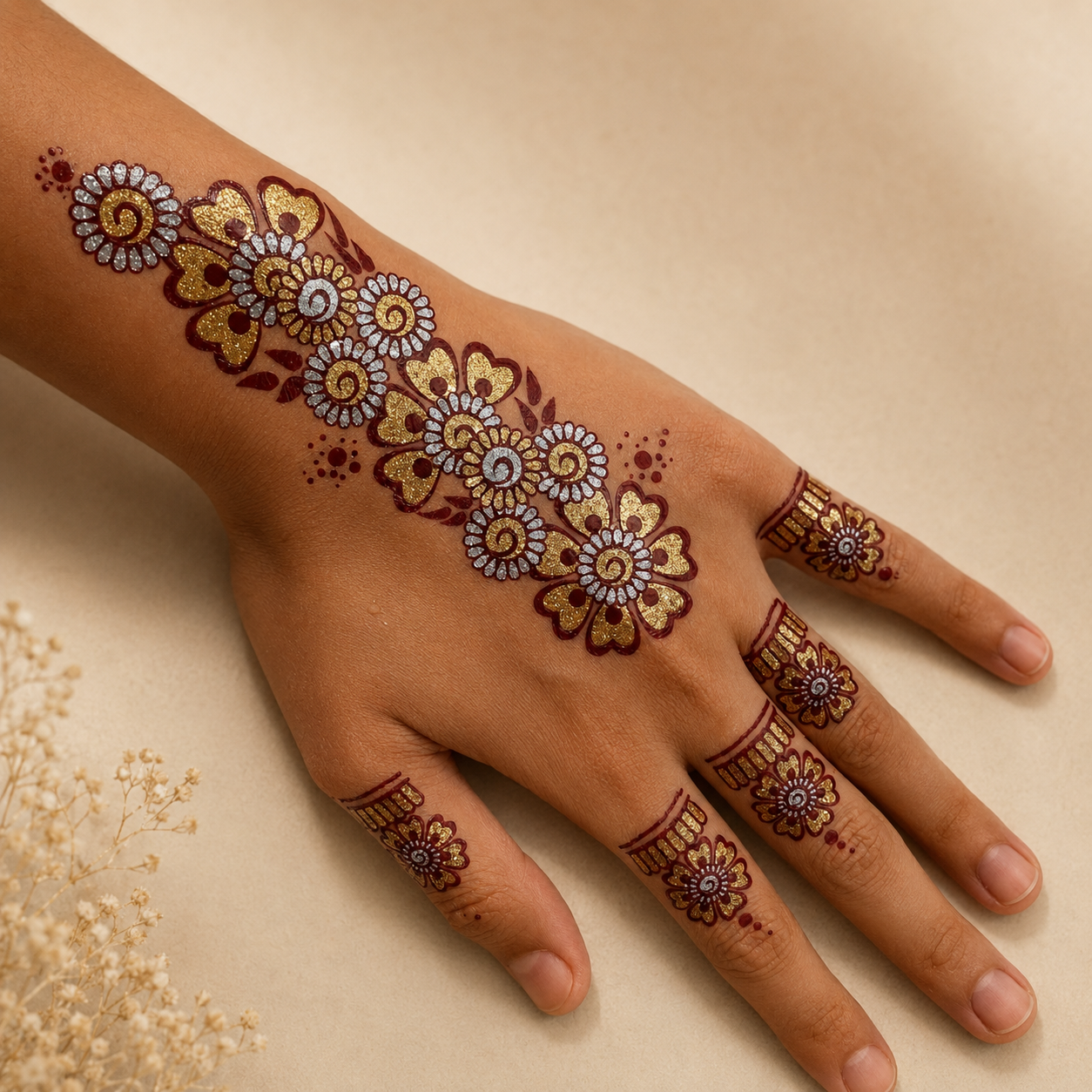
Choose a water-transfer temporary tattoo when you want the exact design to appear immediately, need bright or metallic detail, or expect to switch the look on your schedule. Choose a semi-permanent stain when you accept development time, product-specific color changes, and gradual fading for a longer, more skin-integrated effect. Neither is universally better; your event timing and desired exit matter most.
Quick Answer: Which Type Is Better for You?
The simplest decision rule is this: choose a water-transfer tattoo for immediate control, and consider a semi-permanent stain for planned development. A water-transfer design shows its printed artwork as soon as it has been applied and dried. A stain-style product may need hours to reach its intended color and may remain visible while it gradually fades.
Do not choose from the label alone. “Semi-permanent” is used for different products, so the exact instructions and development time matter more than the category name. Compare control, commitment, timing, finish, and exit.
First, Know What the Two Labels Mean
Water-transfer temporary tattoo stickers sit on the skin’s surface
A standard water-transfer tattoo is a printed decal released from its backing with water. The design is placed face down on clean, dry skin, the backing is wetted evenly, and the printed layer remains on the surface after the paper is removed. The U.S. Food and Drug Administration describes this backing-and-wetting mechanism as one form of decal temporary tattoo.
You can inspect the artwork before applying it, and its printed colors and decorative finish are visible after a clean transfer and dry-down. For the full process, use our step-by-step application guide.
Semi-permanent products usually create a developing stain
Many products marketed as semi-permanent place a stain in the outer skin rather than leaving a printed layer on top. The first mark may be lighter than the final result.
Timings are product-specific. For example, Inkbox says its own formula reacts in the epidermis and develops over 24–36 hours, with the exact speed and color depending on individual skin chemistry. That is a useful example of how one named product works, not a universal promise for every item sold as semi-permanent. Always plan from the instructions for the exact product you are considering.
Do not confuse stains, permanent tattoos, and henna-inspired decals
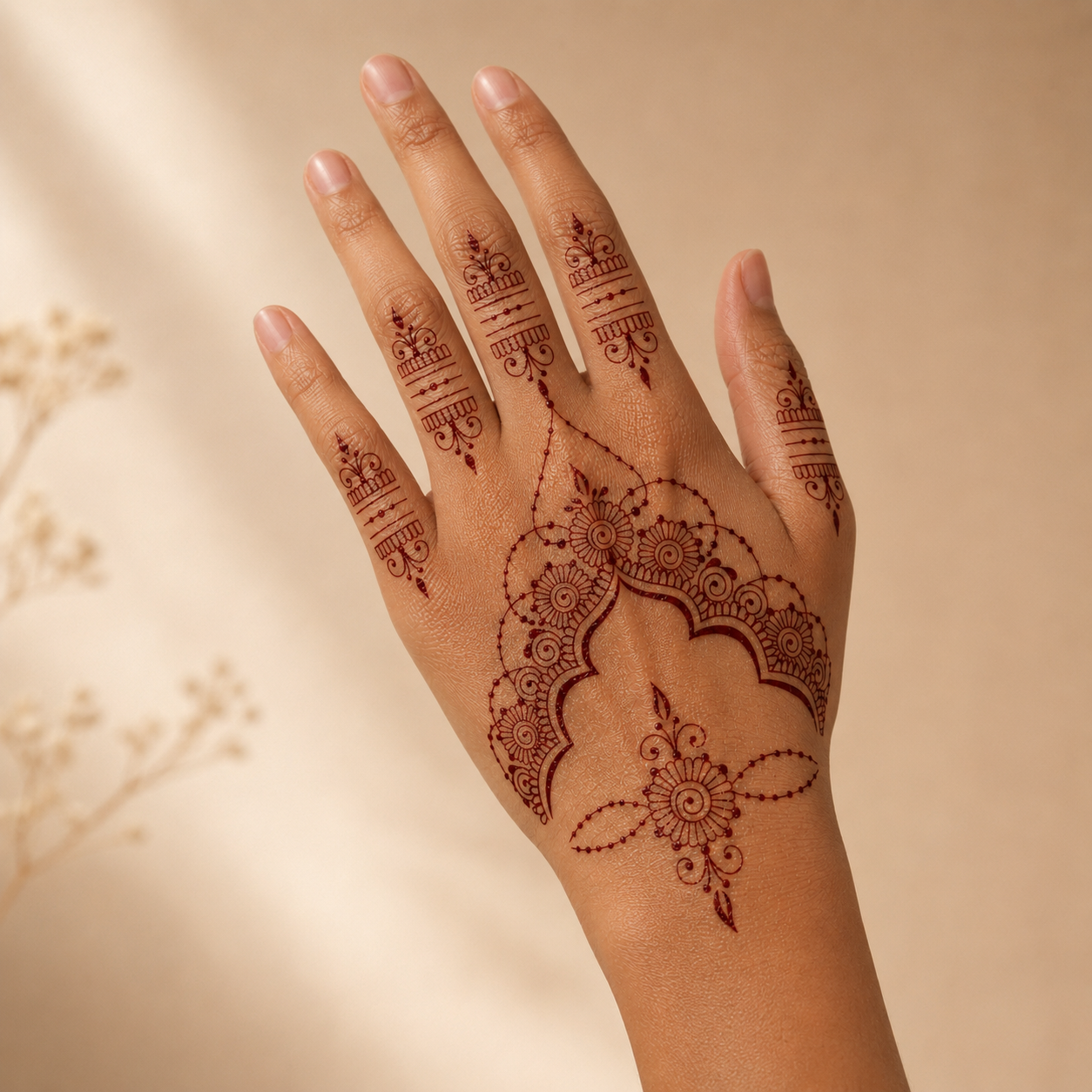
A permanent tattoo places pigment through needles into deeper skin. A consumer stain develops in the outer skin. A water-transfer decal remains a surface design. Traditional henna and products marketed as “black henna” are another category again. Beauty of Papers also carries water-transfer designs with a henna-inspired look; the visual style does not turn them into henna paste or stain products.
The FDA reports adverse reactions involving some decal tattoos, henna, and “black henna,” and notes concerns about PPD sometimes used in black-henna products. Read the exact product’s ingredient declaration and warnings.
Temporary vs. Semi-Permanent Tattoos at a Glance
| Decision | Water-transfer tattoo | Semi-permanent stain |
|---|---|---|
| How it appears | A printed design transfers to the surface | Color develops in the outer skin |
| Result timing | Immediate after transfer and dry-down | May need hours to reach its intended shade |
| Design control | Predetermined artwork, color, and detail | Final shade and development can vary by product and person |
| Finish options | Supports multicolor, fine detail, and metallic effects | Usually favors a stain-like, skin-integrated appearance |
| How it changes | Surface wear can affect edges and clarity | Typically deepens, then gradually fades |
| Exit | A surface decal offers a more deliberate removal choice | Often depends on gradual fading; follow product guidance |
| Best fit | Events, costumes, photos, coordinated groups, frequent changes | Several-day casual wear when development and fading fit the schedule |
Priority rule: immediate control favors water-transfer; a developed, more integrated effect may favor a semi-permanent stain when you accept its timing and gradual exit.
Choose Water-Transfer When Control Matters Most
You need the final look immediately
A water-transfer tattoo is easier for a same-day party, festival, costume, photo session, or group activity. Once dry, you can immediately judge whether it fits the outfit and placement.
You want exact decorative color, detail, or metallic effects
Printed decals can hold predetermined colors, fine lines, and decorative finishes. They work when the artwork itself matters: a gold accent, multicolor floral design, matching party motifs, or costume marking.
This control does not mean every decal looks invisible on skin. Print clarity, application quality, placement, and surface reflection still affect the finished look. Use the real product photographs and exact motif information available rather than judging only from a digital mockup.
You want to change the look on your schedule
A surface decal is more flexible when you plan to change designs or return to work or school. That does not mean every decal disappears instantly. Use our removal guide when needed.
Choose Semi-Permanent When Gradual Integration Matters More
You can plan around development time
A developing stain can suit a trip or weekend when you can apply it early. Work backward from the event: check when the product expects peak color and whether the first day looks different.
You prefer a stain-like finish and accept color variation
A stain can look more integrated than a printed surface design, with lower visual certainty. Skin chemistry, application, and formula can influence the result; a preview is guidance, not a guaranteed color match.
You accept gradual fading instead of a fixed removal moment
Gradual fading works when there is no strict end date. It is less convenient when the mark must be gone by a workday or ceremony. Check the brand’s fading guidance; decal removers do not necessarily work on stains.
Compare the Five Decisions Before You Buy
Control
Do you need an exact motif, color combination, or metallic finish? Choose a printed water-transfer design. If a naturally developing shade matters more than matching a precise preview, consider a stain product.
Commitment
Are you styling one event, trying a placement, or accepting a mark that changes over several days? Choose the mechanism whose visible commitment fits the real calendar, not the longest headline claim.
Timing
When must the tattoo look ready? Water-transfer designs are immediate after application and drying. Developing stains require you to read the product timeline backward from the occasion.
Finish
Do you want decorative printed detail or a simpler stain-like effect? Neither finish is automatically more realistic; the better match depends on the design, viewing distance, lighting, and occasion.
Exit
Do you need to decide when the look ends, or can you wait for gradual fading? This is often the deciding factor when work, school, travel, or costume changes create a firm deadline.
Choose by Situation
- One-night party, festival, costume, or photos: water-transfer is usually the clearer fit because the design is ready immediately and can include coordinated color or metallic detail.
- Testing before permanent ink: water-transfer tests exact artwork and position; a stain offers a longer-lived mark. Neither recreates tattooing, healing, or permanent commitment.
- Several casual days with no fixed end date: a semi-permanent stain may fit if you accept development time and gradual fading.
- Frequent changes or group distribution: water-transfer is usually easier because the printed result is immediate and repeatable.
What Beauty of Papers Sells—and When It Fits
Beauty of Papers currently focuses on ready-to-wear water-transfer temporary tattoo sheets. We do not currently sell semi-permanent stain kits, henna paste, jagua gel, or permanent tattoo products. That boundary matters: we can explain how the choices differ without pretending our catalog covers both sides.
If you prioritize immediate artwork control, decorative color, metallic effects, or frequent changes, browse Beauty of Papers temporary tattoos or compare styles and product types. If you prefer a stain, choose a seller with clear instructions and ingredient information.
Pre-Buy Checklist
- What mechanism does the product actually use?
- When will the final appearance be ready?
- Is the artwork printed and fixed, or expected to develop?
- Does the change or exit pattern fit your deadline?
- Are ingredients, warnings, application directions, and use-area restrictions available?
- Does the seller show the exact product on skin, not only a digital mockup?
- Are its promises specific enough to verify without relying on the word “semi-permanent”?
Summary
Choose a water-transfer temporary tattoo for immediate control, detailed decorative artwork, and a more scheduled change of style. Consider a semi-permanent stain when you can plan around development, prefer a skin-integrated effect, and accept gradual fading. The better purchase is the mechanism whose timing, finish, and exit fit your actual occasion—followed by the instructions for that exact product.
Sources
- U.S. FDA: Temporary Tattoos, Henna/Mehndi, and “Black Henna” Fact Sheet
- Inkbox Help Center: How does Inkbox work?
- Inkbox Help Center: How long will it take for my tattoo to develop?
What the guide images show
Key visual information is repeated below as text so the design, scale, placement, and process do not depend on images alone.
- A real Beauty of Papers water-transfer tattoo photographed on skin, showing printed color, metallic finish, and placement. It is not presented as a semi-permanent stain or a comparative wear test.
- Real water-transfer henna-inspired temporary tattoo applied across an adult hand
Leave a Reply