
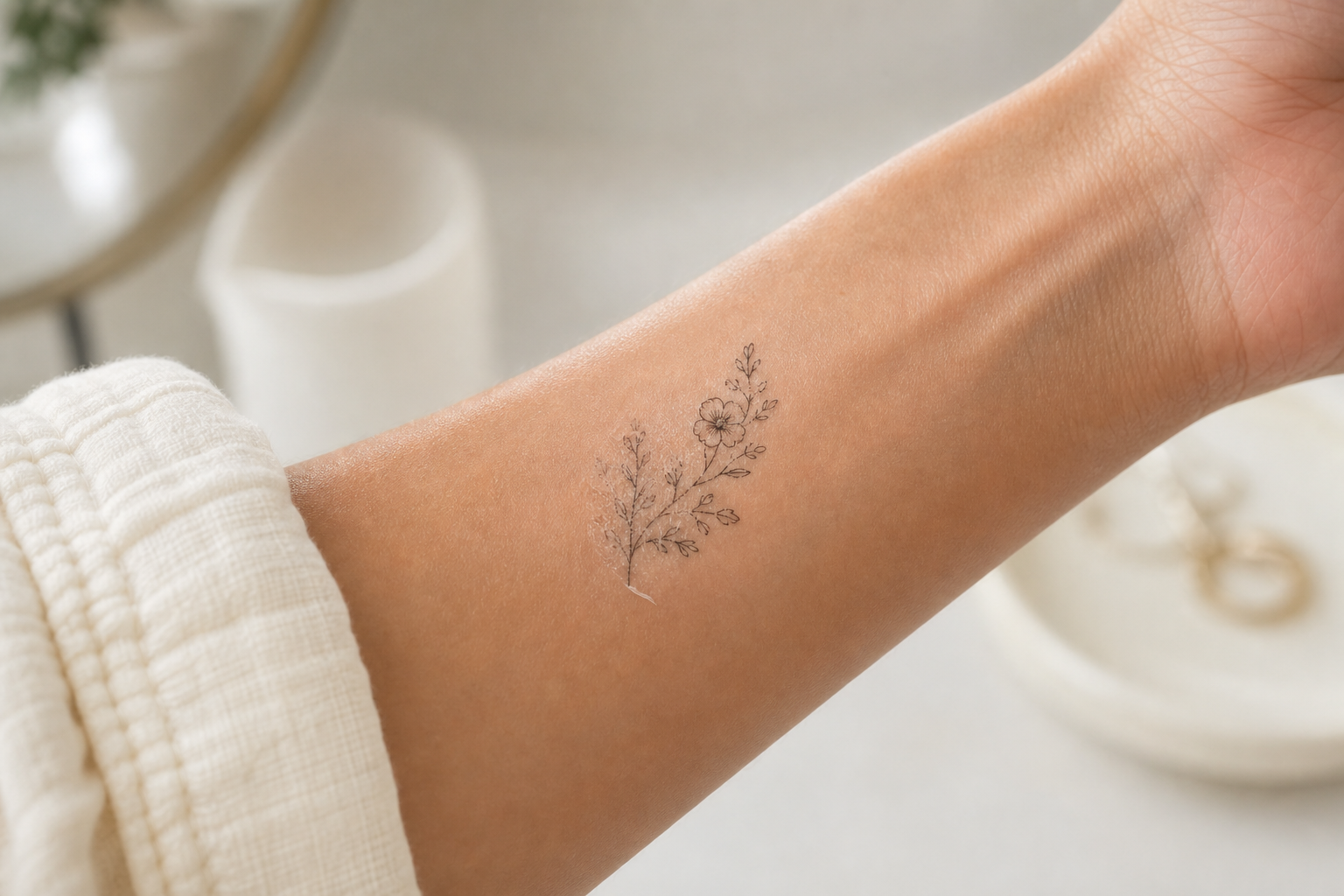
If your temporary tattoo fades unevenly, you usually have two choices: protect what still looks good, or remove it and start over. A little edge fading is normal, especially after rubbing, sweat, water, or clothing contact. But if the design looks patchy, broken, or noticeably uneven before an event, gentle removal is usually cleaner than trying to force a repair.
A standard water-transfer temporary tattoo sits on the surface of the skin. Once part of that surface layer has worn away, it cannot truly be restored to a fresh-transfer look.
Why Temporary Tattoos Fade Unevenly
Uneven fading usually happens because one part of the tattoo gets more stress than another. A sleeve may rub one edge, a joint may bend under one section, or lotion, sunscreen, sweat, water, or body oil may loosen one corner first.
Application can also matter. If the skin was oily, damp, covered with makeup, or not pressed evenly during transfer, one section may attach less cleanly from the beginning. For the full transfer steps, see our guide on how to apply a temporary tattoo.
Can You Fix It?
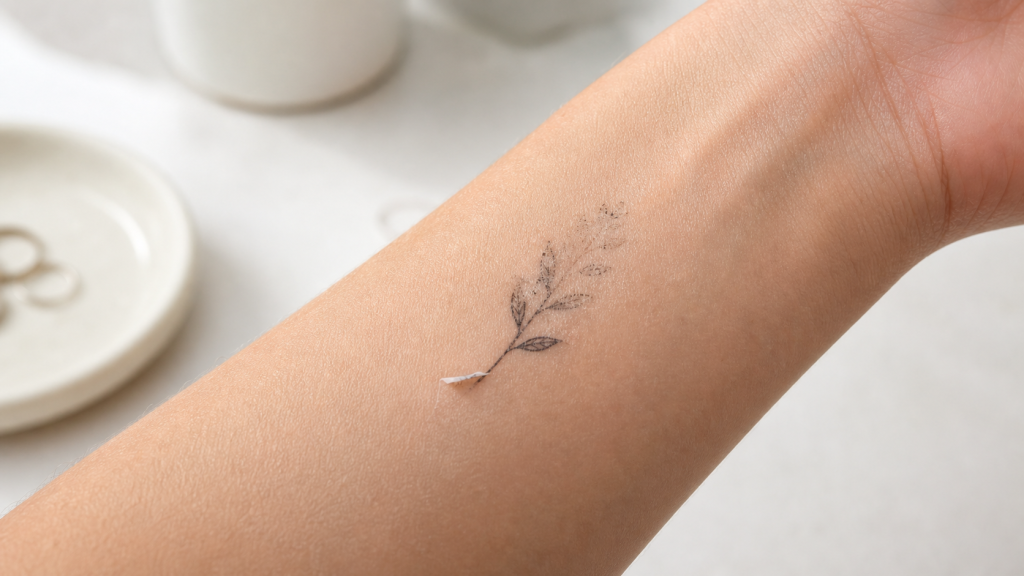
If only the edges are fading
Leave it alone as much as possible. Keep the area dry, avoid rubbing, and do not apply lotion or oil over the fading edge.
If a small area is peeling
You can gently press the edge down with clean, dry fingers, but do not use glue, tape, clear nail polish, or any product that was not meant for skin. If the peeling keeps spreading, see our guide on fixing a peeling temporary tattoo.
If the design is patchy or broken
Remove it gently and reapply a fresh design if you still want the look. Drawing over a large faded area usually looks less natural.
What Not to Do
- Do not re-wet the tattoo to “reactivate” it.
- Do not rub hard with a towel.
- Do not put body oil, lotion, or sunscreen directly over the damaged area.
- Do not cover peeling edges with tape or glue.
How to Avoid Uneven Fading Next Time
Start with clean, dry skin and choose a smoother, lower-friction placement. Temporary tattoos usually wear more evenly on the upper arm, shoulder, outer forearm, or calf than on fingers, wrists, knees, waistlines, or spots under tight clothing.
After applying, let the tattoo dry before dressing, sleeping, sweating heavily, or touching the design. During wear, pat dry after water instead of rubbing. For more detail, read how to make temporary tattoos last longer.
If you want a design that is easier to place on a flatter, lower-friction area, a sheet with smaller options such as our Red Rose Floral Temporary Tattoo Sheet can give you more placement flexibility.
Placement is especially important around moving areas. If a tattoo crosses a joint, one section may fade or crack sooner. Our guide on why joints are difficult places for temporary tattoos explains this in more detail.
When to Remove It
If uneven fading means it is time to start over, use our complete guide to removing a temporary tattoo gently rather than adding more friction.
Remove the tattoo if the design looks too patchy for the event, if the edges are lifting, or if your skin feels itchy, sore, hot, or irritated. Do not try to “save” a design on uncomfortable skin. The FDA discusses reports of reactions involving tattoos and temporary tattoos, and the American Academy of Dermatology explains that contact dermatitis can happen when something touching the skin irritates it or triggers an allergy.
FAQ
Can I reapply water to fix a faded temporary tattoo?
Usually, no. After the tattoo has dried, adding water again can make the design blur, lift, or fade faster.
Can I put lotion over a faded temporary tattoo?
Not if you want it to last. Lotion, especially oil-rich lotion, can loosen the tattoo surface and make fading look worse.
Can I draw over faded areas?
For a tiny missing dot or line, maybe. Large touch-ups usually look uneven, so removal and reapplication is cleaner.
Should I remove it if my skin feels irritated?
Yes. If the area feels itchy, sore, hot, or irritated, remove the tattoo gently and stop wearing it on that area. Do not cover irritated skin with another temporary tattoo.
Final Takeaway
Uneven fading is usually a wear problem, not something you can fully reverse. Protect a lightly faded tattoo if it still looks good, but remove and reapply if the design is patchy, peeling, or uncomfortable.
What the guide images show
Key visual information is repeated below as text so the design, scale, placement, and process do not depend on images alone.
- Uneven fading usually means part of the tattoo has met more friction, oil, water, or movement than the rest.
- Temporary tattoo edge slightly curling up on clean skin