
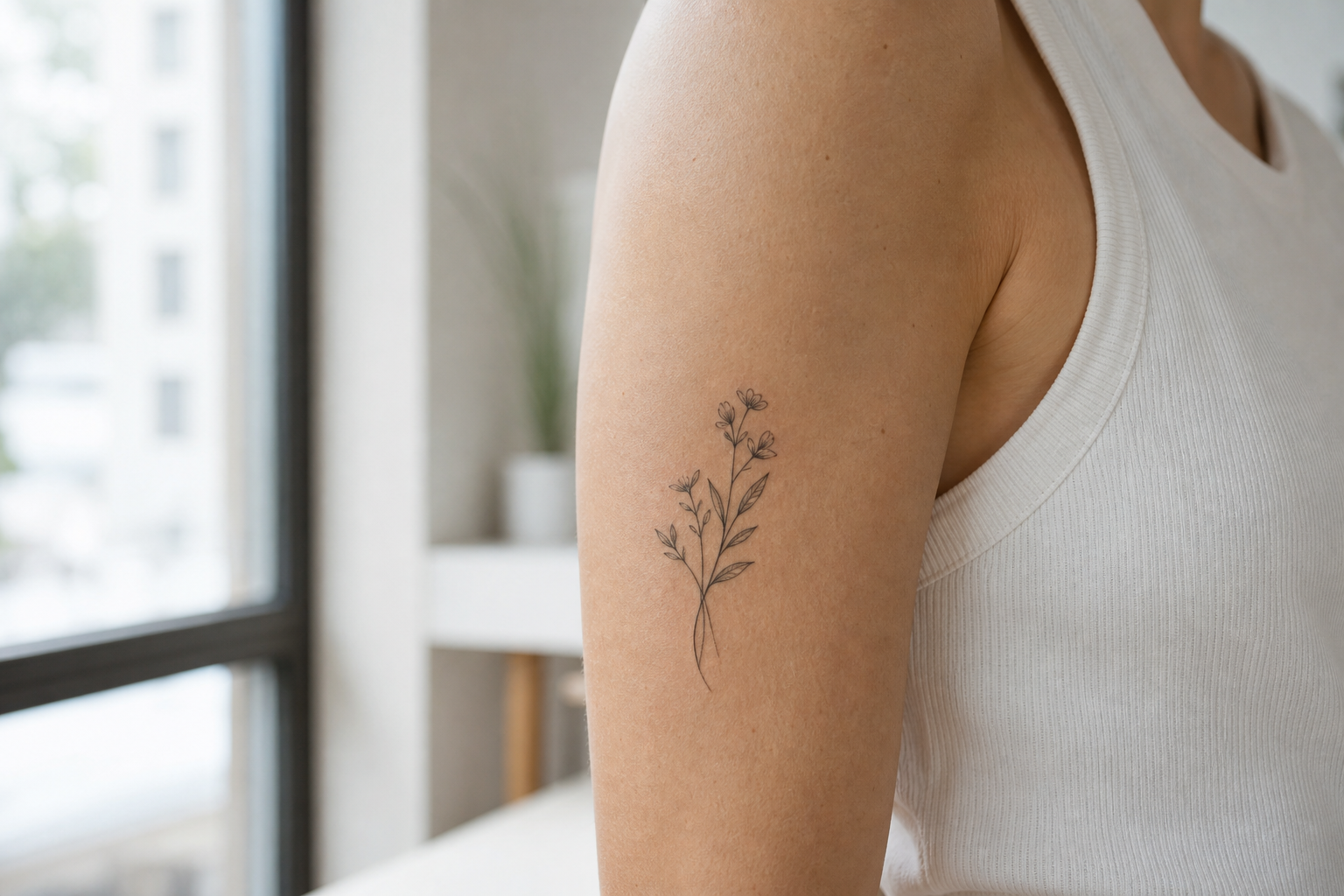
Temporary tattoos can look natural in photos when the design suits the placement, the transfer lies flat, and the tattoo is fully dry before you shoot. Soft light also helps. The goal is not to make every temporary tattoo imitate permanent ink. It is to choose the right visual style and avoid glare, wrinkles, visible edges, or awkward scale.
From our experience styling water-transfer designs for product and placement photos, three details make the biggest visible difference: clean application, believable proportion, and soft lighting. These are practical observations rather than a promise that every design will look permanent.
How Do You Make a Temporary Tattoo Look Less Shiny and More Realistic?
To make a temporary tattoo look less shiny and more realistic, let it dry fully, choose a believable size and placement, and use soft light instead of direct flash. A camera can emphasize details that are less noticeable in person. A fresh tattoo may still have surface shine. Direct flash can make that shine more obvious, while close-up sharpening can make a lifted edge or small wrinkle look harsher than it does at a normal viewing distance.
Scale matters too. A tiny, detailed design enlarged in a close crop may look more like a printed image than body art. A large design placed across a joint can crease when the body moves. The transfer may be complete, but the photo can still feel unnatural because the placement and the design are working against each other.
Which Temporary Tattoos Look Most Realistic in Photos?
Small black or gray fine-line designs on smooth, low-movement placements usually look the most like traditional ink in photos. Believable scale and a clean, flat transfer matter as much as the artwork. Metallic, watercolor, and ornamental designs can still photograph beautifully, but they read as intentional decorative finishes rather than the closest imitation of permanent black ink.
Choose the Right Design, Size, and Placement
For photographs, choose a design and scale that remain readable at normal viewing distance and keep important lines away from deep creases. This page remains the owner of lighting, drying and camera technique; use our guide to choosing temporary tattoos that look real for the full pre-purchase realism checklist covering design, printed color, edge clarity, placement, application and surface-film glare.
For a quiet botanical look rather than a strict black-ink imitation, the Minimal Botanical Temporary Tattoo Sheet uses restrained green and purple watercolor linework and includes real-skin placement views to help you judge the scale before applying it.
If you are using the design to preview a future tattoo idea, our guide to testing permanent tattoo placement with a temporary tattoo explains what you can evaluate and where the comparison has limits.
Apply It Cleanly Before the Camera Comes Out
Even a good design can look artificial if the transfer is incomplete. Start with clean, fully dry skin without lotion, sunscreen, body oil, makeup, or sweat. Keep the tattoo still, wet the backing evenly, and lift the paper slowly. Then let the transferred design dry completely before touching it, dressing over it, or taking close-up photos.
Do not try to hide a poor transfer with more water, lotion, or oil. Water will not rebuild a missing section after the tattoo has set, and oily products can soften the surface or edges. If the design is important for an event or photoshoot, testing one in advance is more reliable than trying to repair a patchy transfer at the last minute.
The full process is covered in our temporary tattoo application guide, so there is no need to repeat every transfer step here.
How to Photograph a Temporary Tattoo More Naturally
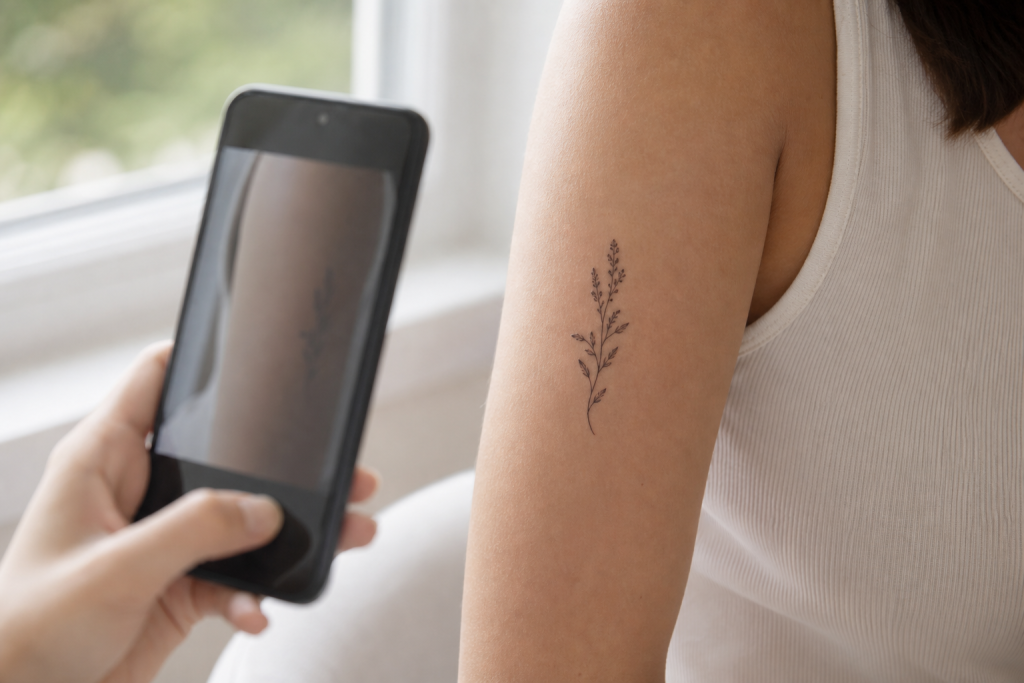
- Wait until it is fully dry. A damp surface is more likely to catch light and look glossy.
- Use soft natural light. Window light or open shade usually shows the design without the hard reflection created by close direct flash.
- Take both close and normal-distance photos. A tattoo should make sense in the full outfit or body placement, not only in a tight crop.
- Keep the body relaxed. Bending a wrist, elbow, or knee deeply can create folds that make the transfer look cracked.
- Do not over-edit. Heavy sharpening, contrast, or saturation can exaggerate the surface texture and make colors look less believable.
- Test a short video clip. Turn the body slowly and check whether the design still looks balanced as the skin moves.
Know What a Temporary Tattoo Cannot Reproduce Exactly
Standard water-transfer temporary tattoos are surface decorations. The FDA describes decal temporary tattoos as designs transferred from a backing onto the skin with water. That is different from permanent tattoo ink placed in the skin, so the two will not have exactly the same depth, texture, or aging pattern.
A temporary tattoo can still help you judge placement, scale, visibility, and styling. It can also create a strong photo look of its own. The honest target is a clean, intentional result that suits the image, not a claim that every viewer will mistake it for permanent ink.
Photo-Ready Checklist
- The design fits the body area and does not cross a deep crease.
- The skin was clean and dry before application.
- The full design transferred without missing sections or lifted edges.
- The tattoo is completely dry.
- The light is soft rather than a close direct flash.
- You checked both a close-up and a normal-distance photo.
A temporary tattoo looks most natural when the design, placement, application, and photograph all support the same visual goal. Choose subtle linework for an ink-like effect, or let metallic and watercolor designs look intentionally expressive instead of forcing them to imitate something they are not.
What the guide images show
Key visual information is repeated below as text so the design, scale, placement, and process do not depend on images alone.
- A clean transfer, believable scale, and soft light help a temporary tattoo photograph more naturally.
- Smartphone photographing a small temporary tattoo in soft window light