
If you are still deciding between decals, stain-style products, henna or jagua, markers, and custom options, compare our temporary tattoo styles and product types guide before returning here for the water-transfer mechanics.
If you only need the application steps, use our full guide on how to apply a temporary tattoo. Here, we will look at what is happening between the paper and your skin.What Are Temporary Tattoos Made Of?
A water-transfer sheet uses a protective cover, a preprinted design and thin transfer layer, and a paper backing. The visible tattoo remains a thin surface film; water helps it release from the paper.
This page keeps the mechanics overview. For what the printed color and supporting materials may contain, which label details matter, and how ingredients relate to skin concerns, read what temporary tattoo ink is made of.
What Does the Water Actually Do?
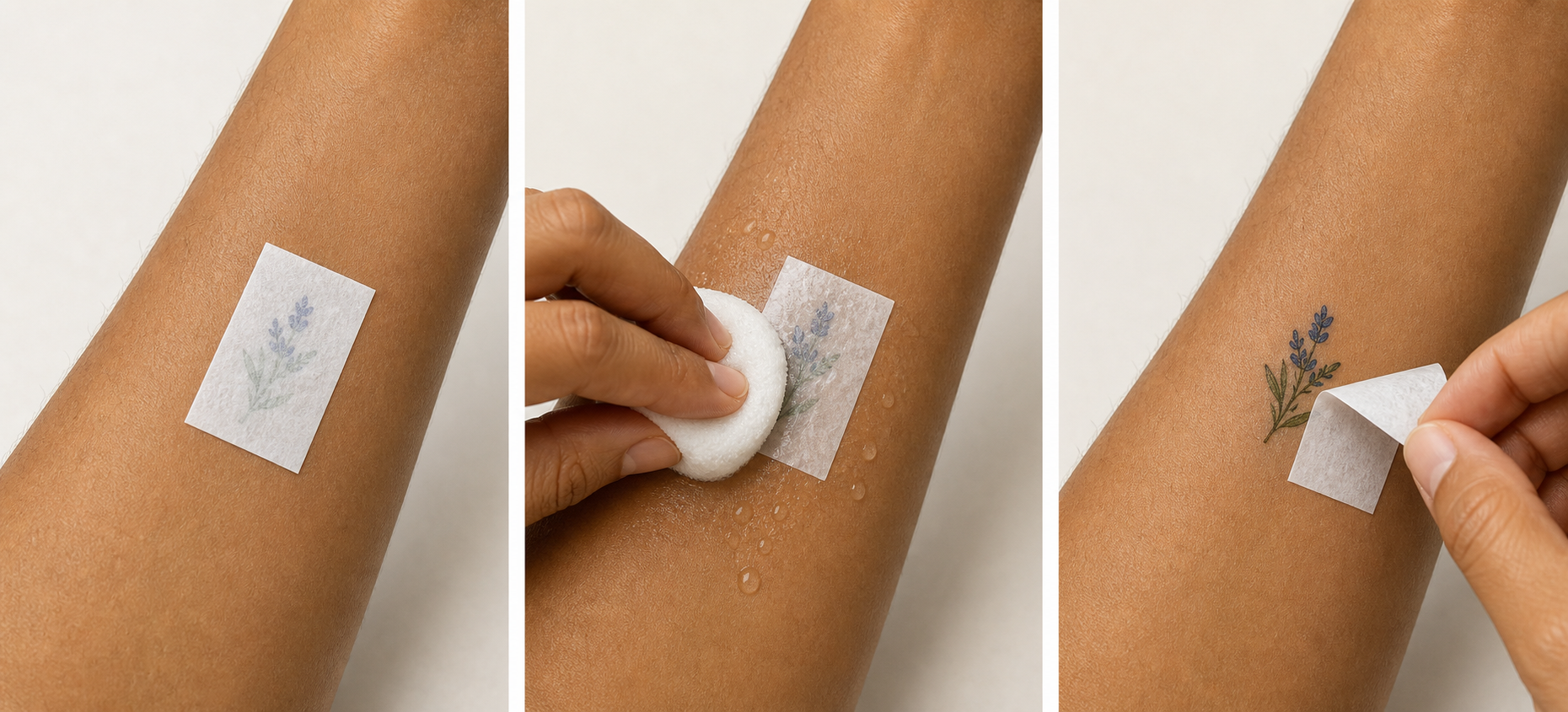
Many people think water activates the ink. That is not quite right. The design is already printed before you use it. Water wets the backing and helps the printed layer release from the paper. Pressure keeps the design in close contact with the skin. When you lift the backing carefully, the paper comes away but the thin design remains. The process can be understood in three simple steps:- Water reaches the backing and release layer.
- Even pressure keeps the whole design touching the skin.
- The paper lifts away, leaving the printed film behind.
Why Does It Stick and Sometimes Look Shiny?
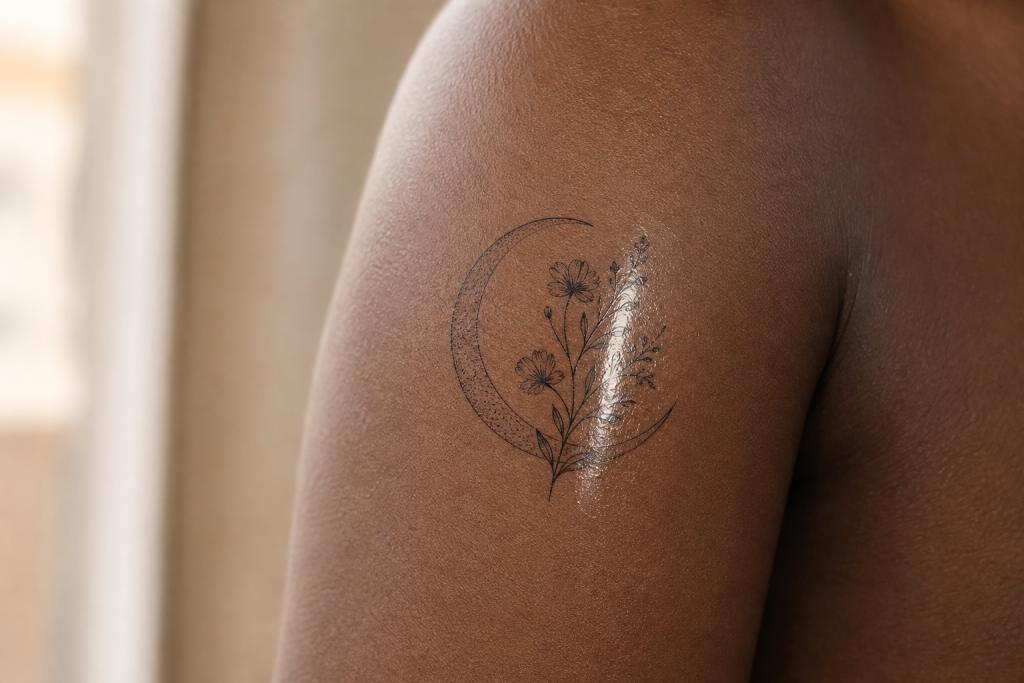
A standard water-transfer temporary tattoo rests as a thin printed layer on the skin surface. A fresh, smooth film can reflect light, so a slight shine often comes from the surface layer rather than pigment inside the skin.
For the plain-language connection between why that layer sticks and why an intact design can resist quick removal, read why temporary tattoos stick and why some feel hard to remove. This page keeps the broader transfer and finish explanation.
How Materials Change the Look and Wear
Temporary tattoos can offer many colors and finishes because the artwork is printed before it reaches the skin. This gives shoppers more decorative choices, but different surfaces do not always wear in the same way.- Flat printed designs are a good everyday choice and often give the cleanest, simplest finish.
- Watercolor and colorful designs can create soft blends and bright details that are difficult to copy with a basic one-color design.
- Gold, metallic, powder, or glitter-like effects can look more special, but their surface may be more delicate.
- Small and medium designs are usually easier to place smoothly than very large designs.
Why large designs are harder to apply
A small design only needs to make even contact with a limited area. A large design has to follow more curves, movement, hair, and changes in skin shape. If several pieces are used, their edges also need to meet closely. Gaps and overlaps become easier to see. For an easy first try, a small or medium design on a smoother area is usually the simplest option.Is It the Same as Henna or a Permanent Tattoo?
No. These products create body art in different ways:- A decal temporary tattoo places a printed film on the skin surface.
- Henna and jagua-style products color or stain the outer skin for a period of time.
- A permanent tattoo uses needles to place pigment into the skin.
Why Does It Eventually Come Off?
The design sits on a moving surface. Clothing rubs, water and sweat reach the area, and oils can loosen the film. Over time, the tattoo may fade, crack, or peel. That is normal. When you are ready to take it off, follow our guide on how to remove a temporary tattoo gently instead of scraping it from the skin.Frequently Asked Questions
Does water activate the tattoo ink?
No. The image is already printed. Water mainly helps the design release from the backing paper.Does a temporary tattoo go into the skin?
No. A standard decal tattoo stays on the skin surface.Why did only half of my tattoo transfer?
Common reasons are uneven water or pressure, oily skin, or lifting the backing too soon.Why do some temporary tattoos feel thicker?
Metallic effects, powder finishes, and heavier designs can create a more noticeable surface layer.What type is easiest for a first-time buyer?
A small or medium flat printed design is usually the easiest place to start. It is simpler to position, press evenly, and wear on a smooth area.Final Takeaway
A water-transfer temporary tattoo is a thin printed design that moves from paper to the outer surface of your skin. Water helps release it, pressure helps it transfer evenly, and a light transfer layer helps it stay in place. To choose one, start with the look you like. Remember that special finishes may need gentler care, and choose a size that fits the body area without difficult curves or seams.Ready to try the process yourself? Browse our temporary tattoo stickers to compare sizes, finishes, and styles.
What the guide images show
Key visual information is repeated below as text so the design, scale, placement, and process do not depend on images alone.
- Water helps the printed design release from the backing while even pressure keeps it against the skin.
- A fresh temporary tattoo can reflect light because its thin printed film sits on the skin's surface.
- Close-up of a fine-line temporary tattoo on deep brown skin showing a slight surface reflection