
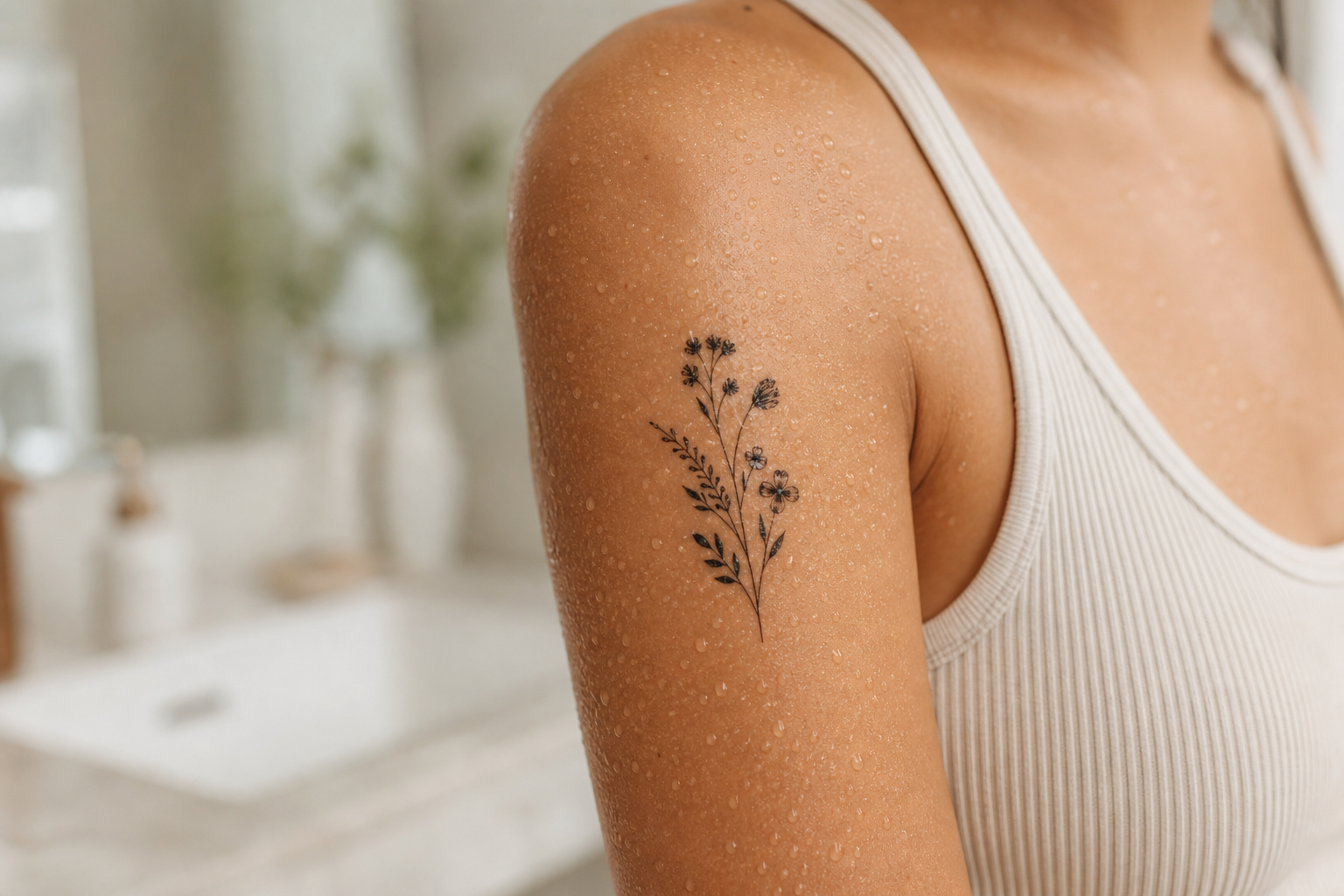
Most waterproof temporary tattoos are genuinely water-resistant in normal wear. If the tattoo has transferred cleanly and has dried on the skin, everyday water exposure such as handwashing, a normal shower, light rain, or mild sweat usually should not ruin it right away.
The part that needs a clearer explanation is this: waterproof does not mean rub-proof, oil-proof, or damage-proof. A temporary tattoo can handle water well and still wear down if it is scrubbed with a towel, rubbed by clothing, softened by oil-based products, or made with a special finish that is more delicate than a standard design.
This guide focuses on standard decal-style temporary tattoos, including the kind of designs most people wear for events, photos, travel, parties, or everyday style. If you need the full transfer process first, start with how to apply a temporary tattoo. If you are trying to remove one, see how to remove a temporary tattoo safely.
Quick Answer: Are Waterproof Temporary Tattoos Really Waterproof?
Yes, many temporary tattoos are waterproof enough for normal daily use. A well-applied standard temporary tattoo can usually tolerate water better than people expect.
But there are three important limits:
- They are usually not rub-proof. Friction can wear the surface away.
- They are usually not oil-proof. Body oil, lotion, sunscreen, makeup remover, and alcohol-heavy products can weaken or lift the design.
- Some special finishes, such as gold powder, metallic effects, or heavier pigment layers, may be less water-resistant than a standard flat design.
So the more accurate answer is: waterproof temporary tattoos can be very good around water, but they still need gentle wear.
Waterproof Does Not Mean Rub-Proof
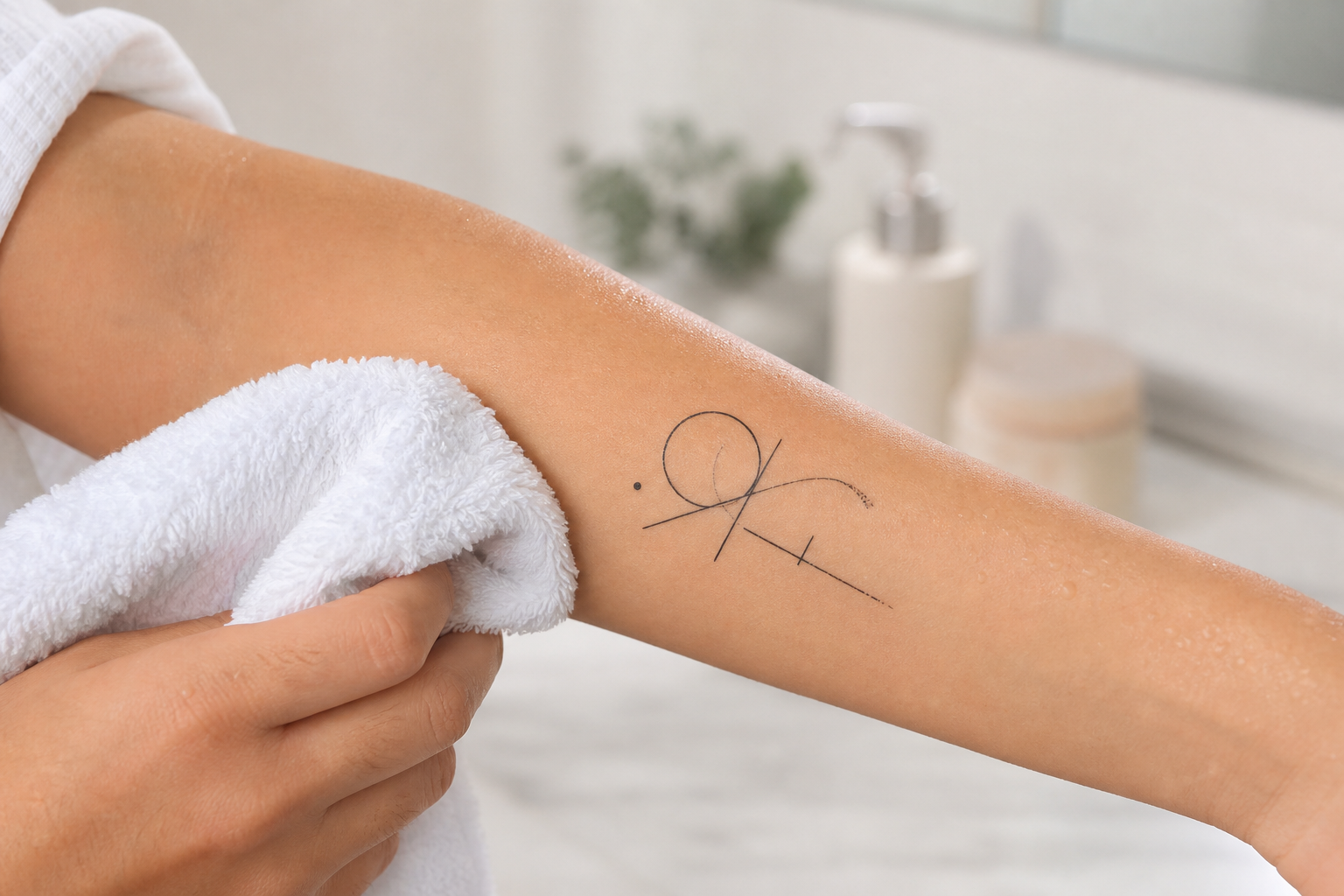
When a temporary tattoo fails after getting wet, water may not be the only reason. Often, the real problem is water plus friction.
For example, these habits can damage a temporary tattoo faster than water alone:
- rubbing the area with a towel after a shower
- wearing tight sleeves, waistbands, straps, socks, or shoes over the design
- scratching or picking at a lifted edge
- touching the tattoo repeatedly throughout the day
- swimming or soaking, then wiping the area roughly
A temporary tattoo sits on the surface of the skin. It is not embedded like a permanent tattoo. That means the visible design depends on a thin surface layer staying smooth and attached. Once repeated rubbing starts to break that surface, the tattoo may look cracked, dull, patchy, or lifted even if the water resistance itself was good.
If your main goal is longer wear, placement matters. A tattoo on the upper arm, shoulder, collarbone, or outer forearm usually has an easier life than a tattoo on the hand, wrist, finger, ankle, foot, or under tight clothing. For a deeper durability guide, see how to make temporary tattoos last longer.
Material Matters: Some Temporary Tattoos Are More Delicate
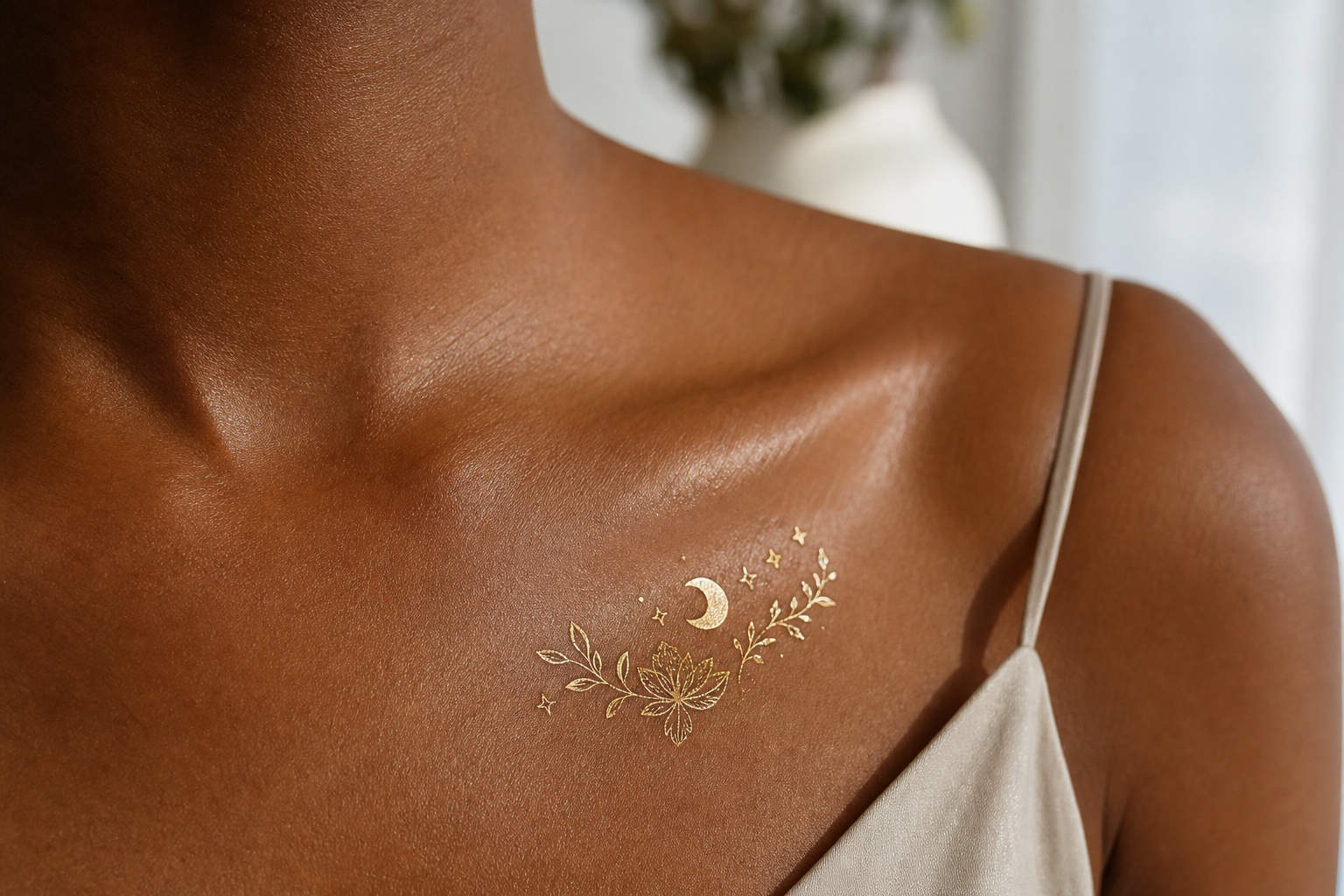
Not every temporary tattoo behaves the same way. In everyday use, many standard designs have strong water resistance after a clean application. But decorative effects can change how the surface performs.
Temporary tattoos with gold powder, metallic-looking finishes, glitter-like effects, or heavier pigment layers may be more delicate. These designs can look beautiful, but the special surface effect may not handle water and rubbing as well as a simpler flat ink design.
This does not mean metallic or gold-style tattoos are bad. It simply means they should be treated more gently:
- avoid soaking them for long periods
- do not scrub the surface
- pat dry instead of wiping
- keep oils and lotions away from the design
- choose a lower-friction placement when possible
If the design has a special finish, think of it as decorative surface art. It may still be water-resistant, but the finish itself can be easier to disturb.
What Can Break Down a Temporary Tattoo Faster Than Water?
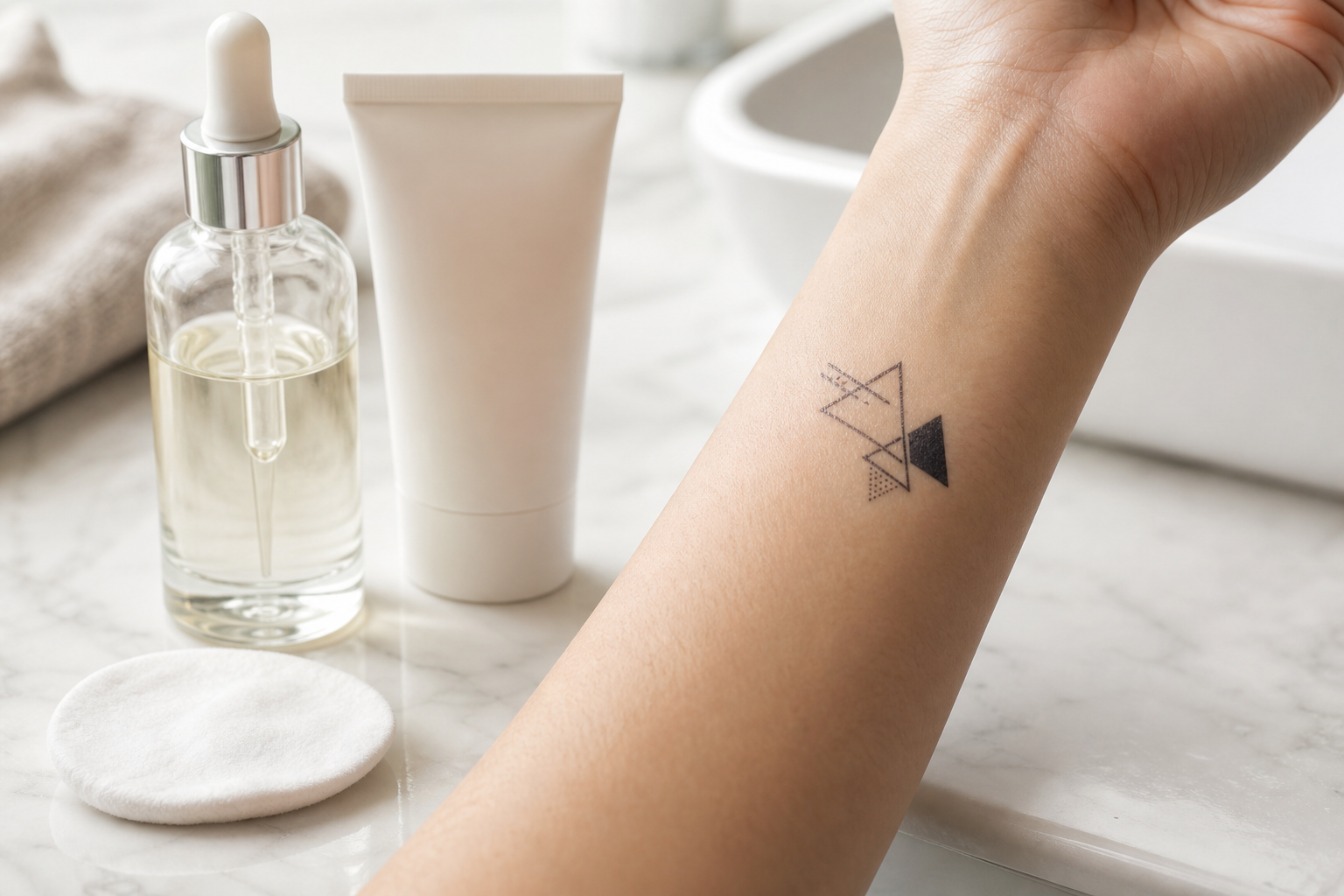
Plain water is usually not the harshest thing a temporary tattoo will meet. Oil-based and solvent-like products are often more important.
In practical terms, be careful with:
- body oil
- oil cleanser or makeup remover
- thick lotion or balm
- sunscreen applied directly over the tattoo
- perfume or alcohol-heavy sprays
- hand sanitizer around hand or wrist tattoos
This is also why oil is commonly used when people want to remove a temporary tattoo. Oil can help loosen the surface design from the skin, which is useful during removal but not helpful if you want the tattoo to last.
The FDA explains that some decal temporary tattoos transfer from a backing after wetting, and that ingredients may be used to help the image adhere to the backing or the skin. You can read the FDA’s general explanation in its temporary tattoo fact sheet. From a wear-care perspective, the simple takeaway is that the surface layer needs to stay intact. Oil, rubbing, and harsh products can interfere with that layer faster than clean water alone.
Can You Shower With a Waterproof Temporary Tattoo?
Usually, yes. A normal shower is generally fine for a well-applied waterproof temporary tattoo.
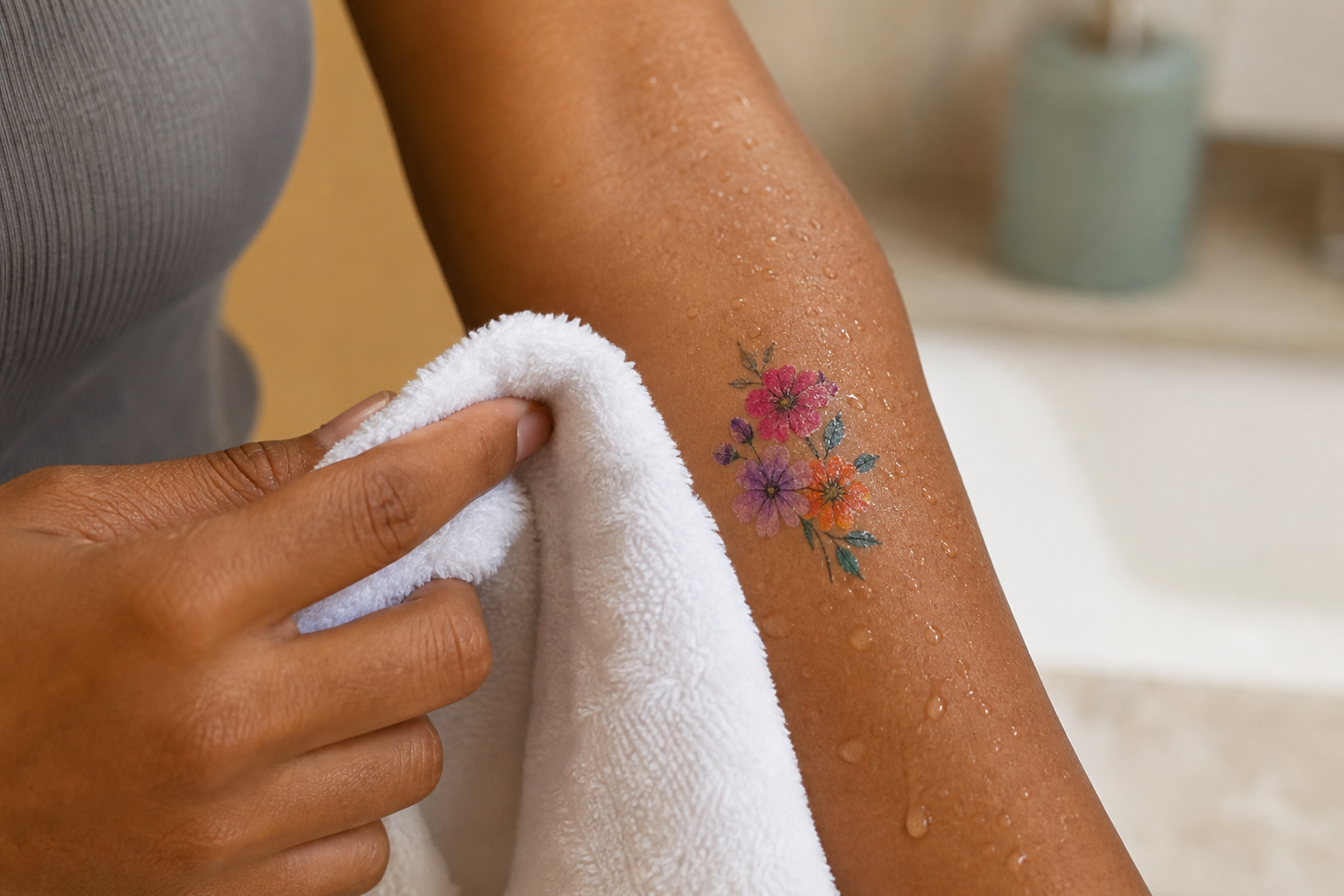
The safer habit is to avoid direct scrubbing. Let water run over the area, use gentle soap around it when needed, and pat the tattoo dry afterward. Do not rub it with a towel, loofah, exfoliating cloth, or body scrub.
Hot water and long showers can be harder on the tattoo than quick, normal washing. Heat can soften the skin surface, and long exposure increases the chance that the tattoo will be touched, stretched, or wiped. The issue is still usually the combination of moisture and friction, not water alone.
Can You Swim With a Temporary Tattoo?
Swimming is more demanding than showering. A waterproof temporary tattoo may survive a swim, especially if the design is standard, freshly transferred well, and placed on a lower-friction area. But swimming adds several stress factors at once: long soaking, movement, towels, swimsuit friction, sunscreen, and sometimes pool chemicals or salt water.
If you want the tattoo to look good for photos or an event, apply it early enough that it can dry and settle before swimming. After swimming, rinse gently if needed and pat dry. Avoid rubbing the tattoo with a towel.
For metallic, gold powder, or heavier pigment designs, it is better to be more cautious. These special finishes may not stay as crisp after swimming as a simple flat design.
Can Sweat Ruin a Temporary Tattoo?
Sweat alone does not always ruin a temporary tattoo. Many waterproof temporary tattoos can handle light sweat during normal wear. The bigger problem is sweat plus rubbing.
Workout clothing, sports bras, backpack straps, watch bands, waistbands, and shoes can all rub repeatedly while the skin is warm and damp. That combination can make the tattoo fade or peel faster.
If you plan to work out, choose a placement that will not be trapped under tight fabric or accessories. Afterward, clean around the area gently and pat dry.
What About Safety, Colorants, and Skin Reactions?
Waterproof performance and skin safety are different questions. A tattoo can be water-resistant and still be a product that should be used thoughtfully, especially on sensitive skin.
In the United States, color additives used in cosmetics are regulated separately from general cosmetic ingredients. The FDA explains this in its guidance on color additives and cosmetics. The same FDA temporary tattoo fact sheet also warns readers to be cautious with products marketed as black henna or pre-mixed henna, because these may involve ingredients that are not the same as traditional henna.
For normal use, avoid applying temporary tattoos to irritated, broken, freshly shaved, sunburned, or highly sensitive skin. If a tattoo causes redness, swelling, itching, blistering, or a reaction that worries you, remove it gently and stop using that product. The FDA also has a page for reporting cosmetic-related complaints if someone experiences a serious issue with a cosmetic product.
How to Help a Waterproof Temporary Tattoo Last Around Water
The best care routine is simple:
- Apply the tattoo to clean, dry skin with no lotion or oil underneath.
- Let it dry fully before touching, dressing tightly, or getting it wet.
- When it gets wet, pat it dry instead of rubbing.
- Keep oil-based products, makeup remover, sunscreen, and alcohol-heavy sprays away from the design when possible.
- Choose a placement with less friction if you want longer wear.
- Treat metallic, gold powder, and heavy-pigment designs more gently than simple flat designs.
These steps do not make a temporary tattoo permanent, but they protect the part that matters most: the thin design layer sitting on the surface of the skin.
Frequently Asked Questions
Are waterproof temporary tattoos really waterproof?
Many are genuinely water-resistant for normal daily use. They can usually handle water better than they can handle rubbing, oil, or long soaking.
Why did my waterproof temporary tattoo peel after a shower?
The most common reason is friction. If the tattoo was rubbed with a towel, scraped by clothing, or already lifting at the edge, it may peel even though the water exposure itself was not extreme.
Are gold or metallic temporary tattoos waterproof?
Some are water-resistant, but special finishes such as gold powder, metallic effects, or heavier pigment layers can be more delicate than standard flat designs. Treat them gently and avoid rubbing the surface.
Can lotion make a temporary tattoo come off?
Yes, especially if the lotion is thick, oily, or applied directly over the tattoo. Oil-based products can weaken the surface layer and are often used when people want to remove temporary tattoos.
Can I wear a temporary tattoo in the pool?
You can, but swimming is harder on the tattoo than a normal shower. Long soaking, towel drying, sunscreen, and swimsuit friction can shorten wear time, especially with delicate finishes.
What is the best way to dry a waterproof temporary tattoo?
Pat it dry gently with a soft towel. Do not rub, scrub, or use an exfoliating cloth over the design.
Final Takeaway
A good waterproof temporary tattoo can handle normal water exposure very well. The more useful rule is not “keep it completely dry.” It is: protect it from rubbing, oil, and harsh products.
Waterproof means the tattoo can live through ordinary water contact. It does not mean it can survive every towel, sleeve, oil cleanser, sunscreen layer, or metallic-finish stress test. If you understand that difference, you can wear temporary tattoos more confidently and keep them looking cleaner for longer.
Leave a Reply