
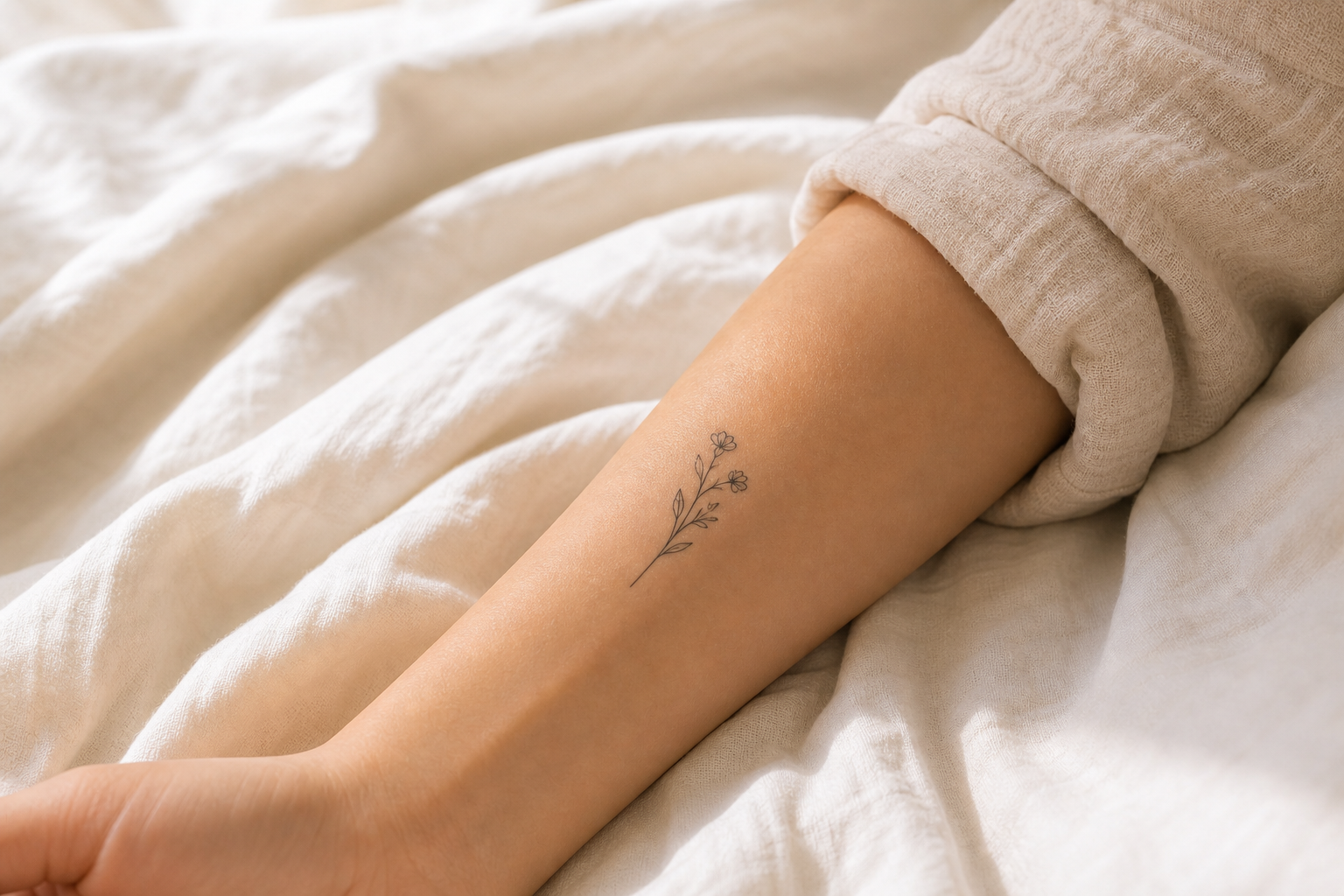
Yes, you can usually sleep with a temporary tattoo on.
The short rule is simple: sleep with it only if the tattoo is fully dry, your skin feels normal, and the placement will not be rubbed by tight fabric all night.
Patch test any new temporary tattoo before first use, not just before bedtime. This is especially important for glitter, metallic powder, metallic foil, glow, or fluorescent designs.
Sleep itself is not the main problem. The real risks are rubbing, pressure, sweat, body oil, lotion, and fabric touching the design for several hours.
A temporary tattoo sits on the surface of the skin, so overnight friction can make the edges lift, blur the design, or transfer a little pigment onto fabric.
Quick Answer: Can You Sleep With a Temporary Tattoo On?
You can sleep with a temporary tattoo on if it is dry, comfortable, and not in a high-friction area.
Do not sleep with it on if the tattoo still feels sticky, your skin feels irritated, or the design uses a new special-effect formula you have not tested yet.
Before bed, check three things:
- The tattoo no longer feels damp, sticky, or tacky.
- The skin does not feel itchy, hot, stinging, or tight.
- The tattoo is not directly under a tight sleeve, waistband, bra strap, sock, or bedding pressure point.
If the tattoo was just applied, wait until it is fully set. If the design feels uncomfortable before you sleep, remove it instead of leaving it on overnight.
For a bigger picture on wear time, see our guide to how long temporary tattoos last. This article focuses only on sleeping with one on.
Why Temporary Tattoos Can Rub Off Overnight
A temporary tattoo is designed to stay on the top layer of the skin. It is not absorbed deep into the skin like a real tattoo. That is what makes it temporary, but it also means the surface can be affected by rubbing.
At night, a few things can happen at the same time:
- Your arm, shoulder, wrist, ankle, or hip presses into the sheets.
- Pajamas or bedding move back and forth over the design.
- Sweat or body oil softens the surface slightly.
- Lotion, body oil, sunscreen, or perfume from earlier in the day sits under or over the tattoo.
- The tattoo was not completely dry before it touched fabric.
That combination can make the tattoo look faded, cracked, shiny, or smudged in the morning. It can also make the edge start to peel, especially if the tattoo is on a joint or a place that bends.
Water alone is not the only factor. Our article on whether waterproof temporary tattoos are really waterproof explains that water resistance does not mean friction-proof. Sleeping is mostly a friction problem.
A Safety Note Before Using a Temporary Tattoo
Do a small patch test before applying any new temporary tattoo to a larger area.
This is a before-use step, not a bedtime step. If the product is new to you, test it first, then decide whether you want to wear it for longer or sleep with it on later.
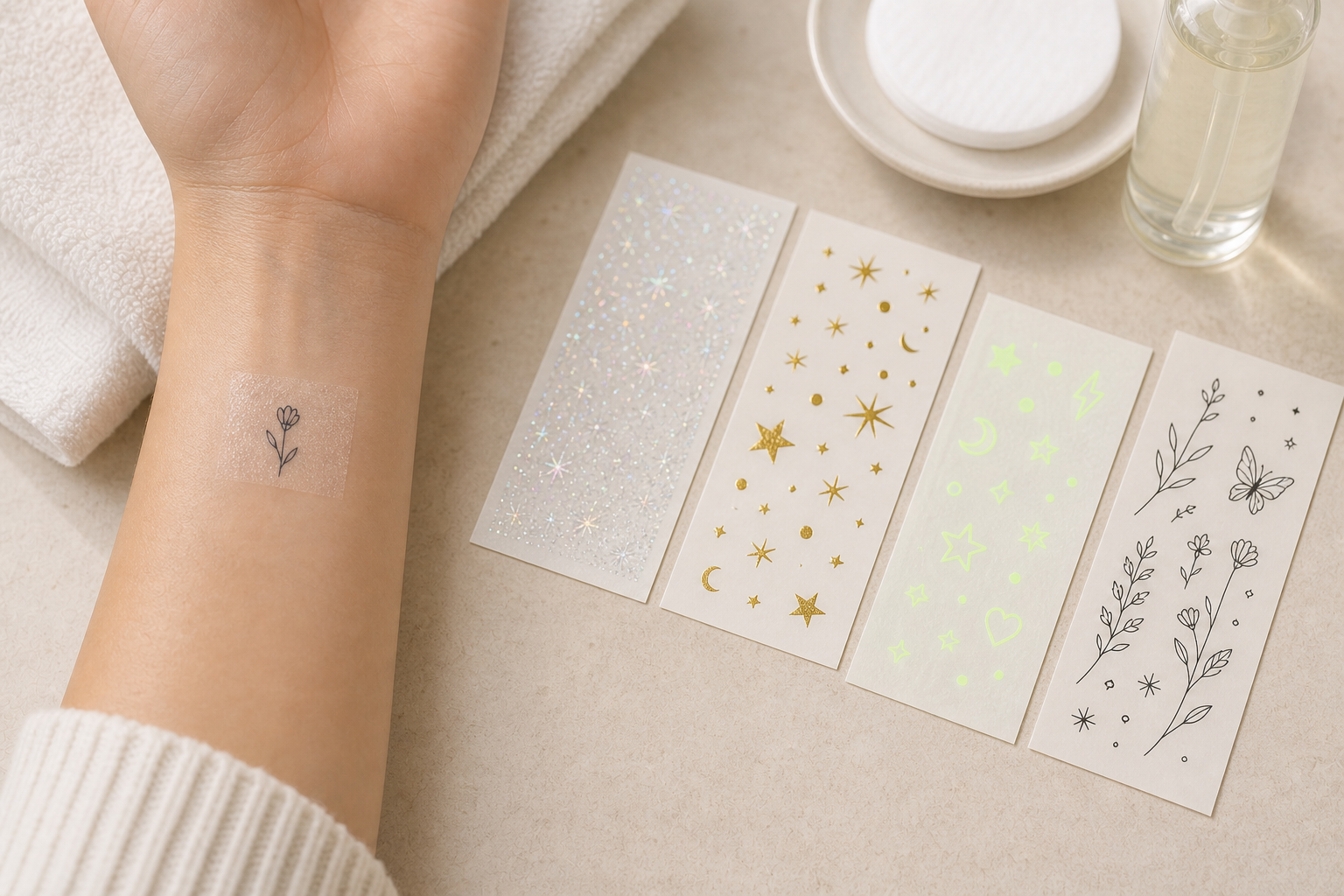
This matters even more for special-effect temporary tattoos, including:
- Glitter temporary tattoos
- Metallic gold or silver temporary tattoos
- Temporary tattoos with metallic powder or foil effects
- Glow-in-the-dark or fluorescent designs
- Very dark black henna-style products
- Any product with an unfamiliar smell, texture, or ingredient list
The FDA says it has received reports of adverse reactions to some decal, henna, and black henna temporary tattoos, and it specifically suggests testing on a less noticeable part of the body before using a temporary tattoo on the face.
That same cautious idea is useful before any larger application. Sleeping adds hours of fabric contact and friction, so it is not the best time to discover that a new formula bothers your skin.
The American Academy of Dermatology explains that contact dermatitis can happen when something that touches the skin causes irritation or an allergic reaction. If your skin is already itchy, red, burning, or stinging before bed, do not sleep with the tattoo on.
For a broader safety overview, you can also read are temporary tattoos safe?.
How Long Should You Wait Before Sleeping?
Do not use the clock as your only guide. Use the surface of the tattoo.
The tattoo should feel dry to the touch. It should not leave moisture on your fingertip. It should not feel soft, sticky, or easy to move. If the design looks glossy because it is still wet, give it more time.
If you are applying a temporary tattoo for the next day, the best timing is earlier in the evening, not right before you climb into bed. That gives the design time to settle before it has to deal with sheets, sleeves, and pressure.
If you apply it late at night, choose a place that will not be rubbed much while you sleep. A small tattoo on the outer forearm will usually be easier to protect than one on the wrist, hand, ribs, hip, ankle, or shoulder strap area.
How Should You Sleep With a New Temporary Tattoo on Your Arm or Elsewhere?
Wait until the tattoo is fully dry, then sleep in a position that does not press the design against your body, bedding, tight sleeves, straps, or seams. An outer-arm or outer-calf placement is usually easier to protect than a wrist, hand, waist, ankle, or any area you normally sleep on.
\n\n\n\nSome placements handle sleep better than others.
Better overnight placements usually include:
- Outer forearm
- Upper outer arm
- Outer calf
- Shoulder cap if it is not under a strap
- Upper back if you do not sleep directly on your back
More difficult overnight placements include:
- Wrist and inner wrist
- Hand and fingers
- Ankle and foot
- Waist, hip, or rib area
- Neck or collarbone under tight clothing
- Any area under elastic, straps, socks, or seams
The rule is simple: if fabric or skin will rub it repeatedly, the tattoo may not look as clean in the morning.
How Do You Prevent a Temporary Tattoo From Rubbing Off Overnight?
To reduce overnight rubbing, wait until the tattoo is fully dry, keep it away from elastic and seams, and wear loose sleepwear. Do not apply oil or heavy lotion over it, and do not wrap it by default. If you cannot avoid pressure or friction, applying the tattoo the next morning is the more reliable choice.
Overnight friction is one part of the broader care plan. For preparation, placement, water, oil, and aftercare together, read our guide to making temporary tattoos last longer.
Do not apply body lotion, cleansing oil, sunscreen, perfume, or heavy moisturizer directly over the tattoo before bed. Oil-based products are especially likely to soften temporary tattoo adhesive or make the surface slip.
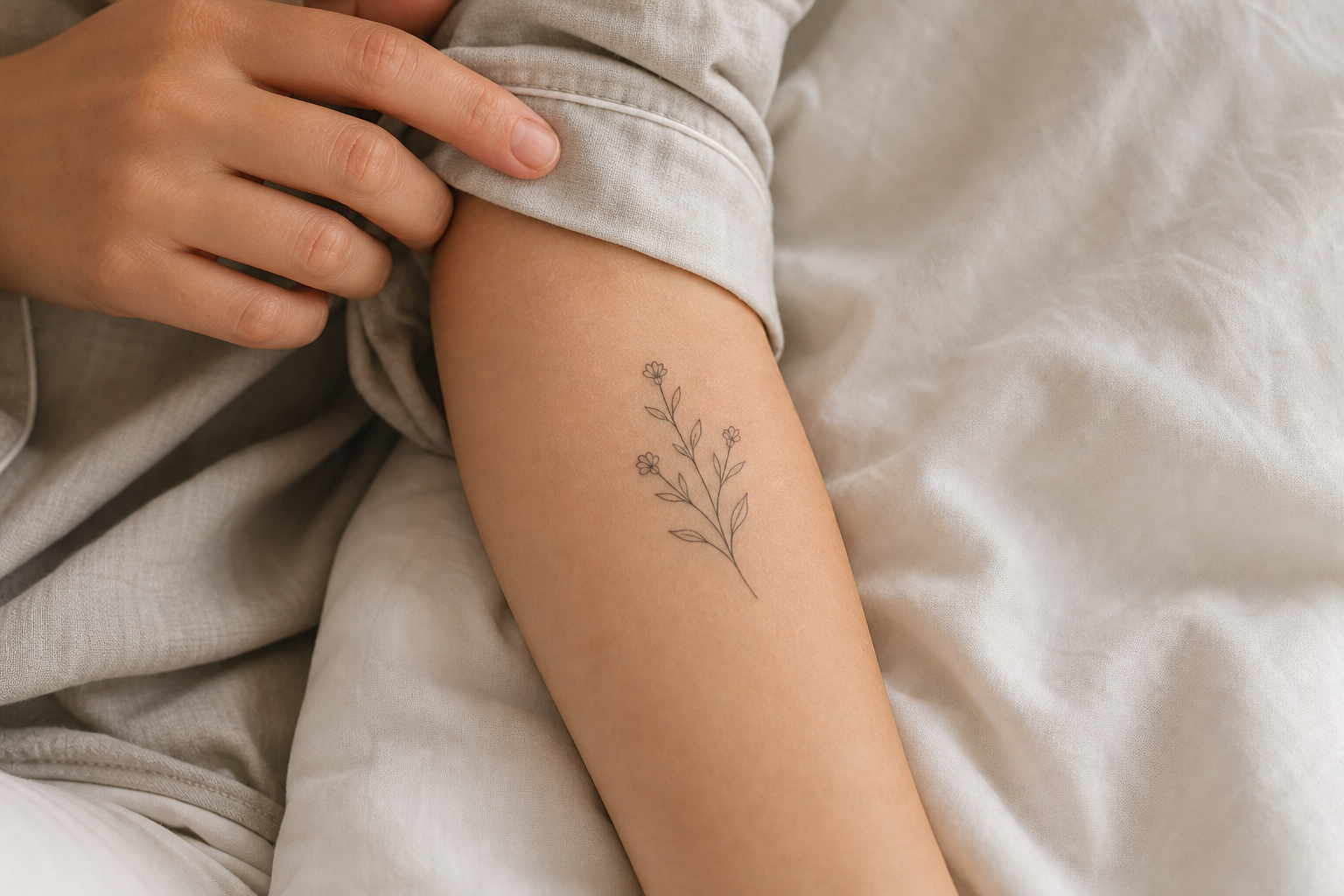
Wear loose clothing if the tattoo is under pajamas. If possible, let the tattoo sit against open air or soft fabric instead of elastic or seams.
Avoid covering the tattoo with tape, plastic wrap, or a tight bandage unless the product instructions specifically say to do that. Covering can trap sweat and create more friction when you move.
If the tattoo is for an event, keep expectations realistic. A tattoo that survives the night may still look good, but it has already gone through several hours of wear before the event begins. For photos, parties, weddings, or a vacation day, applying it the morning of the event usually gives the cleanest result.
Choosing your next temporary tattoo?
Ready to choose a style?
Apply a fresh design when it fits your plans, then follow the product page and package directions.
For the freshest event look, this article recommends applying closer to when you plan to wear it.
Will a Temporary Tattoo Transfer Onto Sheets or Clothes?
It can, but it is less likely if the tattoo is fully dry.
A dry, well-applied temporary tattoo usually stays on the skin better than a freshly applied one. But transfer can still happen if you sweat, rub the design against fabric, or sleep with the tattoo pressed tightly under clothing.
If you are worried about sheets, avoid white or delicate bedding on the first night. Choose loose, washable sleepwear and keep the tattoo away from areas that press directly into the bed.
Metallic, glitter, dark, or very saturated designs may be more noticeable if they transfer. That does not mean every special-effect tattoo will stain fabric, but it is another reason to test first and avoid wearing a brand-new formula overnight before an important event.
What If It Looks Smudged in the Morning?
If the tattoo looks slightly blurred in the morning, do not scrub it right away. First, check your skin.
If the skin feels normal and the design is only a little worn, you can leave it alone. A small amount of fading is normal for temporary tattoos.
If one edge is lifting, avoid picking at it with your fingernail. Picking can make the broken edge larger. If you want to remove the loose part, use a gentle oil-based remover and work from the edge instead of rubbing the whole design.
If the tattoo is cracked, half peeled, or only partly transferred, our guide on how to fix a temporary tattoo that is peeling, cracked, or half transferred gives more specific options.
If the skin feels itchy, red, warm, or uncomfortable, remove the tattoo gently and stop using that product on the same area.
Is Morning Better Than Night?
For the cleanest look, morning is usually better.
Night application can work if the tattoo has enough time to dry and the placement is low-friction. But morning application avoids the biggest overnight risks: bedding, sweat, pressure, and long fabric contact.
Use nighttime application when:
- You are testing placement.
- You want a casual look, not a perfect event look.
- The tattoo is small and placed somewhere low-friction.
- You have already tested the product before.
Use morning application when:
- You need the tattoo to look fresh for photos.
- The design is metallic, glitter, fluorescent, or very dark.
- The placement is on the hand, wrist, ankle, shoulder, or waist.
- You are using a new product or a new brand.
FAQ
Can I sleep right after applying a temporary tattoo?
It is better not to. Wait until the tattoo is fully dry and no longer feels tacky. If it touches sheets while it is still damp, it may blur, lift, or transfer.
Should I cover a temporary tattoo while sleeping?
Usually, no. A tight cover can trap sweat and create more rubbing. Loose clothing or choosing a low-friction placement is usually better than tape or plastic wrap.
Will a temporary tattoo stain my sheets?
It can transfer lightly if it is not fully dry, if you sweat, or if the design rubs against fabric all night. A fully dry tattoo is less likely to transfer, but dark, glitter, metallic, or very saturated designs deserve more caution.
Are glitter, metallic, or glow temporary tattoos okay to sleep with?
Be more careful with them. Patch test before first use, especially if the product is new to you. If you notice itching, redness, stinging, heat, or tightness, do not sleep with it on. Special-effect designs can include extra pigments or particles, and overnight friction can make discomfort harder to notice early.
Why did my temporary tattoo crack overnight?
It may have been placed on a bending area, rubbed against fabric, or exposed to sweat or lotion before it fully set. Wrist, hand, ankle, hip, and shoulder strap areas are especially likely to crack or peel.
Is it better to apply a temporary tattoo in the morning or at night?
For the freshest look, morning is usually better. If you apply it at night, do it earlier in the evening, let it dry completely, and avoid high-friction placements.
Final Takeaway
You can sleep with a temporary tattoo on if it is dry, comfortable, and placed where fabric will not rub it too much. For a casual look, that is usually fine.
For a special event, apply it closer to the time you want it to look fresh. And if the tattoo has glitter, metallic powder, glow, fluorescent effects, black henna-style coloring, or any unfamiliar formula, do a small patch test before first use. A temporary tattoo should be fun to wear, not something your skin has to argue with overnight.
What the guide images show
Key visual information is repeated below as text so the design, scale, placement, and process do not depend on images alone.
- A fully dry temporary tattoo on an arm resting on soft bed sheets.
- Patch testing a special-effect temporary tattoo before using it on a larger area.
- A temporary tattoo placed where loose sleepwear is less likely to rub it.