
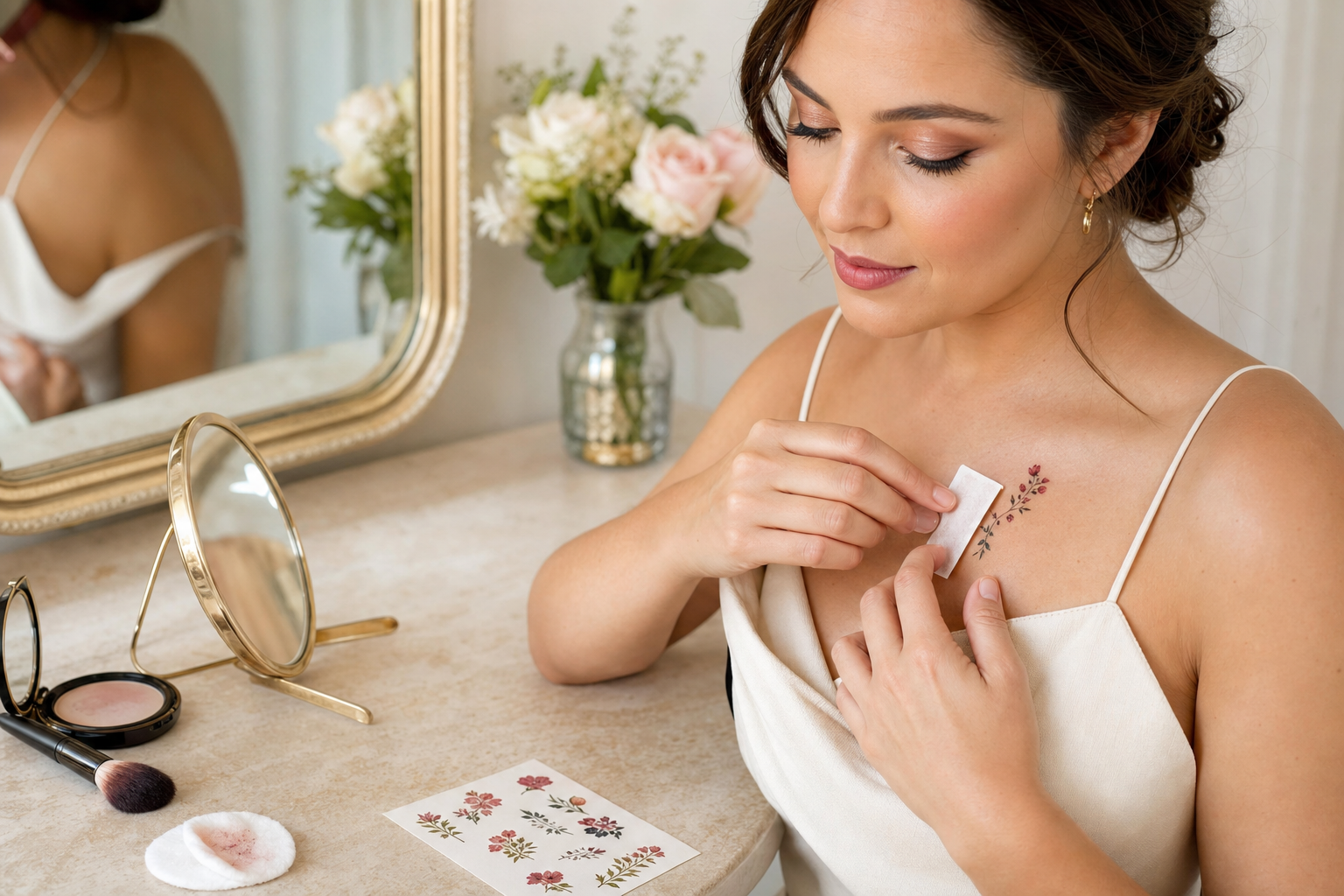
You can try applying a temporary tattoo over makeup, but the result is not as predictable as applying it to clean, dry skin.
The important question is not only whether the tattoo can stick. It is whether the makeup underneath can survive the application process. A water-transfer temporary tattoo usually needs moisture, steady pressure, and a careful peel-away step. If the foundation, body makeup, sunscreen, shimmer, or face paint underneath breaks down when it gets wet, the tattoo may transfer unevenly or lift the makeup with it.
That does not mean a temporary tattoo over makeup is never possible. For a short event, costume, festival look, photo shoot, or night out, you may only need the design to look good for a few hours before you remove your makeup anyway. In that situation, the goal is different from normal temporary tattoo wear: you are not trying to make it last for days. You are trying to get a clean enough transfer on top of a makeup surface.
This guide explains which makeup types are more likely to work, which ones usually cause trouble, and how to test your makeup before you use the real tattoo.
Quick Answer: Can You Put a Temporary Tattoo Over Makeup?
Yes, you can try putting a temporary tattoo over makeup if the makeup is thin, fully dry, matte, and resistant to water and transfer. It is still not guaranteed.
For the most reliable result, temporary tattoos should go on clean, dry skin. TemporaryTattoos.com, for example, explains that classic temporary tattoos are applied with water and a wet cloth, and that the skin should be clean, dry, and free of oil, lotion, and makeup before application.
That application advice matters because makeup creates a layer between the tattoo and the skin. If that layer is oily, creamy, powdery, or easy to disturb, the tattoo may not transfer cleanly.
If you want the best-looking design, apply the temporary tattoo to bare skin first, then apply makeup around it. If you are already wearing makeup and only need a short-term look, test the makeup first and choose your placement carefully.
The Real Test: Can Your Makeup Handle Water and Pressure?
A temporary tattoo is not applied like a sticker on paper. It usually needs water on the paper backing, firm pressure, and time for the design to release. TemporaryTattoos.com describes the application process as using water and a wet cloth, with the tattoo pressed firmly against the skin.
That wet transfer process creates three problems for makeup:
- Water can dissolve, soften, or streak the makeup.
- Pressure can move cream, oil, shimmer, or powder underneath the tattoo.
- Peeling the backing away can lift unstable makeup from the skin.
So the useful question is not “Is this makeup waterproof?” It is:
Can this makeup stay smooth if I press a wet cloth over it?
If the answer is no, the tattoo probably will not transfer cleanly over it.
Makeup Types That May Work Better
The makeup types below are more likely to work under a temporary tattoo, but they still need a small test first.
Fully Dry Waterproof Foundation
A waterproof or water-resistant foundation may hold up better during the wet application step, especially if it has been applied in a thin layer and allowed to dry fully.
The surface should feel dry to the touch. If the foundation still feels creamy, tacky, or movable, the tattoo paper can shift it during application.
For a one-night look, a fully set long-wear foundation can sometimes be acceptable. For the sharpest transfer, bare skin is still better.
Transfer-Resistant Body Makeup
Transfer-resistant body makeup can be a good candidate because it is designed for larger skin areas and contact with clothing. It may handle pressure better than everyday face makeup.
Still, do not rely on the claim alone. A product can be transfer-resistant when dry but soften when you hold a damp cloth over it. Test before applying the tattoo.
Matte Long-Wear Base Products
Thin, matte, long-wear base products usually behave better than dewy or balm-like formulas. A dry-touch finish gives the tattoo paper a more stable surface.
The layer should be thin. Heavy foundation can look smooth at first but peel, pill, or crack when the paper backing is removed.
Alcohol-Activated Body Paint or SFX Makeup
For costume, stage, or special effects looks, fully dry alcohol-activated makeup may be one of the more stable bases. These products are often designed to resist moisture better than standard cream makeup.
This is still a test-first category. Different formulas behave differently, and some areas of the body are more sensitive than others.
Thin, Well-Set Makeup
Sometimes the best makeup base is simply a very thin layer that has been set well and given enough time to dry. If the surface feels smooth, dry, and non-oily, it has a better chance of surviving the wet transfer step.
If the makeup transfers easily to your fingertip, it is probably not ready.
Makeup Types That Usually Do Not Work Well
Some makeup products make temporary tattoo application much less reliable.
Oil-Based Foundation or Body Oil
Oil is one of the biggest problems. It can interfere with transfer, blur the edges, and make the tattoo easier to remove. If the skin feels slick, glossy, or moisturized, the design may not bond evenly.
This includes body oils, oil-heavy foundations, cleansing balm residue, rich moisturizers, and glow oils.
Dewy or Tacky Foundation
Dewy makeup can look beautiful in photos, but it often stays flexible or slightly sticky on the skin. When pressed with a damp cloth, it may move, smear, or lift.
If the makeup is meant to stay luminous and fresh-looking rather than dry down, it may not be the best surface for a temporary tattoo.
Tinted Moisturizer, BB Cream, or Creamy Sunscreen
Light base products are not always better. Tinted moisturizers, BB creams, and creamy sunscreens often leave a soft or slippery film.
Sunscreen needs a little extra care. The American Academy of Dermatology explains that some sunscreens are water resistant, but no sunscreen is waterproof or sweatproof. That is about sun protection, not whether the product is a good surface for a temporary tattoo.
If sunscreen is under the tattoo area, assume it may interfere unless it has dried down very well and passes a water-and-pressure test.
Cream Highlighter, Balm, or Gloss
Glossy, balmy, waxy, or emollient products usually reduce transfer quality. They can stop the tattoo from making even contact with the makeup surface.
This includes cream highlighter, body balm, glossy body shimmer, and sticky glow products.
Loose Glitter or Heavy Powder
Loose glitter creates texture between the tattoo and the skin. Heavy powder can also become patchy when wet.
A tiny amount of powder around a finished tattoo can reduce shine, but a thick powder layer underneath the tattoo is not ideal.
Water-Activated Face Paint
Water-activated face paint is risky because temporary tattoo application also uses water. If the paint reactivates, the design may slide, blur, or pick up color from the makeup underneath.
For costume looks, apply the tattoo to bare skin first when possible, then paint carefully around it.
Freshly Applied Makeup
Even the right product can fail if it has not set. Fresh makeup is easier to move. Give the base time to dry before you test it or apply the tattoo.
Do a Small Water-and-Pressure Test First
Before applying the real temporary tattoo, test the makeup in a small area.
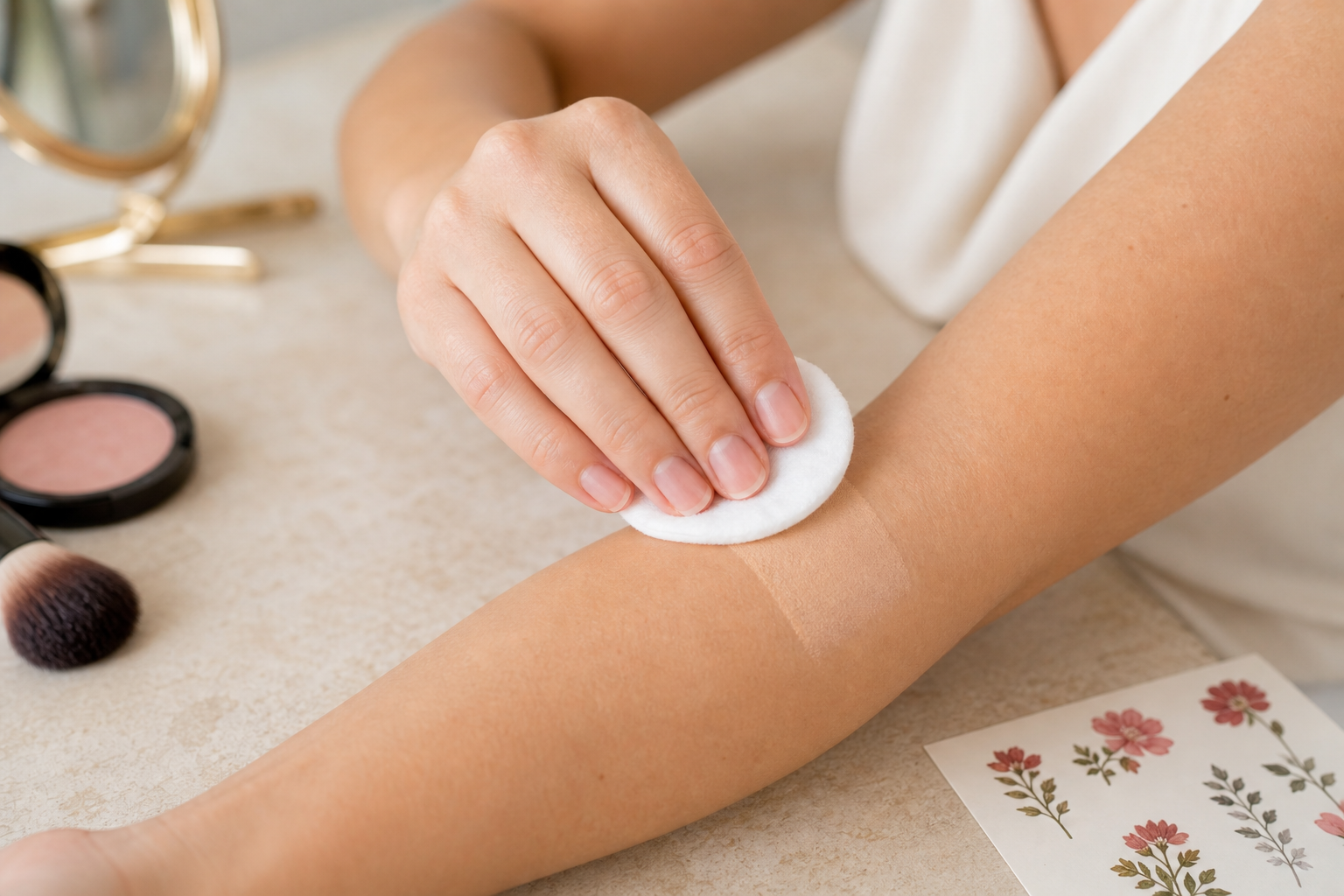
Press a damp cotton pad or cloth over the makeup for 20 to 30 seconds. Use the same kind of pressure you would use to apply the tattoo. Lift the pad straight up and check what happened.
The makeup may be workable if it still looks smooth, dry, and even.
Avoid applying the tattoo directly over that makeup if the test area becomes sticky, streaky, patchy, shiny, muddy, or transfers heavily onto the cloth. Those signs mean the tattoo application process may damage the makeup and stop the design from transferring cleanly.
Best Way to Apply a Temporary Tattoo When You Are Wearing Makeup
If you are already wearing makeup and still want to apply a temporary tattoo, keep the process controlled.
Choose a flat area with less movement. A shoulder, upper arm, collarbone area, or outer forearm is usually easier than a wrist crease, finger, neck fold, or oily part of the face.
If you can, remove makeup from just the tattoo area. Use a cotton swab or small cotton pad to clear a patch of skin slightly larger than the design. Let the skin dry completely before applying the tattoo.
If you cannot remove the makeup, make sure the base is fully dry and set. Place the tattoo carefully and avoid sliding it around. Wet the paper backing enough to release the design, but try not to flood the surrounding makeup.
Hold steady pressure, then peel the backing slowly. Do not drag the paper across the skin.
After the tattoo is on, let it dry before touching it. Avoid blending foundation, shimmer, powder, or sunscreen directly over the fresh design.
For the standard clean-skin method, see our step-by-step guide on how to apply a temporary tattoo.
Should You Apply a Face Tattoo Before or After Makeup?
If you have a choice, apply the temporary tattoo before makeup.
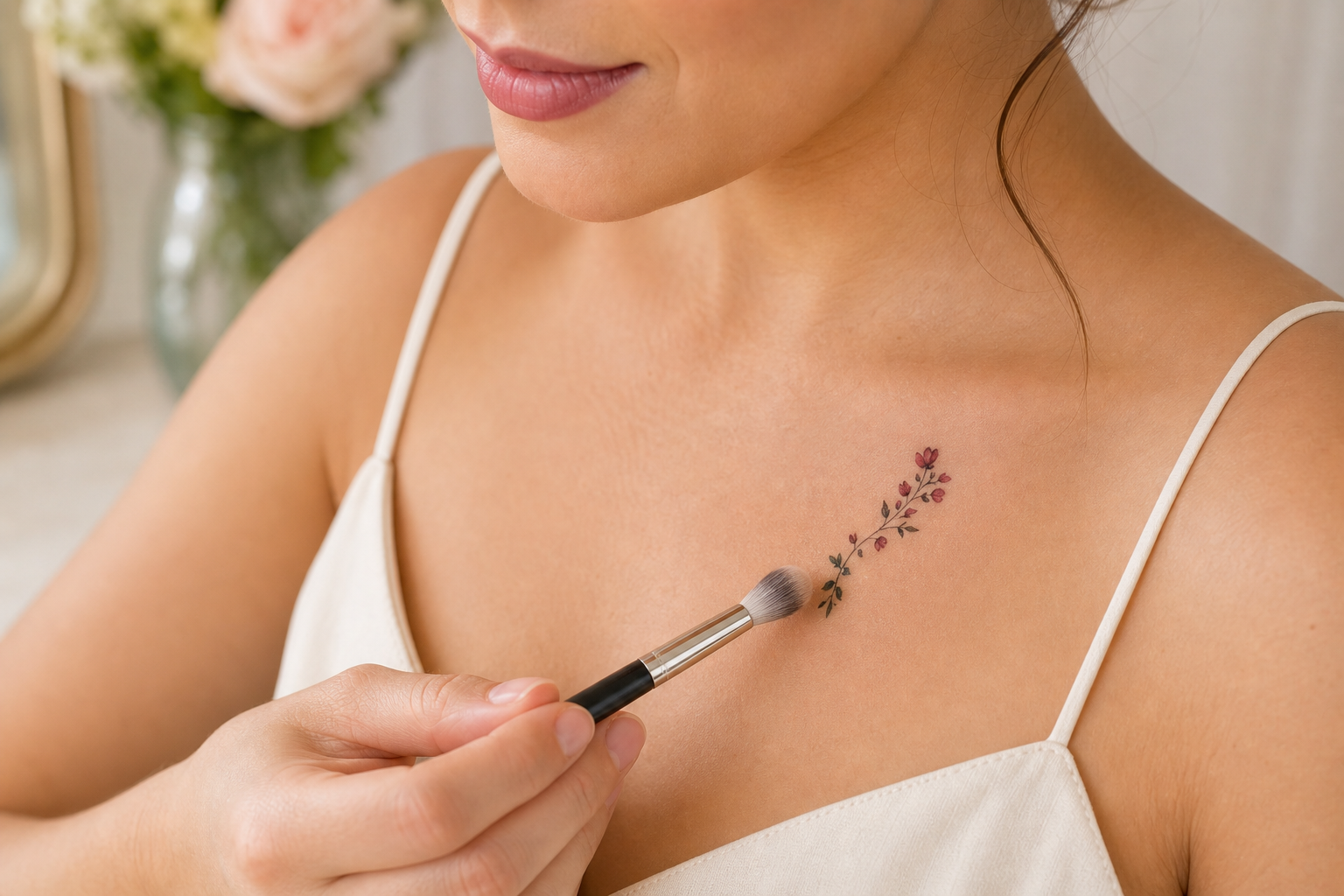
That gives the design direct contact with clean skin. Once the tattoo is dry, you can apply makeup around it using a small brush, sponge edge, or cotton swab. This helps keep the edges crisp without asking a full layer of makeup to survive water and pressure.
This order works especially well for costume makeup, festival looks, collarbone designs, shoulder tattoos, hand details, and photo styling.
Can You Put Makeup Over a Temporary Tattoo?
You can put makeup around a temporary tattoo, but be careful with makeup directly on top of it.
A tiny amount of translucent powder may reduce shine after the tattoo is completely dry. Heavy foundation, oil, cream products, or makeup remover can fade or break down the design faster.
For a one-night look, that may be acceptable. If you want the tattoo to last beyond the event, avoid layering oily or creamy products over it.
For more wear-time advice, read how to make temporary tattoos last longer.
What About Setting Spray?
Setting spray can help makeup stay in place, but it does not turn every makeup look into a waterproof surface.
If you use setting spray before applying the tattoo, let it dry completely. If the skin still feels damp or tacky, wait longer.
Avoid soaking a fresh temporary tattoo with setting spray. Too much moisture can soften the finish or affect the edges before the tattoo settles.
What About Sunscreen Under a Temporary Tattoo?
Sunscreen is important for sun protection, but it is not the best base for a temporary tattoo.
Many sunscreens leave a flexible, creamy, or slippery film. Even water-resistant sunscreen should not be treated as waterproof. The American Academy of Dermatology notes that no sunscreen is waterproof or sweatproof, so a sunscreen that handles normal wear may still move when pressed with a damp cloth.
For an outdoor event, a practical option is to apply the temporary tattoo to clean, dry skin first, let it dry fully, then apply sunscreen carefully around the design. Avoid rubbing sunscreen directly over the tattoo if you want crisp edges.
When You Should Not Apply a Temporary Tattoo Over Makeup
Skip applying a temporary tattoo over makeup if the skin is irritated, broken, sunburned, freshly shaved and sensitive, or reacting to a cosmetic product.
The American Academy of Dermatology explains that contact dermatitis can happen when something that touches the skin causes irritation or an allergic reaction. If your skin is already uncomfortable, do not add more layers of makeup, water, pressure, and adhesive on top.
You should also skip makeup-over-tattoo application if the makeup is oily, wet, thick, glitter-heavy, or water-activated. In those cases, the tattoo may not transfer cleanly, and the makeup underneath may get damaged.
The Bottom Line
You can apply a temporary tattoo over makeup for a short-term look, but it works best over makeup that is thin, dry, matte, set, and able to handle water and pressure.
It usually does not work well over oily, creamy, dewy, freshly applied, glitter-heavy, or water-activated makeup.
For the most reliable result, apply the tattoo to clean skin first, then build the makeup look around it. If you must apply it over makeup, do a small water-and-pressure test before using the real design.
FAQ
Can temporary tattoos stick to foundation?
Sometimes, but foundation makes the result less predictable. Thin, fully dry, matte, long-wear foundation may work better than oily, dewy, or freshly applied foundation.
Can a temporary tattoo go over waterproof makeup?
It can, but waterproof makeup is not a guarantee. The makeup still needs to survive direct moisture, pressure, and peeling. Test it with a damp cotton pad first.
Will the water ruin my makeup while applying a temporary tattoo?
It might. The application process uses water on the tattoo backing, and some makeup breaks down when pressed with moisture. If your makeup smears during a water-and-pressure test, apply the tattoo to bare skin instead.
Can I put setting powder over a temporary tattoo?
A tiny amount of translucent powder can help reduce shine after the tattoo is completely dry. Do not use a heavy layer of powder under the tattoo, because it can interfere with transfer.
Can I apply a temporary tattoo over sunscreen?
It is not ideal. Sunscreen can leave a film that affects adhesion, especially if it is creamy or oily. Apply the tattoo to clean, dry skin first when possible, then apply sunscreen carefully around it.
Can makeup remover remove a temporary tattoo later?
Yes. Many makeup removers can help break down a temporary tattoo, especially oil-based removers or cleansing oils. That can be useful at the end of the night, but it also means oily products can shorten the look while you are wearing it.
Should I apply a temporary tattoo before or after costume makeup?
Before is usually better. Apply the temporary tattoo to clean skin, let it dry, then build costume makeup around it. This avoids using water and pressure on top of finished makeup.
What the guide images show
Key visual information is repeated below as text so the design, scale, placement, and process do not depend on images alone.
- Temporary tattoo application with makeup and a damp cotton pad.
- Water and pressure test before applying a temporary tattoo over makeup.
- Makeup blended around a temporary tattoo after application.
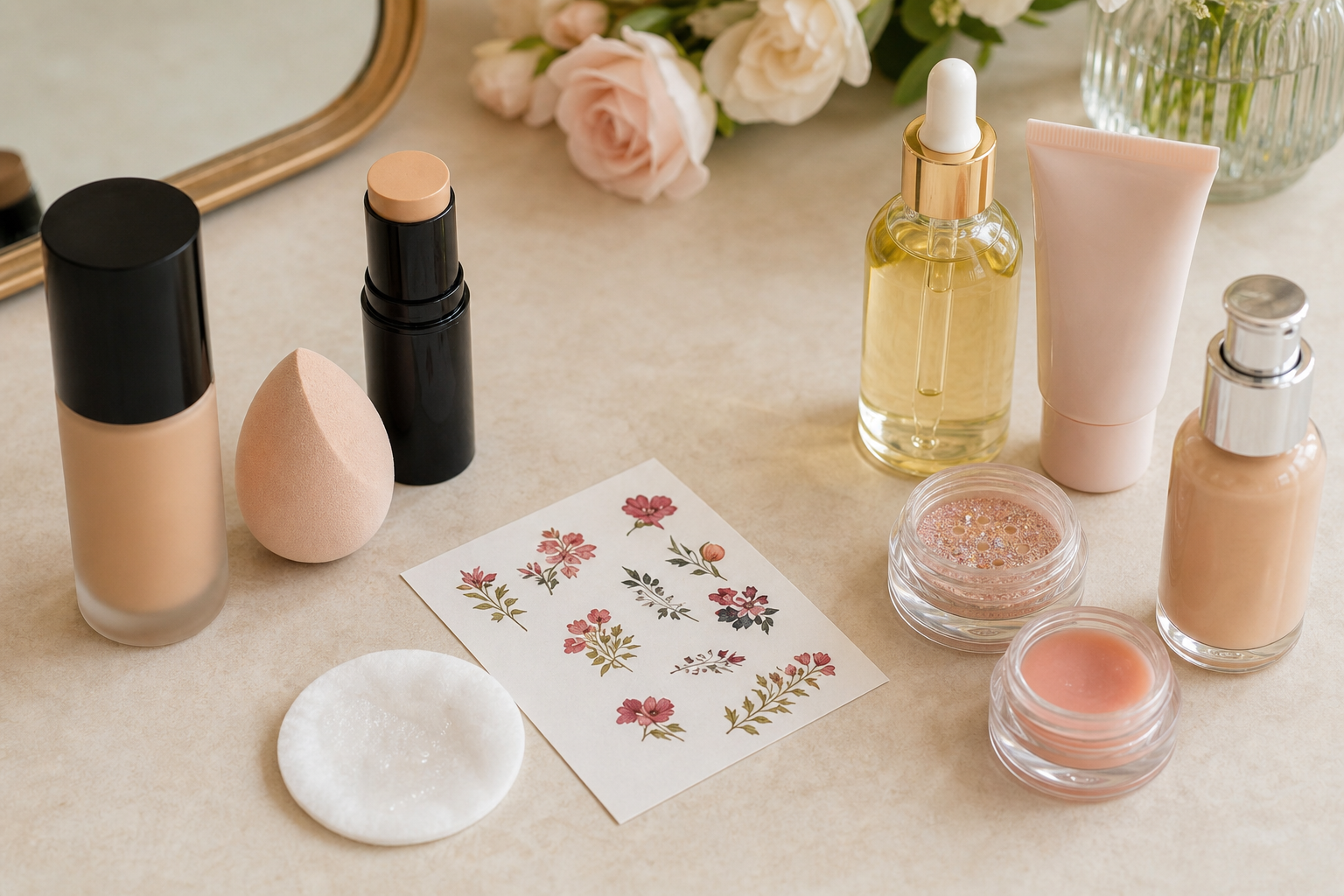
- Makeup products that can affect temporary tattoo transfer.