
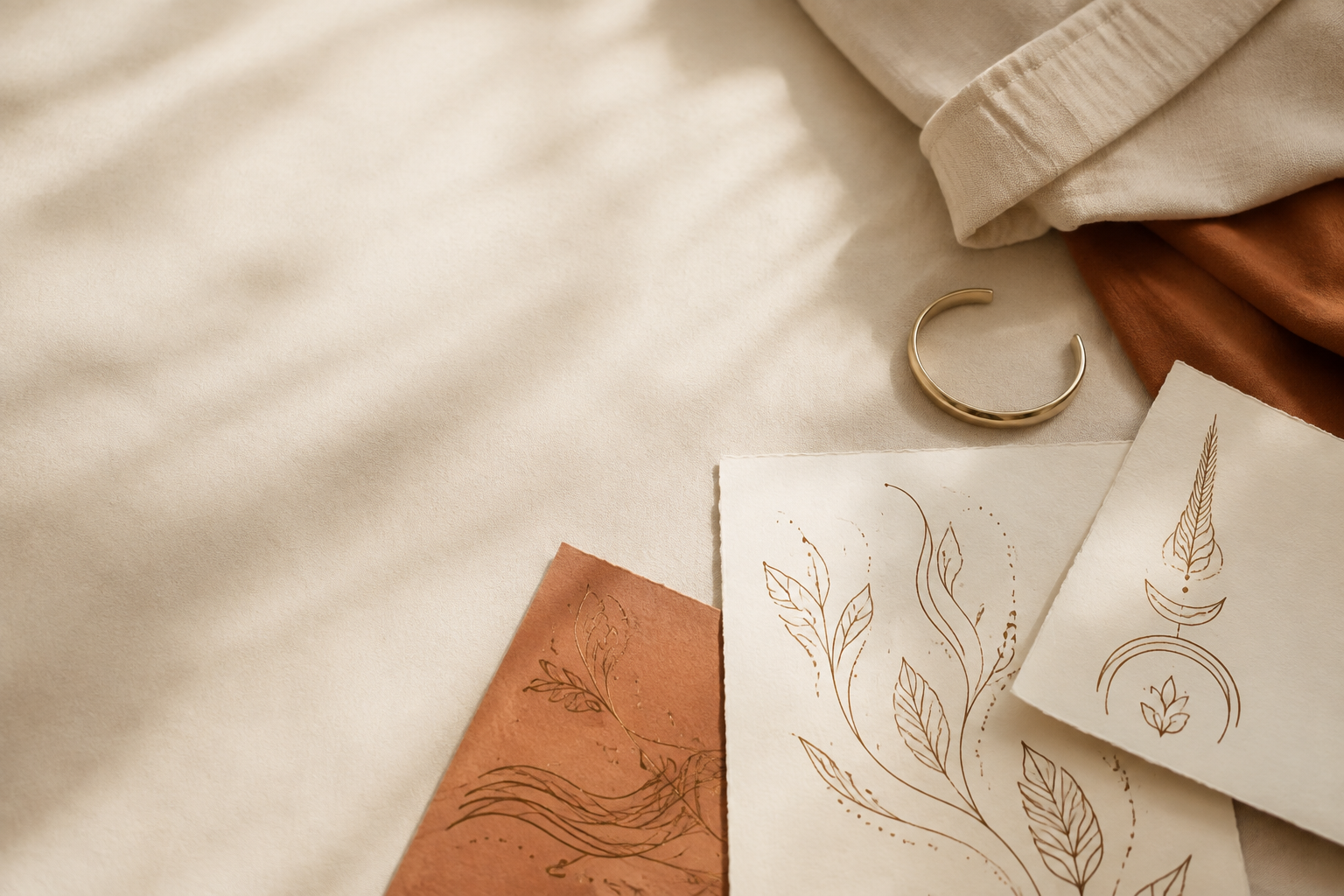
Henna-inspired temporary tattoos look most intentional when you treat them as a decorative linework accent, not as a pattern that has to cover an entire area. Choose one visual role first—an intricate hand detail, a lengthening forearm line, or a small ankle finish—then let your sleeves, shoes, and jewelry leave enough quiet space around it.
Start with the role you want the pattern to play
Before choosing a body area, decide what the tattoo should do for the outfit. A close, intricate motif can act like a finishing detail beside an otherwise simple look. A longer ornamental line can give an open sleeve or bare forearm a clear direction. A small ankle detail can make sandals, cropped trousers, or a simple dress feel considered without becoming the focal point.
The useful rule is simple: one detailed zone needs plainer neighbors. If the outfit already has bold prints, stacked bracelets, or a busy neckline, choose a smaller motif or leave more open skin around it. If the outfit is mostly solid color, a more detailed ornamental pattern can carry a little more visual weight.
Make a hand or wrist design feel deliberate
Hands and wrists are naturally visible, so they suit a design that reads as one refined detail rather than several competing accents. A warm brown motif works well when you want the linework to feel soft beside linen, denim, cream, rust, or other muted colors. A gold ornamental detail can work as a brighter accent when the rest of the look is simple.
Keep a clear border between the tattoo and watches, cuffs, rings, or bracelets. That border is what makes the pattern feel placed rather than crowded. If you want a bracelet-like effect, let the tattoo be the main decorative line and reduce the number of neighboring accessories. If jewelry is the main event, choose a smaller hand or wrist motif instead.
For a broad guide to choosing body areas rather than styling one particular motif family, see our temporary tattoo placement guide.
Use the forearm to give an outfit a direction
The forearm is useful when the pattern should connect the hand to the sleeve rather than sit as a single isolated mark. Look for the direction of the linework: a longer vertical flow can echo a rolled sleeve or a sleeveless silhouette, while a more compact panel can sit near the wrist as a finishing point.
Avoid treating every open forearm as a blank canvas. A detailed shirt cuff, layered necklace, or statement bag already creates visual activity. In that case, choose one smaller ornamental section and keep the rest of the arm visually quiet. With a plain short-sleeve top or a simple dress, a more visible forearm design can become the outfit’s decorative center.
If you are comparing water-transfer designs with traditional henna or mehndi rather than choosing a styling direction, use our water-transfer temporary tattoos vs henna guide. The FDA fact sheet is a useful source for the broader product-type distinction.
Let an ankle detail finish the lower half of a look
An ankle motif works best as a small endpoint: it can relate to a sandal strap, an open shoe, or the hem of a cropped trouser without needing to match every other accessory. Start with the shoe and hemline. A minimal shoe and clear ankle area can support a more detailed motif; a patterned sock, tied sandal, or decorative hem calls for a quieter design.
This is also a good place to use repetition sparingly. One small ornamental element can echo a color from a belt, bag, or earring without creating a head-to-toe theme. If the look already includes gold hardware, a gold motif can be the bridge. If the clothes lean warm and matte, brown linework can keep the result softer.
Choose a motif family, then stop before it becomes busy
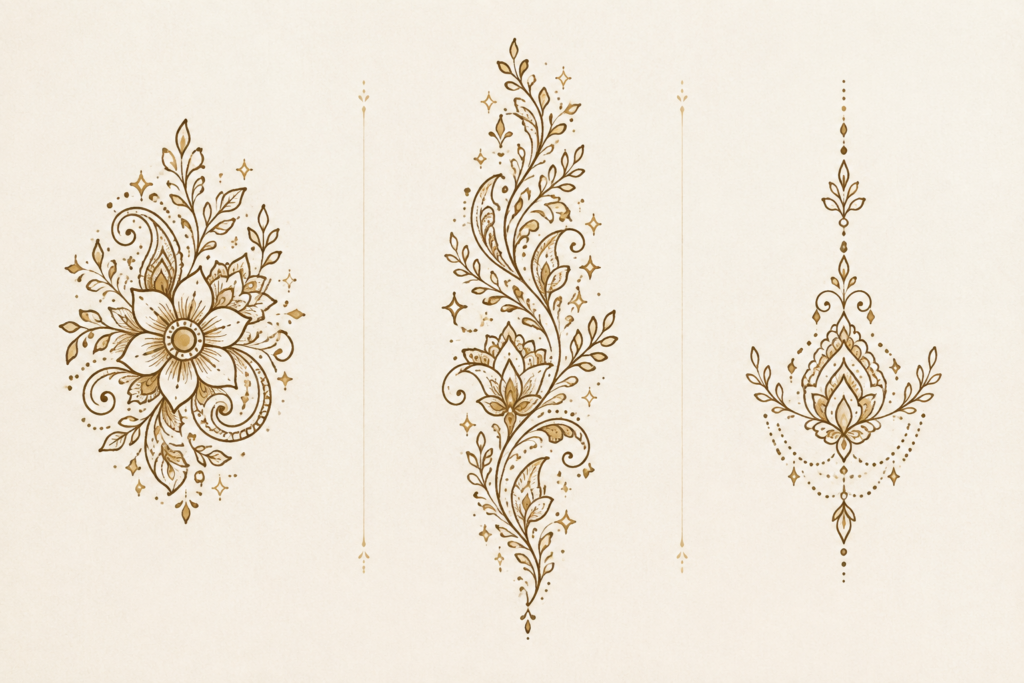
The current Beauty of Papers Henna & Mehndi collection was checked on September 7, 2026 and showed three named sheets: Brown Mehndi Floral, Brown Mehndi Lace, and Gold Mehndi Floral. That small range suggests a useful styling choice: begin with either soft brown floral-and-lace linework or a brighter gold ornamental accent, then keep the rest of the look in the same visual temperature.

This is a catalogue observation, not a promise about stock, scale, wear, or how a design will look on every person. Use the Henna & Mehndi collection to check the current designs and product photos before choosing a sheet.
Do a final three-part mirror check
Before applying, ask three visual questions:
- Is this the only highly detailed area in the look?
- Does the motif have a clear edge away from cuffs, shoes, or jewelry?
- Does its brown or gold direction connect to one other detail instead of competing with several?
If all three answers are yes, the styling is likely to feel intentional. If not, simplify one surrounding element rather than adding another tattoo. For broad temporary-tattoo type choices, visit the temporary tattoo style guide. For transfer instructions, use the step-by-step application guide. For questions about skin suitability or reactions, consult the temporary tattoo safety guide.