

Choose a temporary tattoo when you need evidence, not pressure: it lets you see a design on your body, with your clothes, and in ordinary life before making a longer-term decision. It cannot predict permanent ink or decide for you. Its value is helping separate three questions: Do I like the design, the placement, and the idea of having a tattoo at all?
Start With the Real Question: Do I Want This Tattoo—or Just the Idea of It?
It is possible to love a tattoo in a photograph and feel differently when the same visual idea becomes part of your own appearance. It is also possible to enjoy seeing a design on your body without wanting to keep any tattoo permanently. They are different questions.
A product page can explain artwork, finish, application, and placement. It cannot tell you how you will respond when the design appears beside your usual clothes, in an unplanned photograph, or during an ordinary workday. That is the more persuasive reason to choose a temporary tattoo: it turns an imagined preference into something you can observe.
Three Different Doubts Need Three Different Tests
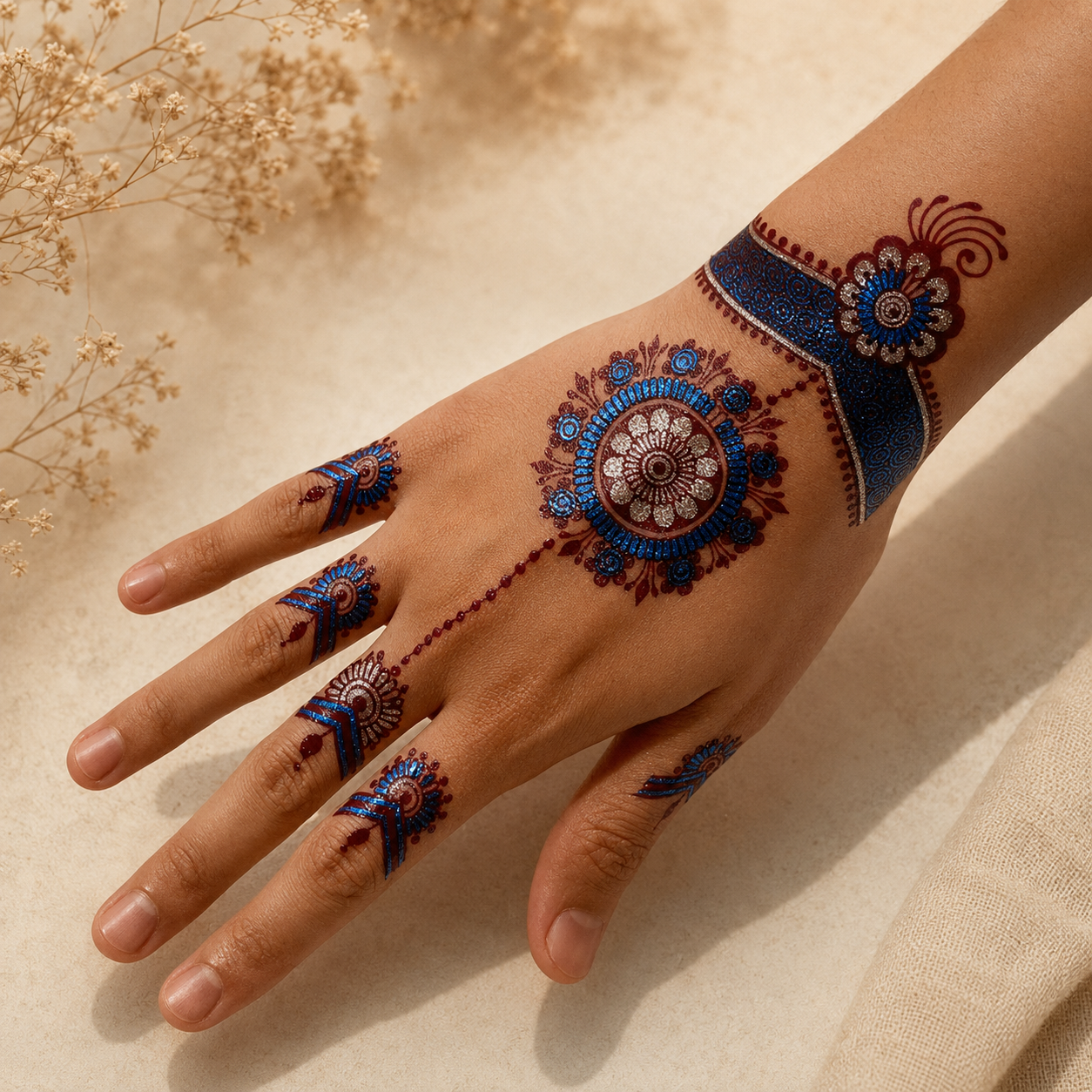
Design doubt: “Is this artwork really me?”
A design can look appealing as an isolated image but feel too delicate, bold, romantic, geometric, colorful, or attention-grabbing once worn. Check it at a normal viewing distance instead of judging only a close-up. Wear the clothes you normally choose and look at the design in daylight, indoor light, mirrors, and photographs.
Placement doubt: “Do I like seeing it here?”
Placement changes how often you see a design, how easily other people notice it, how clothing frames or covers it, and how the artwork follows a moving body. Check the tattoo while standing, sitting, reaching, and wearing normal sleeves, straps, shoes, or jewelry. Look from the front and side rather than twisting the body into an unusual pose.
If placement is your main question, use our detailed guide to testing permanent tattoo placement with a temporary tattoo. It covers size, direction, visibility, movement, and photographs without pretending that a surface transfer predicts a permanent result.
Commitment doubt: “Do I want a tattoo at all?”
The first reaction may be excitement because the look is new. Notice that reaction, but do not treat novelty as the final answer. Return to ordinary life. Do you enjoy seeing the design repeatedly? Do you forget about it comfortably? Do you wish it were easier to cover, less visible, or gone? Would you enjoy changing the artwork rather than keeping one design?
“I like temporary body art, but I do not want permanent ink” is a complete answer. So is “I am still unsure.” A temporary tattoo can provide personal observations, but it should not create pressure to reach a permanent decision.
Why Wearing the Look Can Teach You More Than Reading About It
Consumer research has found that direct product experience can shape evaluation differently from indirect description. Hamilton and Thompson compared direct and indirect product experiences and found that the way people encounter a product affects the preferences they form. This was general consumer-product research—not a tattoo study—so the careful lesson is simply that wearing and observing can reveal information that reading alone does not provide. Read the University of Maryland research summary.
Related research by Hoeffler and Ariely examined how experience, effort, and repeated choices can contribute to more stable preferences over time. Again, this does not prove that one temporary-tattoo trial will create certainty. It supports a more modest idea: preferences can develop as people encounter real trade-offs instead of choosing only from abstract descriptions. See the Duke Scholars publication record.
Use a Temporary Tattoo as Decision Evidence—not a Prediction
| Your doubt | What a temporary tattoo can reveal | What it cannot reveal | Your next decision |
|---|---|---|---|
| Design identity | Whether the artwork fits your clothes, preferred visual weight, and everyday style | Whether you will like the design forever | Keep the direction, or test a different motif |
| Placement and visibility | How the general shape, direction, coverage, and visibility feel in ordinary life | Permanent line quality, healing, aging, or an artist’s final placement | Keep, move, rotate, enlarge, or reduce the idea |
| Social comfort | How you personally feel wearing it in different familiar settings | How every other person will react | Choose a quieter, more visible, or more coverable option |
| Desire for permanence | Whether you enjoy repeated visibility or prefer short-term change | Whether you should get a permanent tattoo | Continue exploring, stay temporary, or pause |
| Product fit | How one ready-to-wear design looks and behaves as a surface decal | How all temporary products or permanent tattoos will perform | Verify another product type or design if needed |
Follow the Uncertainty-to-Evidence Loop
- Name the doubt. Decide whether your main question is the artwork, location, visibility, or the idea of having a tattoo.
- Choose a useful test. Find the closest practical match in shape, direction, visual weight, and intended placement. It does not need to be a perfect replica.
- Wear it. Apply the product according to its instructions on suitable, intact skin. Treat the first reaction as one observation, not the verdict.
- Observe ordinary life. Check normal clothes, mirrors, photographs, body movement, and familiar settings rather than creating a perfect trial day.
- Decide or revise. Name what changed: the motif, placement, visibility, desire for permanence, or nothing yet.
Do not impose a universal number of hours or days on this process. Use the normal wear window for the exact product and stop if the skin becomes uncomfortable. The point is to collect enough ordinary observations to answer the question you named—not to keep a trial running at any cost.
When a Temporary Tattoo Is the Right Psychological Tool
A temporary tattoo is especially useful when your uncertainty can be partly observed:
- You want to know whether a design feels like part of your style rather than merely looking attractive online.
- You need to compare visibility, direction, body area, or clothing coverage.
- You want to notice your own reaction over ordinary moments instead of making a choice during one excited browsing session.
- You enjoy temporary change as the goal, with no plan to make it permanent.
- You are willing to treat the result as information that may revise the idea instead of proving it right.
From a Beauty of Papers catalog-review perspective, the closest useful trial is often about silhouette and visual weight before fine detail. A vertical botanical design can help test a vertical placement; a compact motif can help test a discreet area; a larger geometric arrangement can test whether stronger visual impact feels comfortable. This is a qualified editorial observation, not a laboratory result or a claim that one ready-to-wear design duplicates custom permanent art.
What a Temporary Tattoo Cannot Decide for You
A surface-applied decal cannot predict permanent-tattoo pain, healing, pigment behavior, aging, line detail, or the work of a particular artist. It may also be a poor stand-in for a completely custom composition, a continuous sleeve, or a large piece designed around anatomy.
The FDA distinguishes water-applied decal temporary tattoos from permanent tattoos that involve inserting ink into the skin. It also notes that reactions to some decal products have been reported. Follow the exact label, do not apply to broken or irritated skin, and use our temporary-tattoo safety guide for the broader product-use boundary. Read the FDA temporary-tattoo fact sheet.
If your concern depends on medical suitability, a permanent-tattoo procedure, a fully customized design, or strong outside pressure, a temporary tattoo cannot answer it alone. Use appropriate professional information and allow “not now” to remain an option.
Only Then Check the Product
Once you know what you are testing, product details become more meaningful. Use this order:
- Match the job. Choose a similar silhouette, direction, visual weight, and placement rather than searching for an imaginary perfect copy.
- Verify the real artwork. Compare a complete sheet image with real-skin photographs. Do not rely on a lifestyle image alone.
- Separate sheet size from motif size. The dimensions of the complete sheet do not automatically describe one flower, symbol, or geometric element.
- Check instructions and boundaries. Confirm application type, intended placement, label information, and current product details.
- Accept the limit. A ready-to-wear decal is a useful observation tool, not a permanent-tattoo simulator.
For example, the Pink Lily Temporary Tattoo Sheet offers a soft botanical direction, while the Blue Red Geometric Temporary Tattoo Sheet creates a stronger graphic effect. Their product pages verify complete-sheet dimensions and real-use placements, but those sheet measurements must not be treated as the exact size of an individual motif.
If you already know that a temporary tattoo is the right tool but need help choosing the artwork, continue with our temporary-tattoo design decision tree or compare temporary-tattoo styles and product types.
Summary
The strongest reason to choose a temporary tattoo is not a list of product benefits. It is the chance to replace imagination with personal observation. Separate design doubt, placement doubt, and commitment doubt; choose the closest useful trial; wear it in ordinary life; and name what changed. The result may be to continue, revise the artwork or location, stay temporary, pause, or remain unsure. A temporary tattoo offers decision evidence—not a permanent answer.
What the guide images show
Key visual information is repeated below as text so the design, scale, placement, and process do not depend on images alone.
- A verified real-use placement can help a reader observe how a soft botanical design feels in ordinary styling; it does not predict a permanent tattoo.
- Blue, red, and silver geometric temporary tattoos worn across an adult hand and wrist
Leave a Reply