
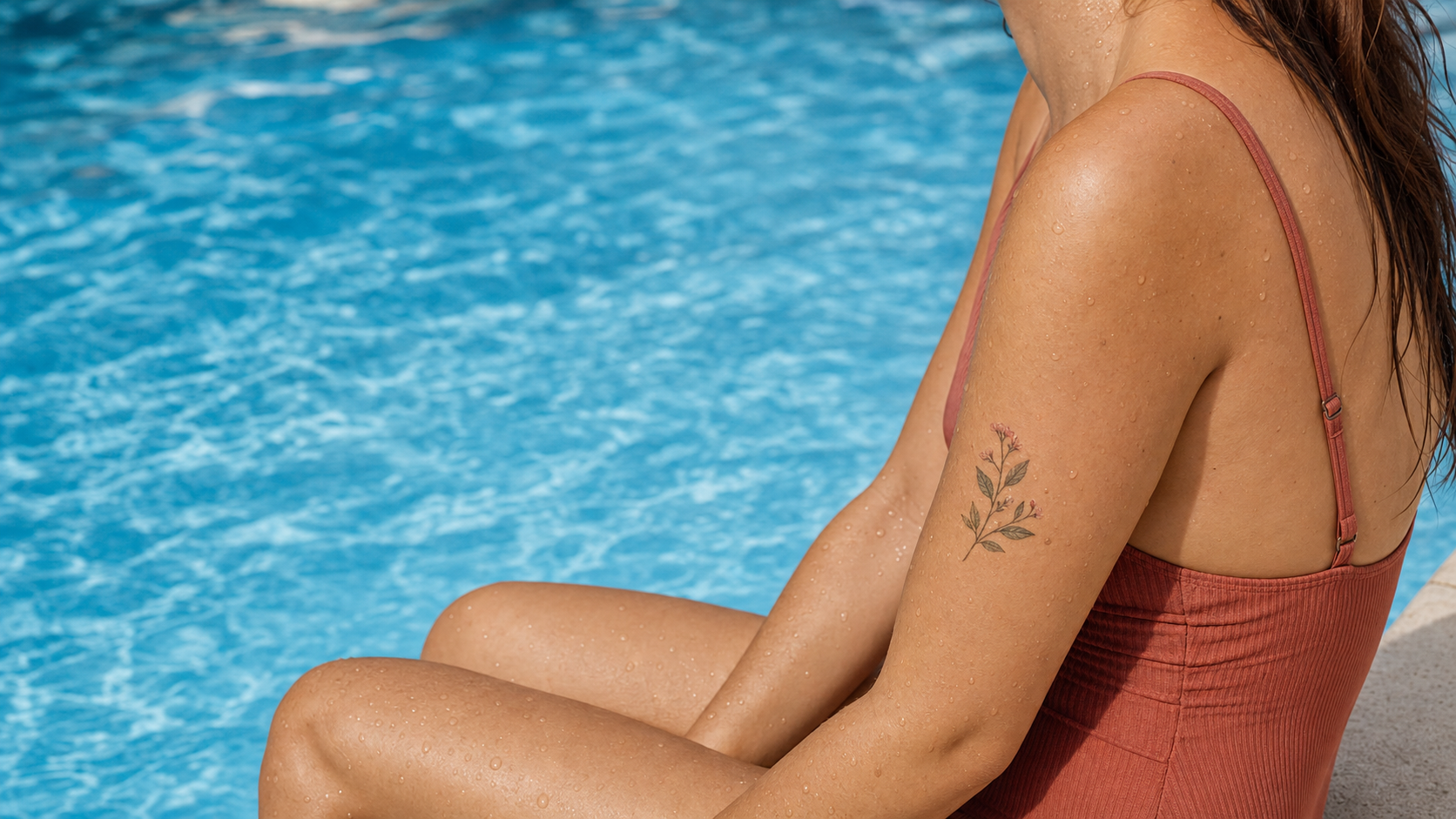
Chlorinated pool water can make a standard water-transfer temporary tattoo fade, crack, or lift sooner, but it is not a reliable one-step remover. Soaking, movement, swimsuit friction, towel drying, and sunscreen can all change the result. If you want the tattoo off, rinse after swimming and switch to a gentle, skin-compatible remover instead of using bleach or concentrated pool chemicals.
What Chlorine Can—and Cannot—Do to a Temporary Tattoo
A standard decal-style temporary tattoo is a thin decorative layer on the skin. The FDA describes decal temporary tattoos as images that transfer from a backing after wetting or use a backing that adheres to the skin. Because the visible design stays at the surface, its appearance can change when water exposure is combined with rubbing, oil, or an edge that was already lifting.
That does not make chlorine a dependable removal method. A pool visit may leave one decal almost unchanged and another looking patchy. Without a controlled product test, it is not possible to assign the change to chlorine alone or promise that a particular design will disappear.
Pool Water Is Not the Same as Household Bleach
Properly managed pool water is a diluted swimming environment. The CDC gives a typical pool-chlorine range of 1–4 ppm and a pH range of 7.0–7.8. Those figures explain normal pool management; they are not temporary-tattoo removal instructions and do not establish a concentration at which a tattoo comes off.
Household bleach and concentrated pool chemicals are different products and should not be improvised as skin removers. The CDC warns that mishandling pool chemicals can cause serious injury and directs people to follow labels and use appropriate protective equipment. If an unknown concentrate contacts the skin, follow its label or safety data instructions and get appropriate help rather than continuing a DIY removal attempt.
Why a Temporary Tattoo May Fade or Lift After Swimming
Pool exposure combines several wear conditions at once. The result may reflect any combination of:
- long soaking and repeated movement in the water;
- swimsuit straps or fabric rubbing the design;
- towel rubbing while the surface is wet;
- sunscreen, lotion, or body oil handled over the tattoo;
- a high-friction placement or an edge that had already started to lift; and
- a metallic or heavier finish that may behave differently from a simple flat design.
For that reason, the better question is not only “Did chlorine remove it?” but “What happened to the surface before, during, and after the swim?” Our broader waterproof temporary tattoo guide explains the water-plus-friction tradeoff in more detail.
Decide What to Do Based on Your Goal
| Situation | Best next action | Avoid |
|---|---|---|
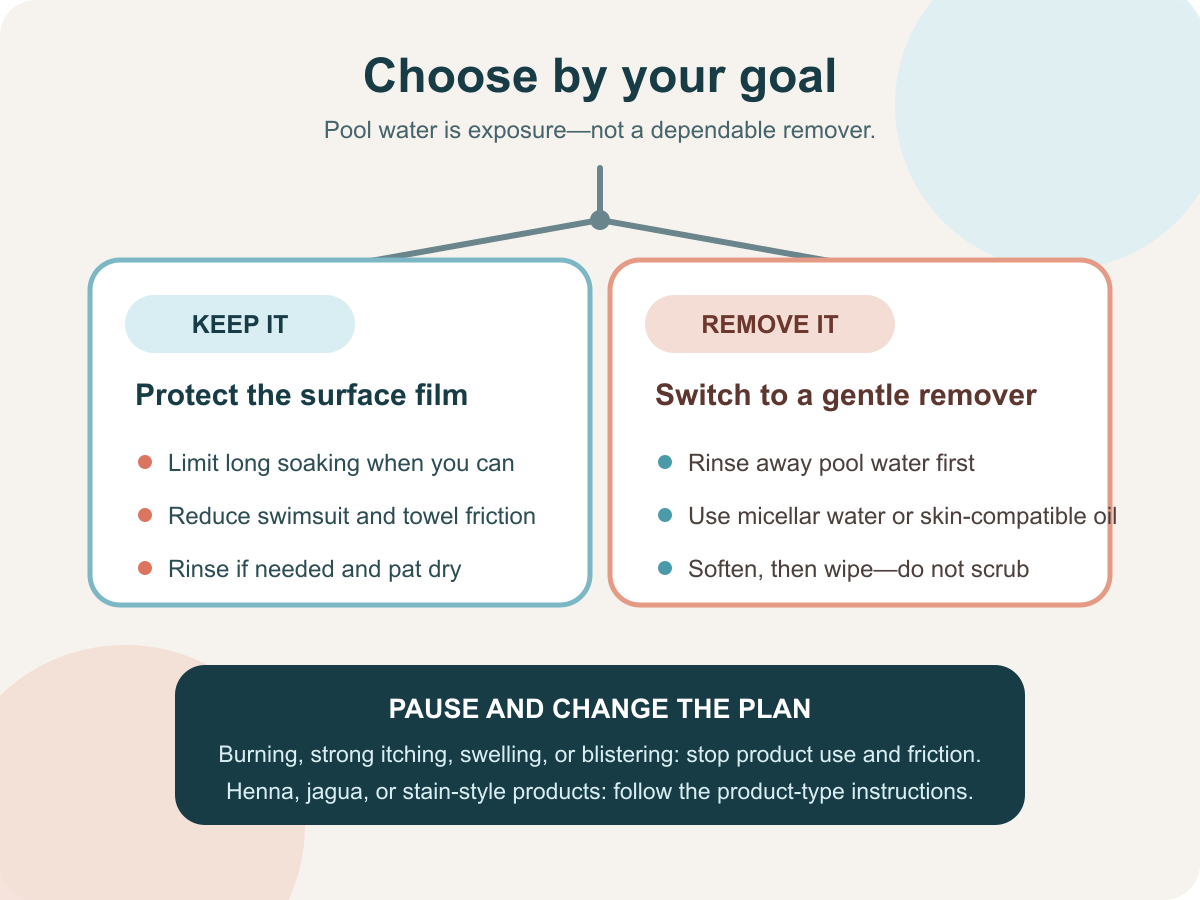
| You want to keep the tattoo | Reduce rubbing, rinse gently if needed, and pat dry | Scrubbing, picking, or repeatedly wiping the wet design |
| You want the remaining decal off | Rinse after swimming, then use micellar water, makeup remover, or a skin-compatible oil | Bleach, pool concentrate, or aggressive friction |
| The decal is patchy or lifting | Either leave it alone to dry or remove the whole surface film gently | Large touch-ups or picking at individual edges |
| Skin is burning, strongly itching, swollen, or blistering | Stop using the tattoo and remover products; seek appropriate professional advice if symptoms are concerning | More chemicals or more rubbing |
| The product is henna, jagua, or a stain-style formula | Follow the specific product instructions and expect a different removal pattern | Treating it as a peel-away surface decal |
Beauty of Papers’ practical decision rule is to choose your goal before touching the tattoo after a swim. If you want to keep it, protect the wet surface from friction. If you want it off, stop treating pool exposure as the remover and deliberately switch to a gentle method. This is an editorial use rule, not a controlled chlorine wear test.
If You Want the Tattoo to Survive the Pool
Apply the tattoo to clean, dry skin and let the transfer dry fully before swimming. Choose a placement that is less likely to sit under a tight strap or moving edge. Follow your sunscreen label and protect exposed skin, but handle the tattoo area gently because rubbing an oily formula directly over a surface decal may shorten clean wear.
Keep the swim and soak reasonable for the occasion. Afterward, rinse gently if needed and pat rather than rub. A tattoo can remain visible after its crisp, photo-ready window has passed, so judge it by the look you need—not only by whether color is still present. If you are planning a pool day, festival, or trip, browse standard water-transfer temporary tattoo styles with placement and care in mind; no style should be assumed chlorine-proof.
If You Want It Off After Swimming
First confirm that it is a standard surface decal. Rinse away pool water, pat the area, and use micellar water, a gentle makeup remover, or a skin-compatible oil to soften the film. Wipe lightly from an edge with a soft pad. If it resists, repeat a gentle pass instead of escalating to a harsh chemical or harder scrubbing.
A stain-style or semi-permanent product may not wipe away like a decal. Check the label and brand instructions. For a fuller method comparison, use our guide to removing a temporary tattoo without irritating your skin.
When Skin Comfort Changes the Decision
Appearance stops being the priority if the area burns, strongly itches, swells, blisters, becomes painful, or grows increasingly uncomfortable. Stop adding tattoo products, removers, and friction. The FDA has received reports of reactions to some decal, henna, and “black henna” temporary tattoos, so product type and symptoms matter. This article cannot diagnose a reaction; seek appropriate professional advice when symptoms are severe, spreading, persistent, blistering, painful, or near the eyes.
Summary
Chlorinated pool water may shorten the clean appearance of a standard temporary tattoo, especially when soaking, movement, sunscreen, swimwear, and towel friction act together. It is not a reliable or even removal method. Protect the surface if you want to keep the design; rinse and use a gentle, product-appropriate remover if you want it off. Never use household bleach or concentrated pool chemicals as a shortcut.
What the guide images show
Key visual information is repeated below as text so the design, scale, placement, and process do not depend on images alone.
- An editorial poolside scene illustrates normal water exposure. It is not a Beauty of Papers SKU image, chlorine test, reaction record, or measured performance result.
- Decision diagram comparing steps for keeping a temporary tattoo after swimming with steps for gently removing it
Leave a Reply