
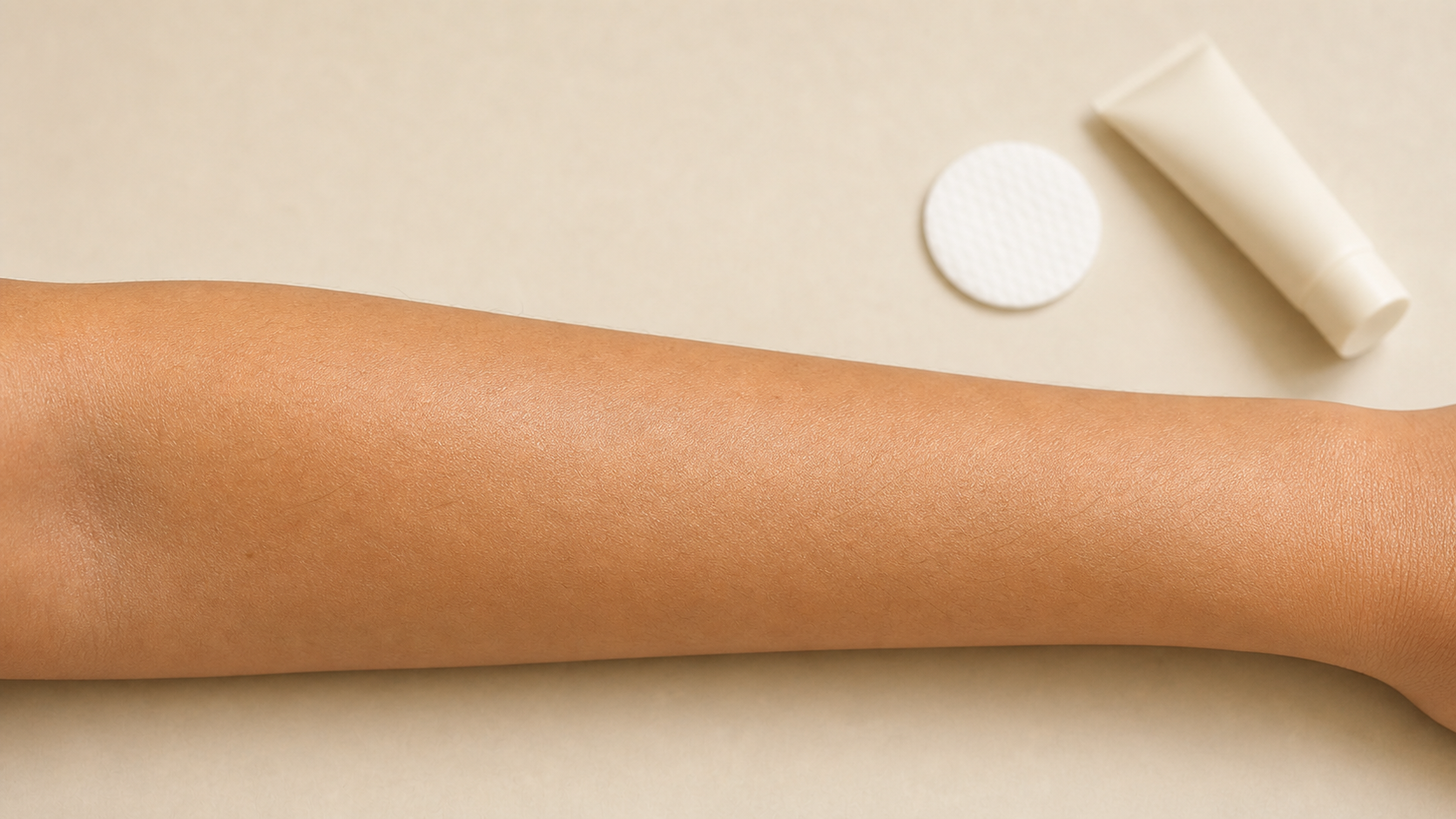
After removing a temporary tattoo, rinse away leftover remover with lukewarm water, pat the skin dry, and leave the area alone. If your skin feels dry, apply a small amount of a simple fragrance-free moisturizer you already tolerate. Do not keep rubbing or apply another tattoo until the skin looks and feels calm, intact, and comfortable.
What Should You Do Right After Removing a Temporary Tattoo?
Once the surface design is gone, the job changes from removal to aftercare. More wiping is not automatically better. Use this short routine:
- Stop using remover. Do not keep polishing the area just because you can see a faint color change.
- Rinse the skin. Use lukewarm water to wash away loosened film, oil, micellar water, or other remover residue.
- Pat dry. Use a soft towel and avoid rubbing.
- Moisturize only if needed. If the area feels dry, use a small amount of a simple fragrance-free moisturizer that your skin already tolerates.
- Leave the area alone. Give the skin a break from friction, new products, and another temporary tattoo.
This routine is a conservative adaptation of general skin-cleansing advice. The American Academy of Dermatology recommends gentle, non-abrasive cleansing, lukewarm water, avoiding scrubbing, patting dry, and applying moisturizer when skin is dry or itchy. The AAD guidance is not specific to temporary tattoo removal, but the same low-friction approach is a reasonable way to avoid adding more mechanical irritation after wiping the skin.
If visible pieces of a water-transfer decal remain while the skin still feels comfortable, use our complete temporary tattoo removal guide instead of improvising with a stronger product. If the color looks like a stain rather than a surface film, read why some temporary tattoos fade instead of wiping away.
Is It Leftover Tattoo Residue or Irritated Skin?
The right next step depends on what you can see and how the area feels.
| What you notice | What it may mean | Best next step |
|---|---|---|
| Small surface fragments or a visible film, and the skin feels comfortable | Probably remaining water-transfer decal residue | Soften it gently and follow the removal guide; do not add force |
| The design is gone, but the skin feels dry, tender, or looks a little different | The area may need a break after remover and friction | Stop removal, rinse, pat dry, keep care simple, and monitor how it feels |
| Burning, swelling, blisters, spreading redness, pain, or worsening symptoms | This is no longer just a residue problem | Stop using products on the area and seek appropriate medical advice |
A faint color does not always mean there is removable film left. Semi-permanent and stain-style products can remain visible in the outer skin layer while they fade. Repeated scrubbing may make the skin uncomfortable without removing much color. When you cannot identify the product, check its label or manufacturer instructions before escalating.
How Should You Care for Comfortable Skin After Removal?
If the skin is intact and comfortable, simple care is usually enough. Rinse once, pat dry, and reduce avoidable friction from tight sleeves, watchbands, towels, or repeated touching. If the area feels dry, a small amount of a plain fragrance-free moisturizer you already use comfortably is a cautious choice. It is not a treatment for a reaction, and you do not need to layer several products.
At Beauty of Papers, our practical product-use rule is to treat skin comfort as the endpoint. The goal is not zero visible pigment at any cost. For a surface decal, stop once the film is removed or when the skin starts to feel worse. That is an experience-based use rule, not a clinical test or a promise about how every person’s skin will respond.
When Should You Leave the Area Alone?
Leave the area alone if it feels tender, hot, stingy, stripped, or increasingly uncomfortable. Do not immediately repeat remover passes or stack fragrance, exfoliating acids, retinoids, aftershave, perfume, or another unfamiliar cosmetic on the same spot. Adding more variables can make it harder to tell what is causing the discomfort.
If your skin is often reactive, review our guide to temporary tattoos for sensitive skin. If the skin is cut, cracked, blistered, or otherwise not intact, use the stricter boundary in our guide to temporary tattoos and broken skin.
When Can You Apply Another Temporary Tattoo?
Use the condition of the skin, not a universal clock. Before placing another temporary tattoo on the same spot, wait until the area is intact, calm, comfortable, and free of redness, tenderness, burning, or rash. There is no responsible one-size-fits-all number of hours because the product used, remover, placement, friction, and individual skin response can differ.
If you choose a different location, that skin should also be clean, dry, intact, and comfortable. Do not cover irritated skin with another design. When the placement is ready, follow our step-by-step temporary tattoo instructions rather than applying over lotion, oil, sunscreen, or damp skin.
If you are ready for a new water-transfer look only after the skin is calm, you can browse the Beauty of Papers temporary tattoo collection. The product bridge comes after the skin decision, not before it.
When Do Symptoms Need More Than Basic Aftercare?
The U.S. Food and Drug Administration reports that adverse reactions have occurred with some decal, henna, and “black henna” temporary tattoos. This does not mean every temporary tattoo causes a reaction, but it is a reason not to dismiss worsening symptoms.
The AAD lists possible contact-dermatitis symptoms such as burning or stinging, tender skin, a hot or swollen rash, and fluid-filled blisters. Those signs do not allow you to diagnose yourself from an article. Stop using the tattoo and remover products on the area and seek appropriate medical advice if symptoms are severe, painful, spreading, blistering, persistent, or getting worse. Use extra caution for symptoms near the eyes or another sensitive location.
Summary
If the temporary tattoo is gone and the skin feels comfortable, rinse with lukewarm water, pat dry, moisturize only if needed, and leave the area alone. If comfortable skin still has surface film, return to the gentle removal guide. If discomfort is increasing or you see swelling, spreading redness, pain, or blisters, stop experimenting. Apply another tattoo only when the chosen skin looks and feels calm, intact, and comfortable.
What the guide images show
Key visual information is repeated below as text so the design, scale, placement, and process do not depend on images alone.
- After a temporary tattoo is removed, keep care gentle and avoid more friction if the skin feels comfortable.
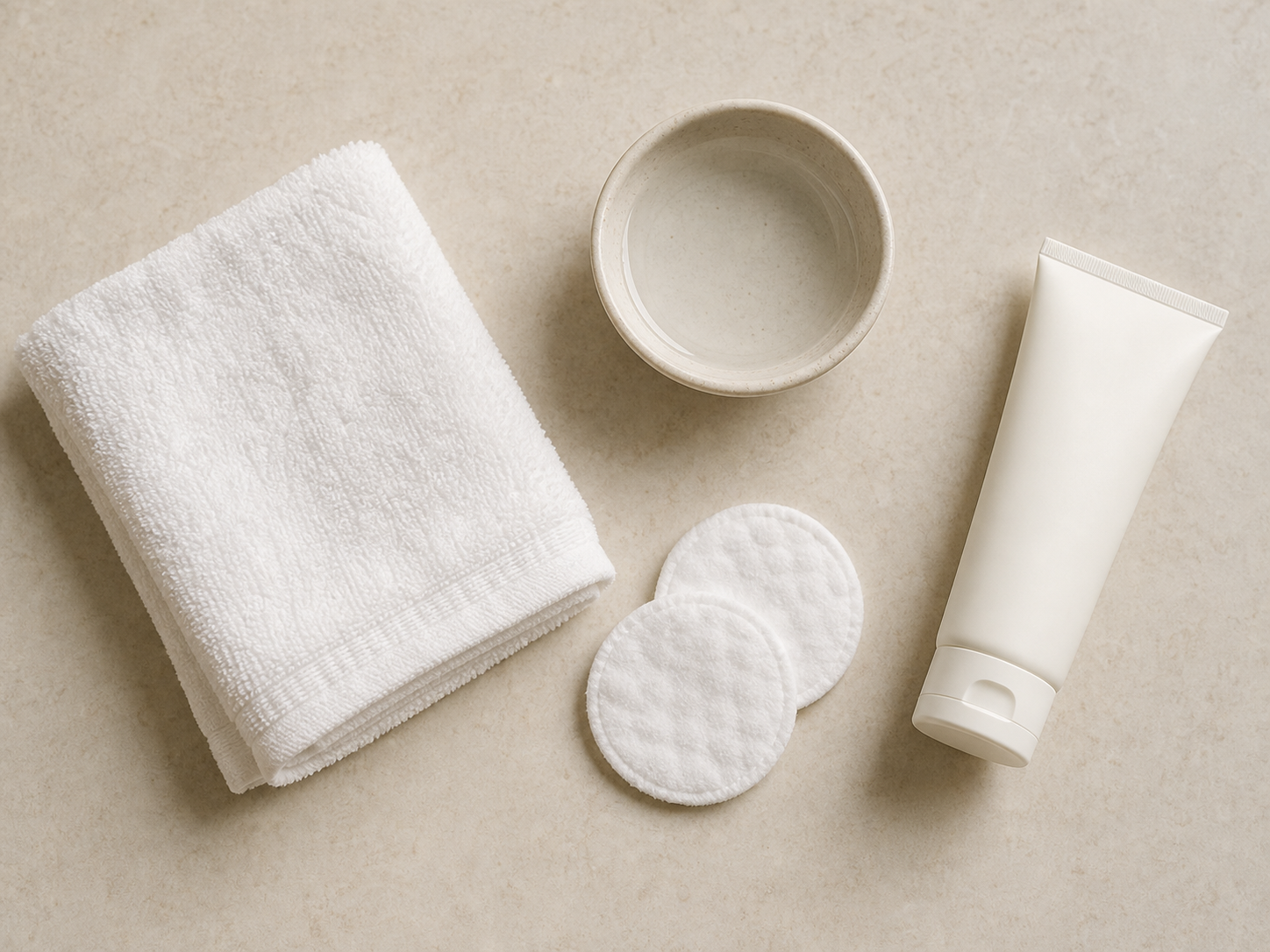
- Soft towel, cotton pads, water, and an unlabeled moisturizer arranged for gentle post-removal skin care
Leave a Reply