
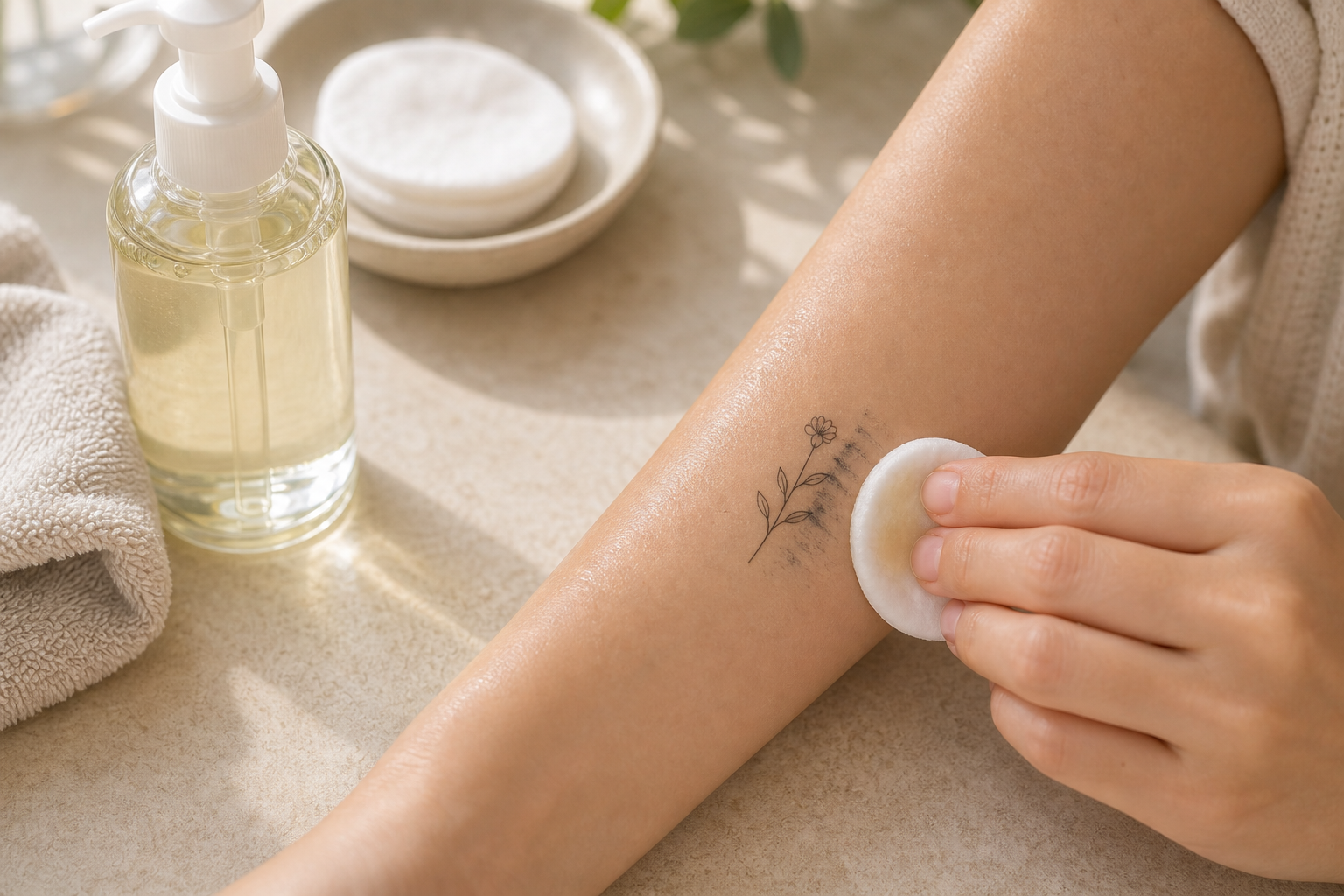
Yes, cleansing oil can help remove many standard temporary tattoos. But it usually does not make the whole design disappear all at once.
In real use, a temporary tattoo often behaves like one thin surface film. Cleansing oil, oil-based makeup remover, or cleansing balm usually starts working where it can get underneath that film: at the edges, corners, and any areas that have already begun to lift.
That is why the gentlest method is not to scrub the whole tattoo again and again. It is to apply oil, wait, lightly wipe the edge, wait again, and repeat. The larger the temporary tattoo, the more patience you need.
Quick Answer: Can Cleansing Oil Remove Temporary Tattoos?
Yes. Cleansing oil can help remove many standard water-transfer temporary tattoos, especially when the tattoo is already fading, cracking, or lifting at the edges.
It works best as a slow, gentle removal method. The oil helps loosen the design from the surface of the skin, but the effect often begins at the border rather than the center.
If you try to force the whole tattoo off by rubbing, your skin may become red or uncomfortable before the tattoo is fully gone. The better approach is to let the oil do more of the work and let your fingers or cotton pad do less.
For a full overview of other removal methods, use our guide on how to remove a temporary tattoo fast without irritating your skin. This article focuses only on cleansing oil and oil-based makeup remover.
Why Cleansing Oil Works Mostly From the Edges
A standard temporary tattoo is not absorbed deep into the skin. It sits on the surface. Once it has transferred and dried, the design can behave like a very thin layer.
When you put cleansing oil over it, the oil does not always reach every part of that layer evenly. The middle of the tattoo may still be attached smoothly. The edges are easier to affect because oil can slip underneath them first.
This is especially true for larger tattoos. A small design has less surface area and more edge relative to its size, so it may come off faster. A large design has a bigger center area that the oil needs time to reach.
So if only the border starts moving at first, that does not mean the method failed. It means the oil is working where it can enter.
The Gentle Method: Oil, Wait, Wipe the Edges, Repeat
The safest way to use cleansing oil is slow and boring, which is exactly why it works.
Start with dry skin. Put a small amount of cleansing oil, cleansing balm, or oil-based makeup remover over the tattoo. If your product is a spray or pump, apply enough to lightly coat the design without soaking the surrounding skin.
Wait 30 to 60 seconds. For a larger tattoo, you may need to wait longer.
Then use your fingertip or a soft cotton pad to gently work at one edge. Do not scrub across the whole design. Focus on the border and any areas that have already started lifting.
If the edge starts to loosen, continue slowly. If nothing moves, add a little more oil and wait again.
Once part of the tattoo begins to release, you can keep working from that loose edge inward. The goal is to move gradually, not to polish the skin.
When you are done, rinse the area with lukewarm water and a gentle cleanser so the oil does not stay on the skin.
Why You Should Not Rub Too Often
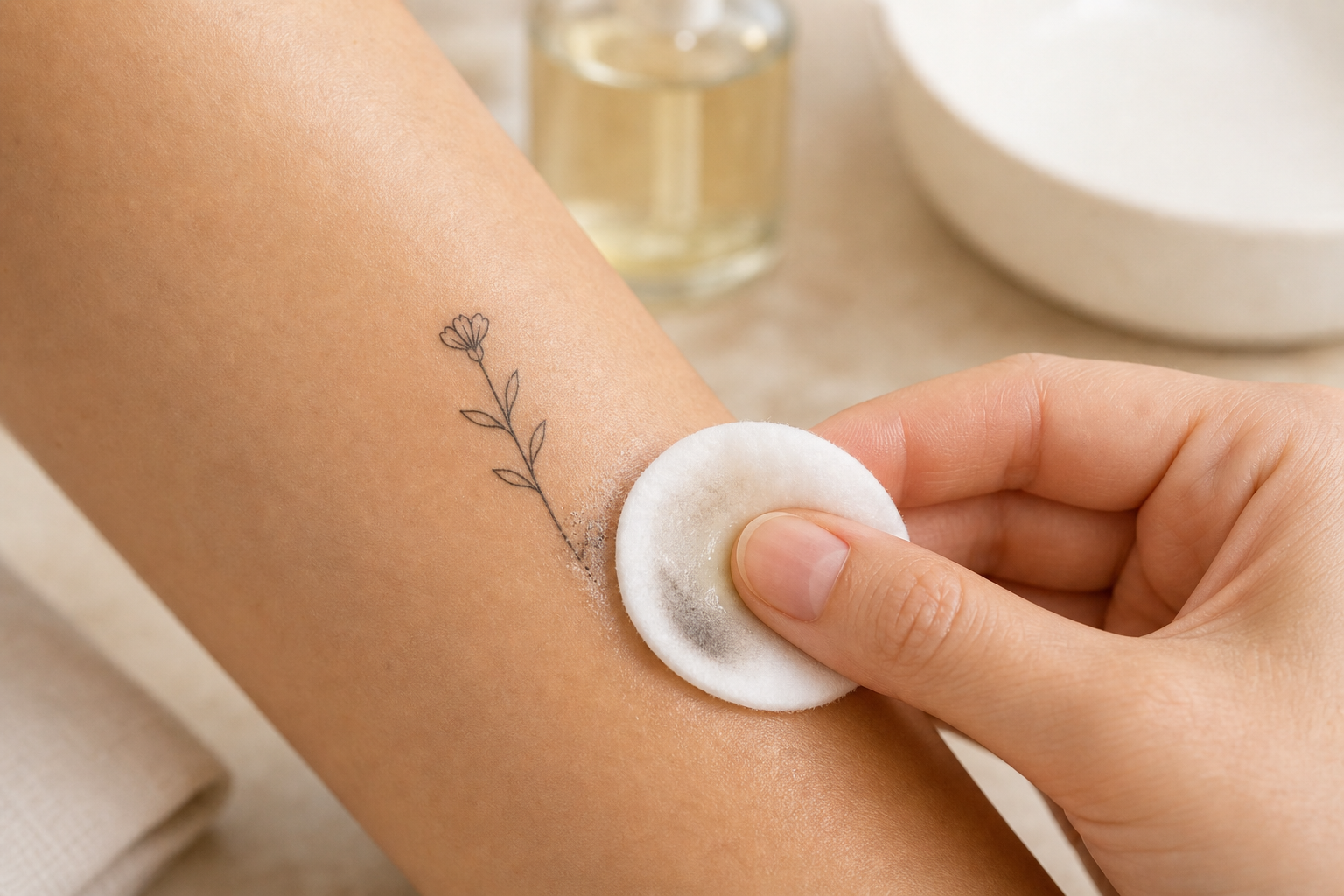
The problem with removal is often not the oil. It is the repeated friction.
If you rub the same spot over and over, the skin can become uncomfortable even if the temporary tattoo is harmless. A cotton pad, towel, or fingernail can create more irritation than the design itself.
If the tattoo is not coming off yet, do not keep increasing pressure. Give the oil more time. Work from the edge. Take a short break. Repeat later if needed.
Stop if the skin becomes red, stings, burns, or feels scraped. The American Academy of Dermatology explains that contact dermatitis can happen when something touching the skin causes irritation or an allergic reaction, so irritated skin deserves a pause instead of more rubbing.
Small Tattoo vs. Large Tattoo: Why Size Changes Removal Time
Small temporary tattoos often come off faster because the oil can reach the edge quickly. A tiny flower, symbol, or word may loosen after one or two rounds.
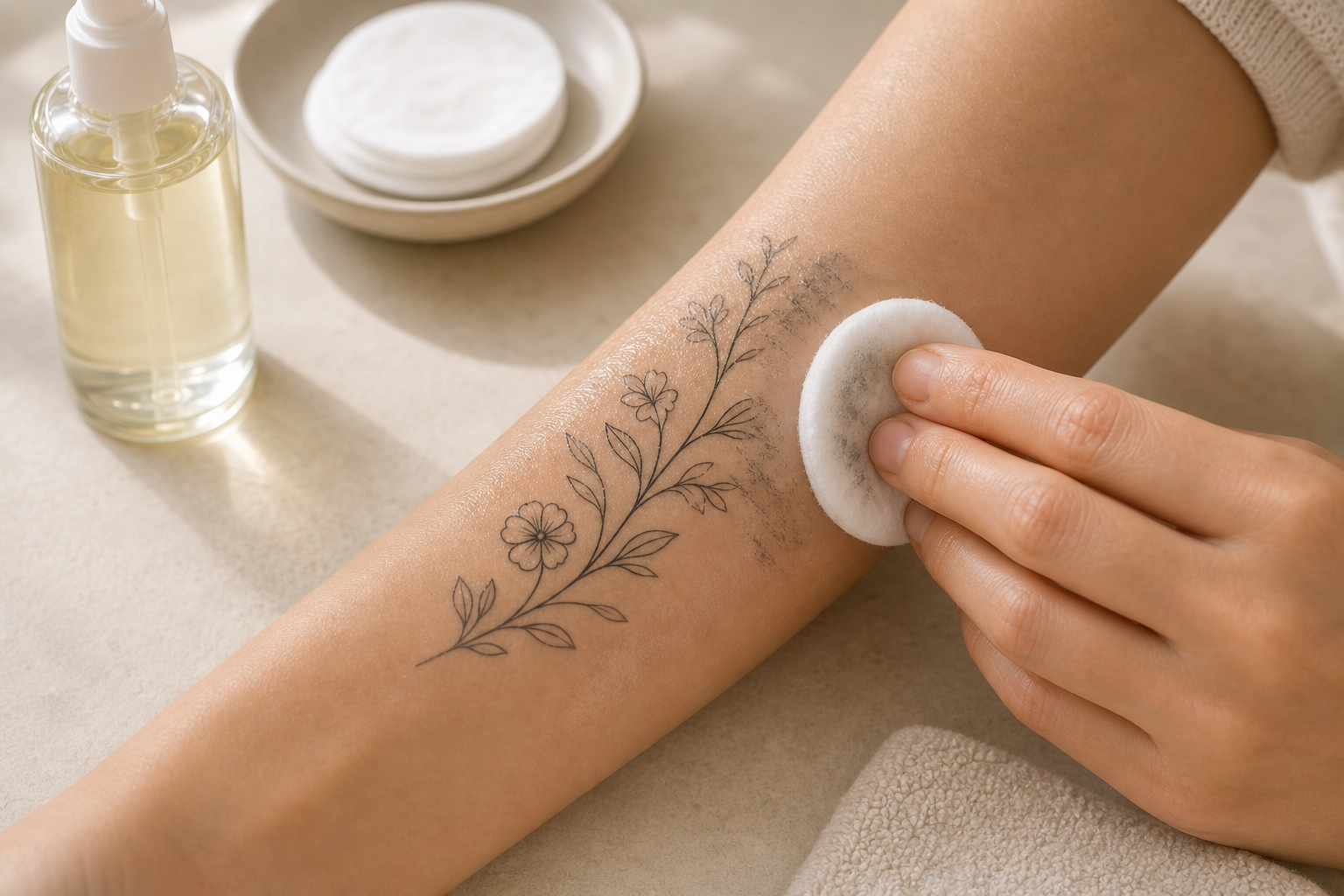
Large temporary tattoos usually take longer. The center of a large design is farther from the edge, so oil may not get underneath it right away.
For a large tattoo, think in sections. Start with one edge. Wait. Loosen that edge. Move inward a little. Then repeat. Trying to remove the whole tattoo at once usually means more rubbing than necessary.
This is also why a tattoo may look half-removed for a few minutes. The edge may lift while the middle stays visible. That is normal. Add oil, wait, and continue gently.
Cleansing Oil vs. Micellar Water vs. Baby Oil
Cleansing oil is often a good choice because it is made to break down makeup and then rinse away. Cleansing balm can work similarly, though it may feel thicker and need more rinsing.
Micellar water may help with some temporary tattoos, especially if the design is already fading. But because many micellar waters are lighter and less oily, they may require more repeated wiping. If you use micellar water, press and wait instead of rubbing quickly.
Baby oil can also loosen temporary tattoos, but it may leave a heavier residue. If you use baby oil, wash the area afterward so the skin does not stay slippery.
The best product is the one that removes the tattoo with the least rubbing.
What If Only the Edge Comes Off?
That is common.
If only the edge comes off, do not attack the center. Add a little more cleansing oil to the lifted edge, wait again, and let the oil move underneath the film.
You can use the loose edge as an entry point. Gently wipe from the outside toward the center, but only when the design is already starting to move.
If the middle still does not move, stop for a few minutes. A second round is better than one aggressive round.
What Types of Temporary Tattoos May Need a Different Method?
This method is mainly for standard water-transfer or decal-style temporary tattoos that sit on the skin surface.
It may not work the same way for henna, jagua, or semi-permanent stain products, because those are not just a surface film. They may fade gradually rather than wipe away with oil.
If you are not sure what kind of temporary tattoo you have, start gently and avoid forcing it. A product that works for one tattoo type may not work for another.
When Not to Use Cleansing Oil
Do not use cleansing oil on broken, scratched, sunburned, or irritated skin. Avoid using it close to the eyes unless the product is specifically made for that area.
Also avoid aggressive removal right after shaving or exfoliating. Skin that already feels sensitive can become uncomfortable faster.
If the tattoo is not bothering you and the skin feels fine, it is okay to let it fade naturally instead of removing it immediately.
The Bottom Line
Cleansing oil can remove many temporary tattoos, but it works best with patience.
Do not think of it as scrubbing the tattoo away. Think of it as softening the edge, waiting, and slowly loosening the surface film. Small tattoos may come off quickly. Large tattoos usually need more time and more rounds.
If your skin starts to feel irritated, stop. A temporary tattoo is supposed to be temporary; your skin comfort matters more than removing every last mark in one pass.
FAQ
Can cleansing oil remove a large temporary tattoo?
Yes, but a large temporary tattoo usually takes longer. Work from the edges and remove it in sections instead of rubbing the whole design at once.
Why does only the edge come off first?
The edge is where oil can get underneath the tattoo layer most easily. The center may still be attached smoothly, so it often takes more time.
Can I use micellar water instead of cleansing oil?
You can try it, especially on a fading tattoo, but it may require more waiting and repeated gentle passes. Avoid constant rubbing.
How long should I wait before wiping?
Start with 30 to 60 seconds. For larger tattoos or stronger adhesion, wait longer and repeat instead of using more pressure.
What if the tattoo is still visible after one round?
That is normal. Add a little more oil, wait, and work from the edge again. If your skin feels irritated, stop and try again later.