

Choose one larger temporary tattoo when you want a clear focal point and you have one readable placement zone to support it. Choose several smaller accents when you want movement, layering, or a lighter distributed look and you can keep the spacing deliberate. The better choice depends less on the motif itself and more on how much space, contrast, and visual rhythm the full look can carry.
A Quick Judgment Table Before You Buy
Before comparing every motif, decide what role the temporary tattoo should play in the full look. The fastest way to choose is to compare visual weight, body space, outfit detail, and how much spacing control you want.
| Quick judgment before you buy |
|---|
| Main styling goal: choose one larger tattoo for a clear focal point. Choose several smaller accents for distributed rhythm and layering. |
| Space requirement: one readable uninterrupted zone favors a larger design. Several smaller zones with clean gaps favor accents. |
| Best with outfit: a simpler outfit can carry one statement tattoo. Layered styling usually works better with lighter accents. |
| Main risk: a larger tattoo can feel too bold for the available space. Several accents can feel busy if spacing or motif logic breaks down. |
- Decide whether the tattoo should be the statement or a supporting layer.
- Check whether you have one strong placement zone or several smaller usable zones.
- If you choose several accents, decide the spacing before adding every piece.
- If you choose one larger design, make sure the surrounding outfit does not crowd it.
- When uncertain, start with less. It is easier to add one accent later than to rescue a crowded composition.
What Changes When You Choose One Large Tattoo Instead of Several Smaller Ones?
A larger temporary tattoo creates a focal point. It tells the eye where to look first and gives the styling a center. That can be useful when the outfit is simple, the placement is visible, and you want the tattoo to act almost like the main accessory.
Several smaller accents do something different. Instead of building one strong point of attention, they spread the look across more than one small zone. That can feel softer, more layered, and more flexible, especially when the designs are repeated or related to each other. But it also creates more chances for the layout to feel busy if the spacing is not intentional.
The core decision is not “large is better” or “small is better.” It is whether the look should read as one clear statement or as a sequence of smaller details.
If the first decision is still which style family to choose, start with the temporary tattoo design guide. This page starts one step later, once the reader is comparing whether the design should become one focal point or several smaller accents.
Choose by Available Space, Not Only by Motif Preference
One larger design needs a cleaner visual field
A larger design works best when it has enough uninterrupted space to read clearly. If the area is broken up by a sharp curve, tight jewelry, straps, or clothing edges, the design can lose impact and feel awkwardly forced into place. The effect is strongest when the tattoo has room to be understood as one object instead of several disconnected pieces.
This is why a statement design often works well on a placement that already feels complete on its own. The tattoo becomes the main event, so the surrounding space needs to support that choice.
Several smaller accents can use space more flexibly
Smaller accents are more adaptable because they do not ask for one single uninterrupted zone. They can work across the wrist, collarbone, ankle, forearm, or shoulder in a way that feels lighter and more adjustable. A cluster also gives the reader room to start with less and stop before the look becomes crowded.
That flexibility is one of the strongest arguments for multi-motif styling. Instead of committing the entire visual decision to one placement, the reader can build rhythm with a few smaller elements and still leave negative space between them.
If the first question is still body area rather than composition, the placement guide remains the better starting point. This article assumes the reader is already comparing how the look should be distributed, not only where the tattoo can sit.
When One Large Temporary Tattoo Works Better
You want one clear statement
A single larger design is the stronger choice when the tattoo should be the first thing the styling communicates. Maybe the outfit is simple and the tattoo is meant to act almost like a statement accessory. Maybe the design itself has enough detail that dividing the look into smaller parts would weaken the effect. In those cases, one focal piece is cleaner than several supporting marks.
You do not want to manage spacing decisions
Several accents require a second skill beyond choosing the motif: arranging them. A single larger design removes that extra composition problem. The placement still matters, but the reader does not also need to solve the gaps between each piece, the order of the motifs, or whether the cluster should taper or repeat.
The outfit already has enough detail elsewhere
If the clothing, jewelry, or makeup already carries texture or repetition, one larger design can keep the tattoo side of the look simpler. The tattoo becomes the single skin-level statement rather than adding several small interruptions to an already active outfit.
When Several Smaller Accents Look Better
You want rhythm instead of one focal point
Several smaller accents work well when the styling should feel airy, layered, or slightly playful instead of anchored around one statement piece. The repeated details can lead the eye across the body more gently than a single large motif. This is often the better choice when the reader wants a decorative effect instead of one dominant mark.
You want to echo jewelry or outfit details
Smaller accents can also work better when the tattoo is meant to support jewelry or clothing rather than replace them. A few related details near the wrist, collarbone, or ankle can echo the overall styling without pulling all the attention into one placement. That makes clustered accents useful when the tattoo should act like a supporting layer.
You want an easier way to stop before the look becomes too much
With several smaller elements, the reader can begin with fewer pieces and build from there. That matters because the easiest styling mistake is not underfilling a look. It is overfilling one. A cluster can become elegant when the final accent is omitted instead of added.
If the reader is also using temporary tattoos to preview how a future placement feels, the try-before guide is the better reference for placement-testing logic. This page stays on decorative composition rather than permanent-tattoo simulation.
What Usually Makes the Look Feel Busy?
Too many accents without a shared logic
Several smaller tattoos only look intentional when they behave like parts of the same decision. If the motifs feel unrelated, the spacing varies without purpose, or every open area gets filled just because it is empty, the result stops looking styled and starts looking random.
No negative space
Negative space is what allows multiple accents to feel deliberate. If every design sits too close to the next, the eye cannot tell whether the cluster is supposed to act as one shape or several. Leaving room between accents is not wasted space. It is what makes the grouping readable.
Using a large focal design where the body area cannot support it
A larger tattoo can also feel wrong when the placement zone is too visually broken for it. A strong statement design needs enough readable space to act like a full idea. If the area constantly competes with straps, seams, cuffs, or other visual interruptions, several smaller accents may be the cleaner solution.
How Outfit Simplicity and Jewelry Change the Decision
Simple outfit, simple jewelry: larger focal designs become easier
When the outfit is visually quiet, one larger tattoo can take the lead without much resistance. The eye has room to accept the tattoo as the main statement, and the rest of the styling does not need to work hard to support it.
Layered outfit or visible jewelry: smaller accents often integrate better
If the styling already includes multiple accessories, repeated textures, or visible hardware, several smaller accents may integrate more naturally. They can support the look instead of trying to dominate it. A clustered layout often feels more flexible when the skin decoration is only one layer of a larger visual system.
This is also where style-specific handoffs matter. If the reader decides the final look should be softer or more botanical, the Floral Collection is the natural next step. If the reader wants a more reflective statement or a jewelry-like accent, the Metallic Collection is the better fit. If the reader still needs broad browsing before committing, start from the full temporary tattoo collection.
Choose one larger temporary tattoo when the look needs a single strong center. Choose several smaller accents when the styling needs lighter rhythm and more flexibility. The better answer is the one that fits the space, the outfit, and the amount of visual weight you want the tattoo to carry. Once that composition decision is clear, browse the Shop or move into the right collection for the final style direction.
What the guide images show
Key visual information is repeated below as text so the design, scale, placement, and process do not depend on images alone.
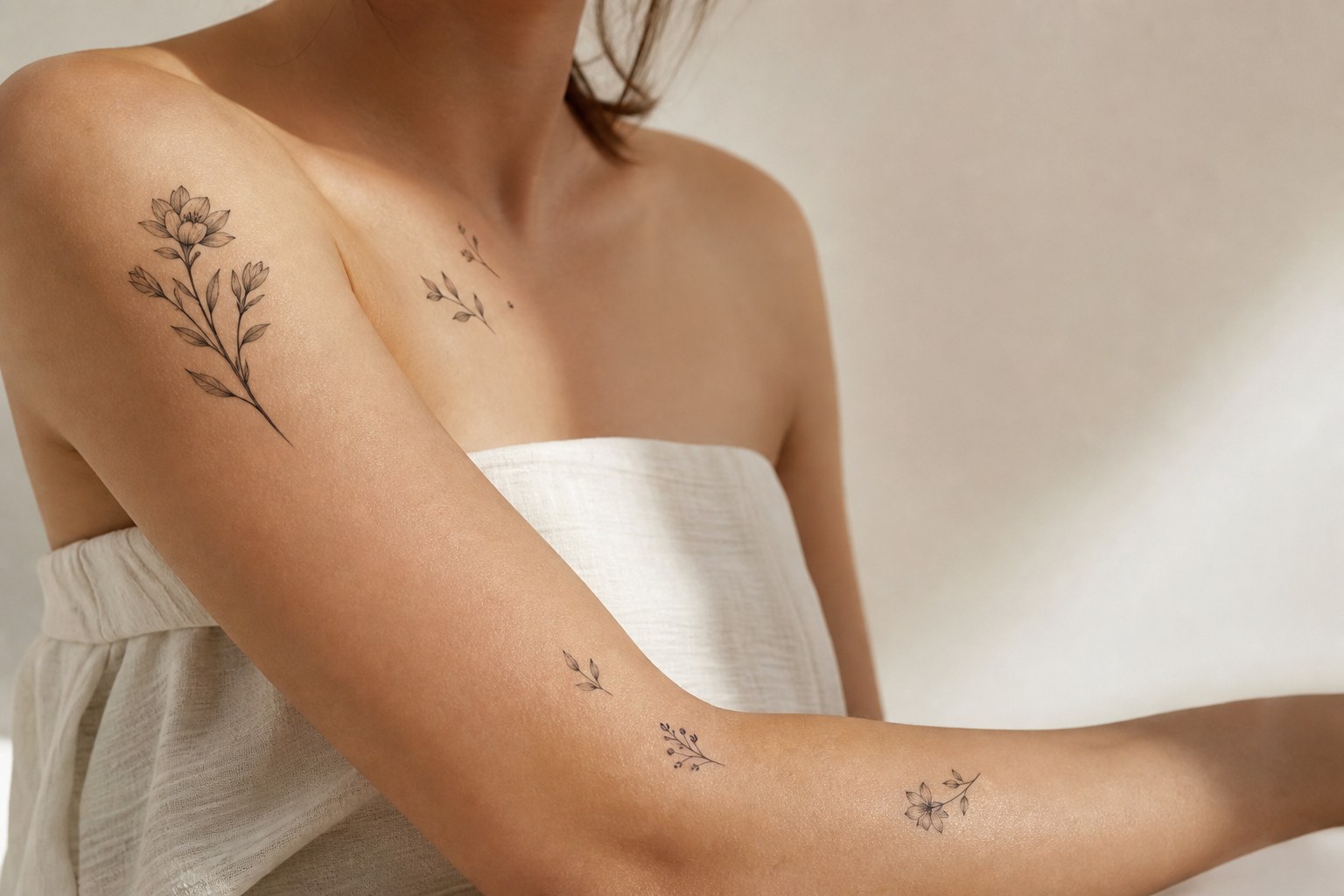
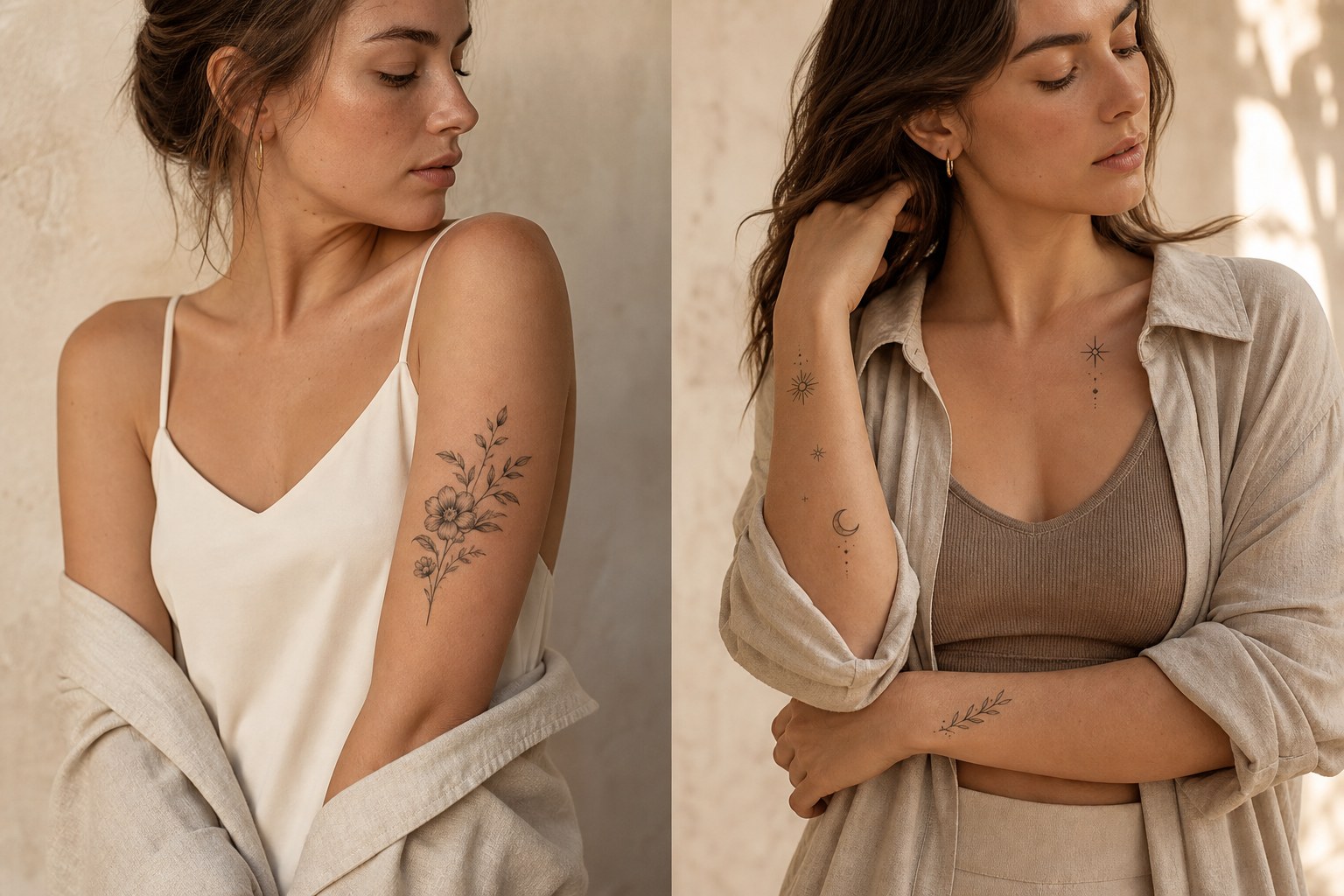
- Generated editorial illustration showing the choice between one focal temporary tattoo and several smaller accents; not a measured size or SKU-placement proof.
- One focal temporary tattoo compared with a smaller accent cluster using clear spacing
- One statement temporary tattoo and several smaller accents styled with different outfit balance